

Every company needs a clear way to measure staffing capacity. Different people work different hours, especially when part-time employees, remote teams, and contract workers are involved. This is why many HR teams search for how to calculate the FTE employee number. FTE, also called Full-Time Equivalent, converts all employee hours into one simple number that shows how many full-time employees your company truly has.
Indian businesses use FTE for project planning, team allocation, payroll forecasting, labour compliance, and workforce capacity analysis. With Bharat Payroll, HR managers in India can track hours worked, full-time hours, attendance, and leave records in one system. This makes calculating FTE faster and more accurate for any business.
What Is FTE and Why Does It Matter?
FTE stands for Full Time Equivalent. It represents the combined working hours of full-time employees, part-time employees, seasonal workers, and temporary staff in one number. For example, if two people work half the hours of one full-time employee, they count as 1 FTE.
FTE shows the real performance and workload capacity of your workforce. It helps employers and HR teams determine how many people are needed for new projects, upcoming deadlines, or expansions.
FTE matters because it supports payroll planning, talent acquisition, budgeting, hiring decisions, productivity tracking, and compliance rules. It also gives managers one clear view of how many workers are active in a certain period.
Why FTE Is Better Than Headcount
Headcount only shows the number of people working. It does not show how many hours each person actually works. FTE uses time equivalent values so companies can see actual workload, not just names on a list.
If a company has ten workers but eight of them are part-time employees, the FTE number will be much lower than the headcount number. This helps companies avoid overstaffing or understaffing.
How to Calculate FTE Employee Number (Simple Formula)
The Full Time Equivalent FTE calculation uses one simple rule:
FTE = Total Hours Worked ÷ Full Time Hours
If a full-time employee works 40 hours per week, and the entire team has worked 120 hours in total, then your FTE is:
120 hours ÷ 40 hours = 3 FTE
This means the total workload is equal to three full-time employees.
Understanding Full-Time Hours for FTE
Most Indian companies use 40 hours per week as full-time hours. Some use 45 hours or 48 hours, depending on industry or labour rules. A full-time employee who works 2,080 hours per year (40 hours × 52 weeks) is generally counted as 1 FTE.
HR teams must set a standard number for full-time hours so the FTE calculation stays consistent.
Step-by-Step: How to Calculate Full-Time Equivalent
The first step is to collect the total number of hours worked by every employee, including part-time workers, full-time employees, interns, and seasonal workers.
The second step is to add all employee hours together to create one combined total for the period, such as one week, one month, or one quarter.
The last step is to divide the total hours worked by the full-time hours used in your company. This gives the FTE value that shows real workforce capacity.
This method works for companies of all sizes, including sole proprietorships, corporations, and partnership firms.
Full Example of FTE Calculation for a Team
Imagine a company with three employees.
- Employee 1 works 40 hours per week.
- Employee 2 works 20 hours per week.
- Employee 3 works 10 hours per week.
The total hours worked in this period are:
40 hours + 20 hours + 10 hours = 70 hours.
The full-time hours are 40 hours per week.
FTE = 70 hours ÷ 40 hours = 1.75 FTE
This means the team of three employees is equal to 1.75 full-time employees.
FTE Formula in Different Formats
1. Simple Format
Total Hours Worked ÷ Full Time Hours = FTE
2. Indian Format
Total Number of Hours Worked in a Week ÷ 40 Hours = FTE
3. Annual Format
Total Hours Worked in Year ÷ 2,080 Hours = Annual FTE
4. Project Format
Sum of Project Hours ÷ Required Full Time Hours = Project FTE
Part-Time Employees and FTE
Part-time employees often work different hours per week. The fte calculation helps convert their performance into full-time units. A person who works 20 hours per week is counted as 0.5 FTE if full-time is 40 hours.
Part-time hours, seasonal hours, and flexible schedules are included in the total hours calculation.
Seasonal Workers and FTE
Seasonal workers contribute to the total number of hours worked, even if they work for a short period. FTE helps determine how much value they contribute to projects or operations.
This helps companies manage payroll, leave budgets, workload planning, and staffing spikes.
How FTE Helps in Workforce Capacity Planning
FTE shows how many workers a company truly has based on actual working hours. It helps determine if your team can take on new projects, improve delivery, and reduce overload. Workforce capacity improves when HR teams understand FTE correctly.
Companies use FTE to make decisions about hiring, scheduling, and resource allocation. This prevents bottlenecks, burnout, and missed deadlines.
FTE and Talent Acquisition
Recruiters use Full Time Equivalent data to decide when to hire a new full-time employee or a part-time employee. It also helps hiring managers understand whether the workload can be distributed among existing team members.
If the FTE number shows a high workload, companies can hire new talent quickly.
FTE and Payroll Forecasting
Payroll teams use FTE to estimate salaries, overtime, benefit contributions, and expected payments for different employment types. When working hours are clear, payroll errors reduce, and payroll planning becomes accurate.
Bharat Payroll helps companies track attendance, hours worked, and working-hour history automatically.
FTE for Hybrid Teams and Remote Teams
Remote teams often work in different time zones. FTE gives one combined value based on the number of hours worked. Hybrid teams with flexible schedules also use FTE to show equal contribution.
This helps managers create fair schedules and identify gaps in staffing.
FTE for Controlled Group and Multi-Entity Businesses
When multiple companies operate under one controlled group, FTE helps determine shared staffing capacity. It also supports compliance and reporting rules by calculating workforce capacity across all entities.
This helps companies avoid mistakes in reporting and labour requirements.
How Bharat Payroll Helps You Save Time in FTE Calculations
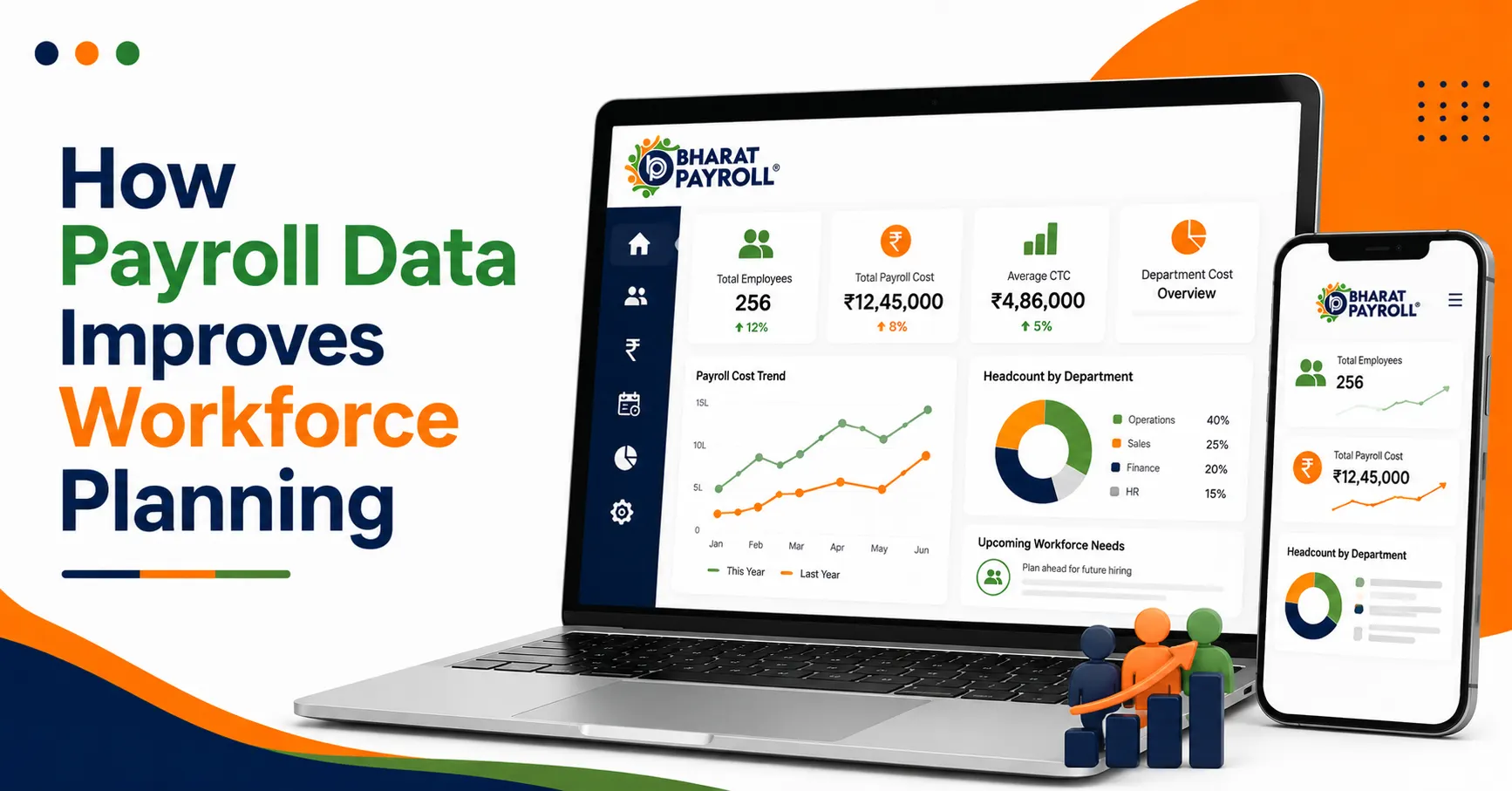
Bharat Payroll tracks attendance, remote hours, overtime, and leave data. It makes FTE calculation automatic and error-free. HR teams can export reports, calculate FTE instantly, and improve workforce planning without manual calculations.
It supports small businesses, fast-growing companies, and large enterprises looking for better HR operations.
Common Mistakes When Calculating FTE
Some companies forget to include part-time employees or seasonal workers. Others use inconsistent full-time hours. Some combine payroll hours and attendance hours incorrectly. A proper system keeps calculations accurate across the business.
FTE in India vs Other Countries
In India, companies use FTE for staffing, scheduling, payroll, and HR planning. Some countries also use FTE for tax purposes, such as employer size requirements. Indian companies mainly use FTE to measure capacity and optimize team performance.
Conclusion
Knowing how to calculate FTE employee numbers helps Indian companies plan better, hire smarter, and avoid workload issues. Full Time Equivalent shows true staffing capacity by converting all hours worked into one clear measure. With Bharat Payroll, companies can calculate FTE instantly, reduce errors, and manage team performance more effectively.
Manage FTE Easily With Bharat Payroll
Bharat Payroll helps Indian companies calculate FTE, track hours, and manage attendance—making workforce planning accurate and effortless.
Frequently Asked Questions
1) What is FTE, and why is it used?
FTE shows how many full-time employees your company actually needs based on total hours worked. It helps with payroll planning, workload balance, hiring decisions, resource allocation, and compliance. HR teams use it to calculate staffing capacity accurately.
2) How do I calculate FTE for part-time employees?
You add the number of hours worked by part-time employees for a certain period and divide the total hours by the full-time hours. This gives a fractional number that reflects their contribution compared to full-time workers in a simple and clear way.
3) Why is FTE important for workforce capacity?
FTE helps managers understand if their team has enough people for new projects or tasks. It shows the actual available work hours, not just headcount. This prevents overload, supports delivery timelines, and improves HR decisions about hiring or scheduling.
4) Can remote employees be included in FTE calculations?
Yes. Remote employees, hybrid employees, and flexible workers are included based on the number of hours they work. FTE converts all of these hours into one clear number so managers can assess team capacity without confusion about work location or timing.
5) How does Bharat Payroll help with FTE calculations?
Bharat Payroll automatically tracks working hours, attendance logs, shift lengths, and leave data. It converts these values into FTE without manual effort. This saves time for HR teams and gives accurate workforce capacity data for planning and compliance.