
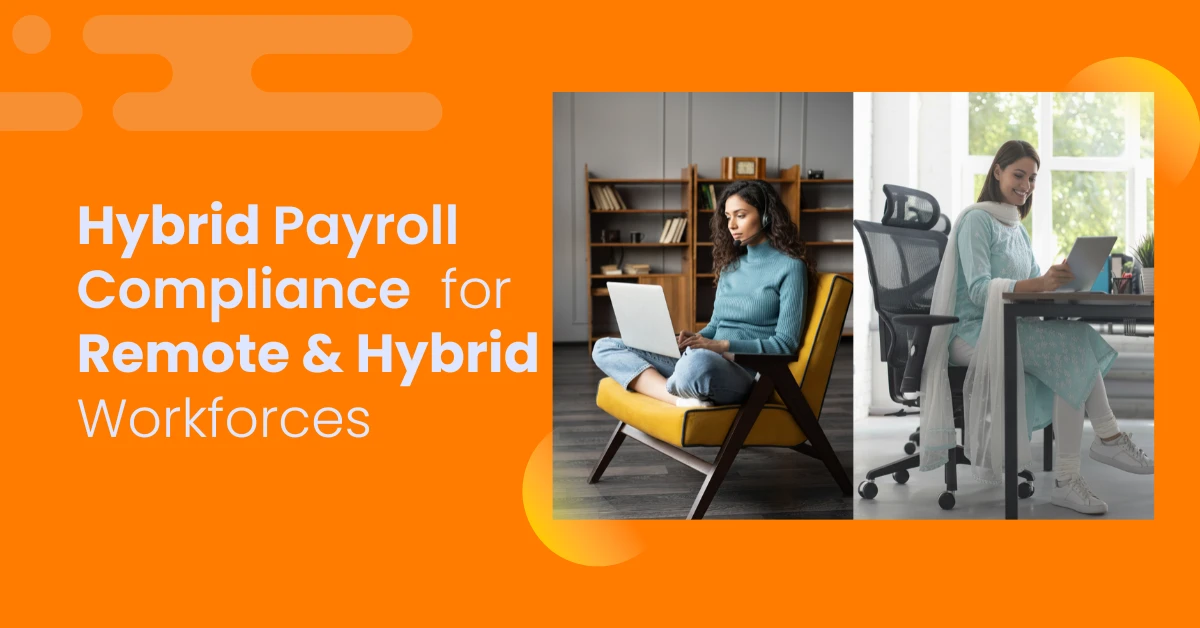
Hybrid payroll compliance refers to the process of managing payroll obligations for employees who work partly from office locations and partly from remote environments. As hybrid work becomes common across Indian organisations, payroll teams must account for employee work locations, statutory deductions, labour laws, and digital payroll records while maintaining regulatory accuracy.
Hybrid payroll compliance often intersects with broader payroll compliance in India, particularly where state labour laws, professional tax obligations, and employment registrations differ across locations. Businesses managing distributed teams must track these variations carefully to avoid payroll discrepancies or regulatory penalties.
Companies expanding their workforce across cities such as Bengaluru, Mumbai, Hyderabad, or Delhi frequently discover that hybrid payroll compliance requires stronger payroll systems, reliable attendance documentation, and accurate statutory monitoring. According to recent workforce studies, more than 60 percent of Indian organisations now operate hybrid teams, which has increased payroll compliance monitoring across multiple work locations.
This article explains how hybrid payroll compliance works, the operational risks organisations face, and the practical steps businesses should take to maintain compliant payroll operations while managing flexible work models.
Why Hybrid Payroll Compliance Has Become a Business Priority
Work models have changed significantly in recent years. Many organisations now operate with employees splitting their time between offices, home locations, and shared workspaces.
From a payroll perspective, this shift introduces several new regulatory considerations.
- An employee’s work location may determine which labour laws apply.
- Professional tax liability may depend on the employee’s state of residence.
- Attendance tracking methods must record working hours accurately, even outside the office.
- Payroll documentation must remain accessible through digital records rather than physical files.
These factors make hybrid payroll compliance a continuous monitoring process rather than a routine payroll activity.
Companies that continue relying on manual payroll records often struggle to maintain clarity across distributed workforces. Payroll teams must confirm that each employee’s location, working hours, and statutory deductions align with regulatory requirements.
For growing organisations, hybrid payroll compliance becomes particularly important once teams operate across multiple states.
Challenges of Hybrid Payroll Compliance
Managing payroll for hybrid teams introduces several operational risks for employers.
Inconsistent employee location records
Employees working from multiple cities may trigger different statutory obligations, such as professional tax or labour welfare contributions.
Attendance tracking gaps
Without structured digital attendance systems, working hours recorded from home environments may not match payroll calculations.
State-level regulatory differences
Each state may follow different labour rules, minimum wage notifications, and professional tax structures.
Payroll documentation fragmentation
Payroll records stored across different systems may create difficulties during audits or regulatory inspections.
Identifying these challenges early helps organisations strengthen hybrid payroll compliance before issues escalate.
Hybrid Payroll Compliance and Changing Workforce Structures
Hybrid work models reshape how companies manage employment relationships. Earlier payroll structures were designed around central offices where employees worked under one set of labour regulations.
Hybrid work introduces a different scenario.
- Employees may relocate temporarily.
- Some employees work permanently from home in another state.
- Project teams may operate across multiple cities.
Each situation influences payroll compliance obligations.
An employee living in Bengaluru but employed by a company headquartered in Delhi may fall under Karnataka labour regulations for certain compliance matters. Similarly, professional tax deductions may follow the employee’s working state rather than the employer’s registered office.
Payroll teams must therefore track employee location data carefully and update payroll configurations whenever work locations change. Without proper tracking, payroll calculations may apply incorrect statutory rules.
Worker Classification in Hybrid Work Environments
Hybrid work arrangements often increase the use of freelancers, consultants, and short-term contract workers. While flexible staffing supports operational needs, worker classification becomes a critical payroll compliance issue.
Employers must distinguish clearly between employees and independent contractors.
Employees receive salaries, statutory benefits, and payroll deductions such as income tax, provident fund, and professional tax. Contractors operate under service agreements and manage their own tax obligations. Misclassifying workers may create statutory liabilities if authorities determine that a contractor should have been treated as an employee.
Payroll teams should therefore review worker contracts regularly and document employment relationships carefully. Clear employment records protect organisations during labour inspections or financial audits.
Attendance and Time Tracking for Hybrid Payroll Compliance
Accurate time tracking remains one of the most sensitive areas of hybrid payroll compliance.
Traditional attendance systems often relied on biometric devices or office entry logs. Hybrid work makes these methods insufficient.
Employees may log in remotely, attend virtual meetings outside regular hours, or complete assignments during flexible work schedules. If these hours are not recorded properly, payroll calculations may become inaccurate.
For non-exempt employees, labour laws require employers to compensate all recorded working hours, including overtime where applicable.
Hybrid payroll compliance, therefore, requires:
- Digital attendance tools that capture login times
- Clear policies regarding overtime eligibility
- Accurate records of work hours, regardless of location
Managers must also confirm that employees record working hours consistently. Proper documentation protects both the organisation and the employee.
Payroll Documentation and Digital Record Keeping
Hybrid work environments rely heavily on digital documentation. Payroll records must remain organised and accessible regardless of where employees or payroll teams operate.
Employers must maintain records, including:
- Employee salary registers
- Payslips and deduction records
- Income tax deduction statements
- Provident fund and ESI challans
- Attendance and overtime documentation
In hybrid environments, storing payroll records across multiple systems or local files often creates confusion during audits.
Centralised payroll documentation helps organisations retrieve payroll records quickly when regulators request verification. Clear payroll documentation also improves employee transparency. Staff members frequently require salary statements for loan applications, visa processes, or financial verification.
Digital payroll records simplify these requirements while maintaining compliance standards.
Tax Reporting Responsibilities in Hybrid Payroll Environments
Hybrid work models may require payroll teams to manage tax obligations across multiple locations.
For instance:
- Employees relocating to another state may require revised professional tax deductions.
- Payroll teams must confirm that income tax deductions remain aligned with employee declarations.
- Year-end payroll statements must reflect correct salary data and tax deductions.
Businesses managing hybrid teams must monitor these payroll responsibilities regularly. Incorrect tax reporting may result in regulatory notices or financial adjustments.
Automated payroll systems often help payroll teams manage location-based tax rules more accurately, especially when employees operate from multiple states.
Technology and Hybrid Payroll Compliance
Manual payroll methods struggle to keep pace with hybrid workforce requirements. Payroll teams managing distributed employees must track location-based labour rules, working hours, and statutory deductions within a single payroll environment.
Digital payroll platforms help organisations maintain consistency in payroll calculations and compliance monitoring.
Integrated payroll systems can connect attendance records, salary calculations, and statutory deductions. This reduces the risk of calculation errors and improves payroll accuracy across multiple work locations.
Employees also benefit from self-service portals where they can download payslips, review salary components, and update personal details. As hybrid work becomes a permanent workforce structure, technology plays a central role in maintaining hybrid payroll compliance.
Internal Resource for Broader Payroll Compliance
Hybrid payroll compliance operates as one part of a larger regulatory framework. Organisations managing distributed workforces should also review broader payroll regulations that apply to Indian employers.
Businesses that want to build stronger payroll governance often explore the complete framework explained in the article below:
Payroll Compliance in India: Complete Guide
That guide explains statutory laws, payroll obligations, compliance risks, and operational frameworks required to maintain payroll compliance across Indian organisations.
Understanding the full regulatory environment helps companies align hybrid payroll practices with national labour regulations.
Payroll Compliance Checklist 2026 for Hybrid Workforces
Hybrid work models require payroll teams to monitor compliance activities more closely than traditional office-based setups. A structured checklist helps organisations confirm that payroll operations remain aligned with statutory rules.
Employee registration and documentation
Employers must maintain updated employee records, including PAN, Aadhaar, bank details, employment contracts, and work location information. In hybrid setups, recording the employee’s working state helps determine applicable statutory deductions.
Salary structure validation
Salary components should follow Indian wage definitions and statutory contribution requirements. Incorrect structuring can affect provident fund contributions, gratuity eligibility, and income tax calculations.
Income tax deduction monitoring
Employers must deduct income tax from employee salaries through the TDS system based on declared deductions and the chosen tax regime. Monthly deposit deadlines must be tracked carefully to avoid interest charges.
Provident fund and ESI deposits
Companies registered under EPFO and ESIC must deposit employer and employee contributions within statutory deadlines. Hybrid work does not change these obligations.
Attendance and work hour verification
Payroll teams must confirm that attendance records match salary calculations. Digital attendance systems often help maintain accurate working hour documentation for hybrid teams.
Payroll documentation management
Payslips, payroll registers, statutory challans, and deduction summaries must remain organised and accessible. These records support compliance inspections and financial audits.
Maintaining a structured payroll compliance checklist allows organisations to detect gaps early and correct payroll processes before regulatory issues arise.
Multi-State Payroll Compliance in Hybrid Teams
Hybrid work often expands the geographical spread of employees. A company may hire staff working from different states while operating from a central office.
Each state may apply different payroll rules.
Professional tax variations
Professional tax regulations differ across states such as Maharashtra, Karnataka, and West Bengal. Payroll teams must calculate deductions according to the employee’s work location.
Minimum wage regulations
State governments periodically revise minimum wage notifications. Employers must confirm that salary structures remain aligned with applicable wage rules for the employee’s working state.
Labour welfare fund obligations
Some states require labour welfare fund contributions. These deductions must follow state-specific schedules.
Shops and Establishments compliance
Employment registers, leave policies, and working hour rules may vary under state labour laws.
For companies employing remote staff across multiple cities, multi-state payroll compliance requires careful monitoring of regulatory updates.
Hybrid work increases the likelihood of employees working outside the company’s registered office. Payroll teams must therefore review location data regularly to maintain compliance accuracy.
Payroll Audit Preparation Guide for Hybrid Organisations
Payroll audits may occur during financial reviews, labour inspections, or investor due diligence processes. Hybrid payroll environments require stronger documentation practices because employee records exist across digital systems.
Maintain payroll registers
Salary registers should document employee earnings, deductions, statutory contributions, and net payments for every payroll cycle.
Preserve statutory challans
Payment confirmations for PF deposits, ESI contributions, and income tax deductions must remain available for review.
Reconcile payroll reports
Payroll reports should match the filings submitted to statutory authorities. Any discrepancy may trigger regulatory queries.
Maintain attendance records
Attendance and work hour documentation must support payroll calculations. Hybrid work increases the importance of digital attendance logs.
Conduct periodic internal reviews
Many organisations review payroll data quarterly to confirm deduction accuracy, verify statutory deposits, and check payroll documentation completeness.
Preparing payroll records early helps companies respond confidently when regulatory authorities request documentation.
Payroll Compliance for Startups with Hybrid Teams
Startups frequently adopt hybrid work early because it reduces office costs and expands hiring flexibility. Yet payroll compliance obligations remain applicable regardless of company size.
Early salary structuring
Improper salary structures may create complications when statutory contributions become mandatory. Planning salary components correctly helps startups avoid restructuring payroll later.
Worker classification
Startups often rely on consultants, freelancers, and project-based staff. Employers must confirm whether individuals should be classified as employees or contractors.
Statutory registrations
Once workforce thresholds are crossed, companies must register under EPFO and ESIC regulations. These obligations apply even if employees work remotely.
Compliance calendar management
Startups managing payroll manually sometimes miss statutory deadlines. Tracking tax deposits and filings becomes easier with structured payroll systems.
Building payroll compliance practices early allows startups to scale without regulatory complications.
Payroll Compliance Penalties for Hybrid Workforce Errors
Payroll compliance failures may lead to financial penalties, regulatory notices, and operational disruptions. Hybrid work environments increase the risk of compliance mistakes if payroll tracking remains inconsistent.
Provident fund violations
Delayed provident fund deposits may attract interest charges and additional damages depending on the delay duration.
Income tax deduction violations
Late TDS deposits or inaccurate filings may result in interest liabilities and regulatory notices from tax authorities.
Minimum wage violations
Employers paying salaries below statutory wage levels may face penalties under labour laws.
Incomplete payroll documentation
Failure to maintain payroll registers or deduction records may lead to fines during labour inspections.
Companies managing hybrid teams must maintain accurate payroll documentation and monitor statutory deadlines to reduce compliance exposure.
Manual Payroll vs Digital Payroll Systems for Hybrid Payroll Compliance
Businesses managing distributed teams often compare traditional payroll management with digital payroll systems when maintaining hybrid payroll compliance.
| Payroll Compliance Area | Manual Payroll Processes | Automated Payroll Systems |
| Employee work location tracking | Requires manual updates and HR verification | Automatically stores employee location records |
| Attendance management | Often maintained through spreadsheets or disconnected tools | Integrated digital attendance tracking |
| Statutory deductions | Higher risk of calculation errors | Automated deduction calculations |
| Multi-state payroll compliance | Difficult to monitor state labour regulations manually | Configurable rules for state-level compliance |
| Payroll documentation | Files stored across multiple systems or folders | Centralised payroll records |
| Audit preparation | Time-consuming document reconciliation | Instant payroll reports and documentation access |
Organisations managing hybrid teams often adopt structured payroll systems to maintain accurate payroll calculations, organised documentation, and reliable compliance tracking.
When Should Businesses Upgrade Payroll Systems for Hybrid Teams
Many organisations continue using spreadsheets until payroll compliance becomes difficult to manage. Signs that payroll systems require an upgrade include:
- Employees working across multiple states
- Difficulty tracking statutory filing deadlines
- Frequent payroll calculation corrections
- Attendance data stored across multiple tools
- Upcoming financial audits or due diligence reviews
Upgrading payroll systems early helps businesses maintain accurate payroll documentation and regulatory compliance.
Conclusion
Hybrid work models have changed how organisations manage payroll compliance. Employees now work from different cities, states, and locations, which increases the need for accurate payroll tracking and location-based statutory monitoring.
Payroll teams must manage employee classification, attendance documentation, tax deductions, and statutory filings while maintaining organised payroll records.
Organisations that adopt structured payroll systems often find it easier to maintain compliance consistency across distributed workforces. Clear payroll documentation, regular compliance reviews, and reliable payroll technology help businesses manage hybrid payroll obligations while supporting workforce flexibility.
Simplify Hybrid Payroll Compliance With Bharat Payroll
Managing hybrid payroll compliance requires accurate payroll calculations, statutory monitoring, and organised payroll documentation.
Bharat Payroll helps businesses manage hybrid workforce payroll while maintaining regulatory accuracy across locations.
- Automated payroll calculations
- Statutory deduction monitoring
- Multi-state payroll management
- Organised payroll documentation
- Payroll reporting for audits
Stay compliant with Indian payroll regulations while managing distributed teams confidently.
Simplify Hybrid Payroll Compliance Today
Automate payroll, attendance, and statutory deductions in one connected system—stay compliant across all locations effortlessly.
Frequently Asked Questions
1. What is hybrid payroll compliance?
Hybrid payroll compliance refers to managing payroll obligations for employees who work partly from office locations and partly from remote environments. It includes tax deductions, statutory contributions, attendance tracking, and payroll documentation.
2. Does remote work affect payroll compliance in India?
Yes. Employee work location may influence professional tax deductions, labour regulations, and payroll reporting requirements.
3. How can companies manage payroll compliance for hybrid teams?
Businesses often use digital payroll systems that track attendance, statutory deductions, and payroll documentation in a single platform.
4. Why is documentation important for hybrid payroll compliance?
Payroll records such as salary registers, attendance logs, and statutory challans support audits, regulatory inspections, and employee salary verification.
5. Can payroll software help manage hybrid workforce compliance?
Payroll software helps calculate deductions accurately, maintain payroll records, and monitor statutory deadlines for employees working across multiple locations.