
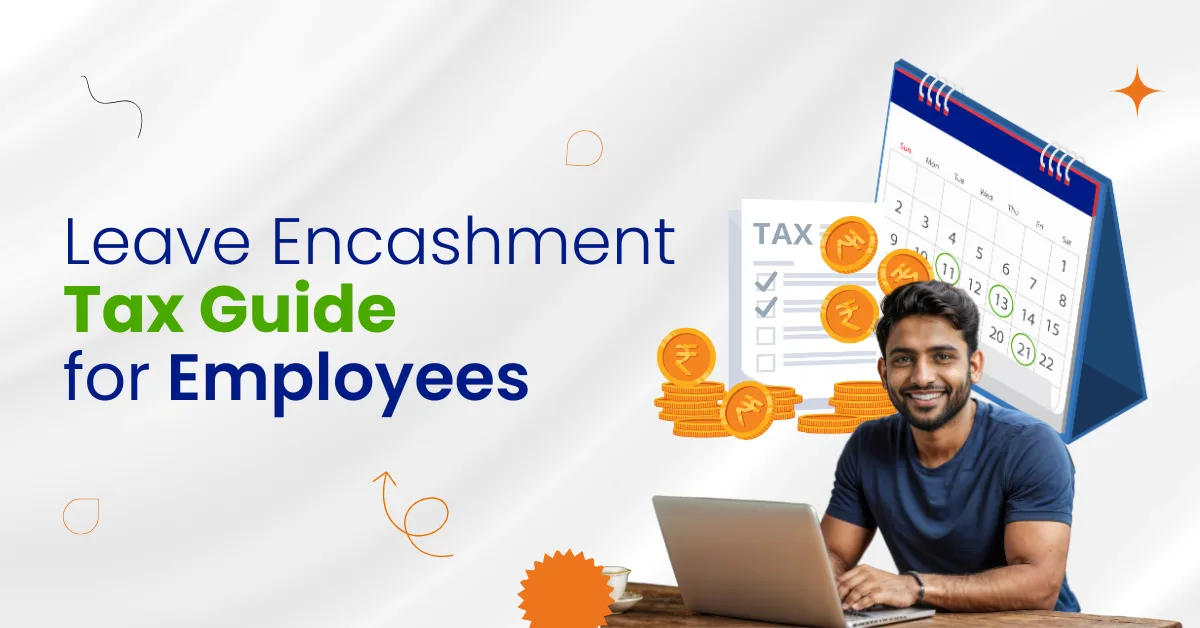
Leave encashment means getting money for unused paid leave. It helps when employees cannot take time off. Many people do not understand how it works or how tax rules apply. Some are unsure if leave encashment is taxable under the Income Tax Act. Knowing the basics helps employees make better decisions during resignation, retirement, or job changes.
Bharat Payroll makes this process easy. It keeps leave balances clear. It follows company rules. It calculates leave encashment automatically. HR teams trust it because it removes errors. When data stays clean, leave encashment becomes simple for every employee.
This guide explains leave encashment in an easy way. It uses simple steps, short examples, and clear language. This helps employees and HR teams understand payouts and tax rules without confusion.
What Leave Encashment Really Means?
Leave encashment refers to receiving monetary compensation for unused leave. Employees earn leave every month or year. These leaves include paid leave, annual leave, casual leave, and medical leave. If employees do not use these leaves, they can convert them into money based on company policy.
Here is the idea in simple words:
- Employees earn paid leave during continuous service each year.
- Unused leave becomes eligible for encashment depending on company rules.
- Encashment amount depends on the employee’s basic salary and dearness allowance.
- HR uses a standard leave encashment calculator for accurate payouts.
- Bharat Payroll calculates leave encashment using fixed formulas and stored data.
This helps employees receive money for unused days at the time of retirement or resignation.
How Leave Encashment Is Calculated
Leave encashment calculation is based on a simple formula under the Income Tax Act:
Encashment Amount = (Basic Salary + DA) × Unused Leave Days / 30
Companies use this formula to calculate leave encashment accurately. The leave encashment calculator uses the formula and shows the payout on the payslip.
Encashment calculation depends on:
- Employee’s basic salary and dearness allowance values.
- Number of unused days at time of retirement or resignation.
- Years of completed service to determine eligible leave.
- Company’s policy on carrying forward unused leaves.
- Maximum limit allowed under tax exemption rules.
Accurate calculation ensures employees receive money without confusion.
Why Leave Encashment Matters for Employees
Leave encashment supports employees during important moments. It provides a lump sum payout when employees resign, retire, or face personal reasons requiring financial support. Many employees rely on leave salary to manage expenses during life transitions.
Here is why leave encashment matters:
- It gives extra financial support during retirement or resignation periods.
- It prevents loss of unused paid leave accumulated over the service tenure.
- It supports employees who cannot take leave due to workload demands.
- It offers tax benefits under specific taxation rules and policy conditions.
- It provides security for legal heirs when a deceased employee is eligible.
Leave encashment adds meaningful value to employee compensation.
Is Leave Encashment Taxable or Not? A Simple Explanation
Many employees ask the same question:
Is leave encashment taxable?
The answer depends on:
- Whether the employee is a government employee or a non-government employee
- Whether the payout happens at the time of retirement or resignation
- Whether the employee chooses the old or the new tax regime
- Whether the limits of tax exemption apply
Taxation conditions differ for each type of employee.
Leave Encashment for Government Employees
For government employees, leave encashment at the time of retirement is fully tax-free. They do not need to pay income tax on the leave encashment amount. This rule applies only at retirement, not during mid-career resignations.
Key points:
- Leave salary for government employees is fully exempt.
- No maximum exemption limit applies for retirement encashment.
- Payout becomes part of retirement benefits under Indian labor laws.
- Leave encashment is not taxable at the time of retirement.
- Encashment calculation still uses basic salary and dearness allowance.
This gives strong tax benefits to government employees.
Leave Encashment for Non-Government Employees
For private employees or non-government employees, the rules are different:
- Leave encashment during active service is fully taxable.
- Leave encashment on resignation is also fully taxable.
- Leave encashment at retirement is partially taxable.
- Income Tax exemption applies only under Section 10(10AA).
- Leave encashment exemption follows a maximum limit set by the government.
This is why private employees must review taxation rules carefully before deciding.
Is Leave Encashment Taxable on Resignation?
Yes. Leave encashment is taxable when an employee resigns. There is no tax relief for private employees upon resignation. The actual leave encashment amount becomes part of salary income and creates a tax liability.
Simple explanation:
- Leave encashment on resignation is fully taxable.
- No exemption applies in the new tax regime.
- The old regime offers partial relief only at retirement.
- HR must deduct tax at source based on company policy.
- Bharat Payroll calculates tax automatically during final settlement.
Employees should check their leave balance before giving notice so they know their payout.
Is Leave Encashment Taxable in the New Regime?
Yes. In the new tax regime, leave encashment is fully taxable for almost all employees.
Important points for clarity:
- New regime offers no income tax exemption on encashment.
- Private employees must pay full tax on the encashment amount.
- Exemption rules apply only if the employee chooses the old regime.
- Encashment amount becomes part of taxable salary income.
- Payroll software must apply correct taxation conditions.
Employees should compare regimes before selecting the new system.
Tax Exemption Rules Under the Old Tax Regime
Non-government employees choosing the old tax regime can get an exemption under Section 10(10AA). The lowest of the following amounts becomes exempt:
- Actual leave encashment received from the employer.
- Cash equivalent of unused paid leave for service tenure.
- 10 months’ average salary (Basic + DA).
- Government-notified maximum exemption limit.
This helps reduce tax liability for private employees at retirement.
Understanding Leave Types Eligible for Encashment
Not all leave types qualify. Encashment policy depends on company rules and labor laws.
Common eligible leaves:
- Earned leave accumulated during completed service years.
- Annual leave carried forward under the company’s policy.
- Privilege leave converted to encashment at retirement.
- Unused paid leave accumulated over the entire service period.
Non-eligible or optional, depending on the company:
- Casual leave is usually not eligible for encashment.
- Sick leave may not be encashable unless the company permits.
- Maternity leaves follow separate legal rules for female employees.
- National holidays and festival holidays are not encashable.
Understanding company policy helps employees plan better.
Simple Leave Encashment Example
A private employee has:
- Basic Salary + DA = ₹40,000
- Unused leave = 45 days
Encashment = 40,000 × 45 / 30 = ₹60,000
Tax treatment:
- Fully taxable under the new regime.
- Partially taxable under the old regime.
- Government employees retiring get a 100% exemption.
A leave encashment calculator helps avoid mistakes and confusion.
Why Employees Get Confused About Leave Encashment
Confusion happens because:
- Taxation changes between resignation and retirement cases.
- Rules differ for government and non-government employees.
- Tax exemption applies only in old regime conditions.
- Companies follow different leave encashment policies.
- Many employees do not check their leave balance regularly.
Payroll software helps reduce this confusion for both HR and employees.
How Bharat Payroll Makes Leave Encashment Simple
Bharat Payroll automates leave encashment by:
- Tracking leave balance for entire service tenure automatically.
- Applying the correct leave encashment formula during payroll cycles.
- Using updated tax rules for old and new regimes.
- Generating clear leave and salary reports instantly for employees.
- Handling resignation, retirement, or deceased employee settlements smoothly.
This creates trust and transparency across the organization.
Leadership Views on Fair Leave Encashment
Industry leaders emphasize fairness:
“Fair pay builds loyal teams.” — Indra Nooyi
“Clear HR rules create healthy workplaces.” — Sundar Pichai
“Employee care creates long-term company strength.” — Satya Nadella
Leave encashment rules play an important part in employee well-being.
Final Thoughts: Leave Encashment Supports Financial Stability
Leave encashment gives employees financial support when they need it most. It rewards them for unused leave and supports them during retirement or resignation. Clear rules, accurate calculations, and transparent tax treatment make the process more reliable.
Bharat Payroll helps organizations manage leave encashment with clarity, automation, and compliance. It keeps the leave balance updated, applies the correct tax rules, and ensures accurate payouts every time.
Simplify Your Leave Encashment Today
Get clear leave records, accurate encashment payouts, and easy tax handling with Bharat Payroll for a faster and smoother HR process.
FAQs
1. Is leave encashment taxable or not?
Leave encashment tax depends on the employee type and the tax system. Government employees retiring get a full exemption. Private employees get partial relief only in the old regime. In the new regime, leave encashment becomes fully taxable for most people without any extra benefits.
2. Is leave encashment taxable on resignation?
Yes, leave encashment is taxable when an employee resigns. Private employees must pay tax on the full payout. The new regime has no exemption. HR teams use leave balance and salary details to calculate the correct amount during the final settlement process.
3. Is leave encashment taxable in the new regime?
Under the new tax regime, leave encashment is fully taxable. No exemption applies in most cases. Only old regime retirement rules may give relief. Payroll software applies the correct tax automatically, so the payout stays accurate and easy to understand.
4. How do companies calculate leave encashment?
Companies calculate leave encashment using basic salary and dearness allowance. They multiply unused leave days by salary and divide by thirty. HR teams use calculators to make the process easy, accurate, and clear for employees. This follows company policy and tax rules.
5. How does Bharat Payroll help with leave encashment?
Bharat Payroll tracks unused leave and calculates encashment instantly. It applies the correct tax rules under both regimes. It updates payslips, stores records, and supports smooth settlements during resignation or retirement. This makes leave encashment simple for employees and HR teams.