
In today’s fast-moving business world, managing employee attendance accurately is no longer optional. Payroll errors, proxy attendance, and manual tracking still cost organizations time, money, and trust. That is why many companies are moving toward biometric attendance systems.
At Bharat Payroll, we work closely with organizations that want reliable attendance data, accurate payroll processing, and better workforce control without complexity. A biometric attendance system helps employers track employee attendance using unique physical characteristics instead of cards or passwords.
This guide explains how a biometric attendance system works, its benefits, costs, and why it has become a trusted solution for modern workplaces.
What Is a Biometric Attendance System
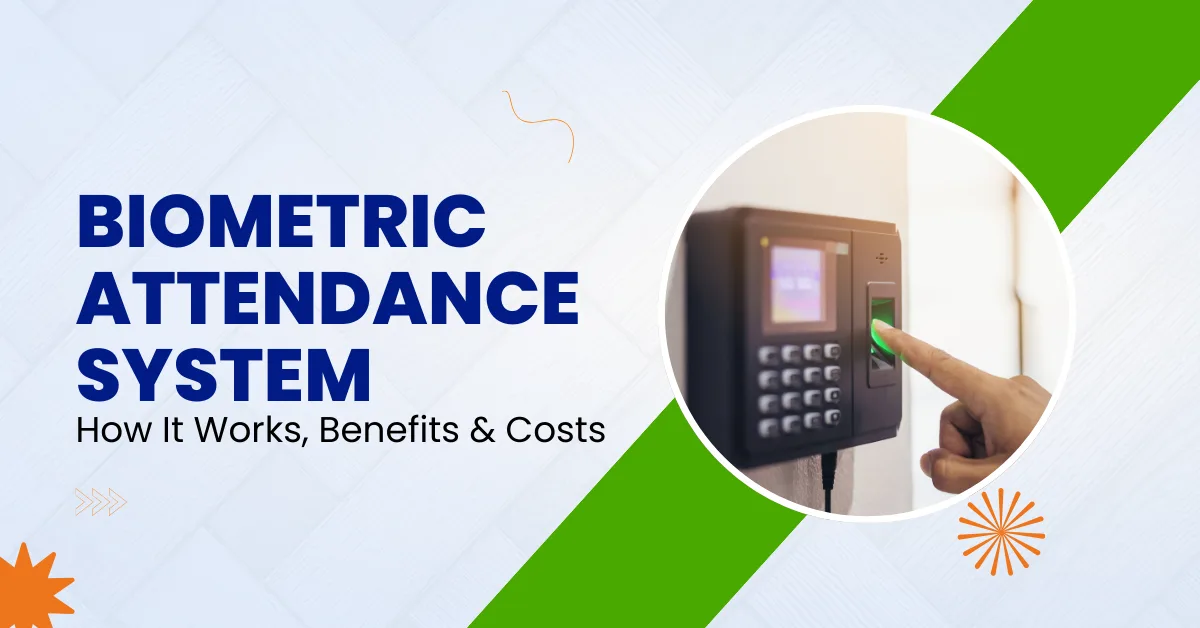
A biometric attendance system is an attendance system that identifies employees using biometric technology. Instead of signing registers or swiping cards, employees verify their identity using fingerprints, face recognition, or hand geometry.
Biometric attendance systems rely on unique physical characteristics that cannot be shared or copied easily. This makes biometric attendance highly accurate and secure.
In simple terms, biometric attendance replaces traditional methods with identity-based verification.
Why Businesses Are Adopting Biometric Attendance Systems
Organizations across industries are adopting biometric systems because traditional attendance methods create gaps.
Manual attendance registers lead to human error. Card-based systems allow buddy punching. Passwords get shared. These problems directly impact attendance records and payroll accuracy.
A biometric attendance system solves these issues by linking attendance directly to an employee’s identity.
How a Biometric Attendance System Works
Understanding how a biometric attendance system works helps businesses trust the process.
The system follows a clear and structured workflow.
Step 1: Employee Enrollment
Each employee is enrolled in the biometric system.
During enrollment, the system captures biometric data such as fingerprints or facial images. These details are converted into digital templates using coordinates defined by the system.
No raw image is stored. Only encrypted biometric data templates are saved.
Step 2: Biometric Verification
When employees report to work, they place a finger on the fingerprint scanner or stand before a face recognition device.
The biometric system captures the biometric input and converts it into electronic pulses or image-based technology data.
Step 3: Matching and Authentication
The system compares the captured biometric data with stored templates.
Matching happens using merge points and various coordinates unique to the employee.
If matched successfully, the employee gains access, and attendance is recorded.
Step 4: Attendance Data Recording
Once verified, attendance data is stored automatically.
The system logs:
- Entry time
- Exit time
- Work hours
- Absent employees
This attendance data syncs with payroll systems for accurate payroll processing.
Types of Biometric Attendance Systems
Different workplaces use different biometric attendance systems based on size, environment, and security needs. Each system works by identifying employees through unique physical traits, but the technology and use cases vary.
1. Fingerprint Attendance System
The fingerprint attendance system is the most widely used biometric technology in offices and factories. It verifies employee attendance by scanning the unique ridges and valleys of a person’s fingerprint.
This system uses capacitive technology, which detects electrical signals created by fingerprint patterns. Every employee’s fingerprint is unique, making this method highly reliable for daily attendance tracking.
Why organizations choose fingerprint systems:
- It provides highly accurate employee identification every working day.
- It is cost-effective for small and medium-sized businesses.
- It is easy to install, use, and maintain long-term.
Fingerprint attendance systems work best in standard office environments where employees clock in regularly.
2. Facial Recognition Attendance System
Facial recognition attendance systems use image-based technology to identify employees by analyzing facial features. The system maps key facial points, such as eye position, nose shape, and facial structure, using predefined coordinates.
Unlike fingerprint systems, facial recognition does not require physical contact. Employees simply stand in front of the camera, and attendance is recorded automatically.
Why are facial recognition systems preferred?
- It enables touchless attendance, improving workplace hygiene.
- It works well in environments where fingerprints may be damaged.
- It is ideal for large organizations with high employee movement.
Facial recognition systems are commonly used in corporate offices, hospitals, and high-traffic workplaces.
3. Hand Geometry Attendance Systems
Hand geometry systems identify employees by measuring the shape, length, and width of the hand. Instead of scanning fingerprints, the system captures hand dimensions and compares them with stored templates.
This method focuses on physical hand structure rather than surface details, making it stable over time.
Why are hand geometry systems used?
- It offers stable verification with low error rates.
- It is less affected by cuts, dirt, or fingerprint damage.
- It is suitable for restricted or high-security areas.
Hand geometry systems are often used in factories, research facilities, and controlled-access workplaces.
Choosing the Right Biometric System
The best biometric attendance system depends on workplace conditions, employee volume, and security requirements. Fingerprint systems suit most offices, facial recognition works well for hygiene-focused environments, and hand geometry fits restricted access areas.
At Bharat Payroll, we help organizations select and integrate the right biometric attendance system to ensure accurate attendance tracking and smooth payroll processing.
How Biometric Attendance Improves Employee Identification
Biometric attendance systems verify the employee’s identity, not a card or code.
Each person has unique fingerprints and facial features. These cannot be duplicated or shared.
This provides a significant advantage over traditional attendance systems.
Key Benefits of Biometric Attendance Systems
A biometric attendance system offers several benefits for employers and HR teams.
Core Benefits
- Prevents buddy punching and proxy attendance completely.
- Improves attendance records with highly accurate data.
- Reduces human error in daily attendance tracking.
- Supports accurate payroll calculations without manual corrections.
- Strengthens access control for restricted workplace areas.
- Saves money by reducing payroll leakage.
- Improves workforce efficiency and accountability.
- Enhances security using biometric verification.
These benefits explain why biometric attendance systems are widely used.
Biometric Attendance vs Traditional Attendance Methods
Traditional methods depend on trust and manual processes.
Biometric attendance depends on identity verification.
Key Differences
| Feature | Traditional Methods | Biometric Attendance |
|---|---|---|
| Identity verification | Weak | Highly accurate |
| Proxy attendance | Common | Eliminated |
| Human error | High | Minimal |
| Payroll accuracy | Inconsistent | Reliable |
| Security | Low | Completely secure |
Biometric attendance clearly delivers a significant benefit.
Role of Biometric Attendance in Payroll Accuracy
Attendance and payroll are directly connected.
Incorrect attendance data leads to incorrect salaries.
Biometric attendance ensures:
- Exact work hours calculation
- Accurate overtime tracking
- Reliable absent employees reporting
At Bharat Payroll, biometric attendance data integrates smoothly with payroll systems to ensure accurate payroll every cycle.
Is Biometric Data Safe
Many employers ask whether biometric systems are safe.
Modern biometric systems are designed with security in mind.
How Biometric Systems Protect Sensitive Data
- Biometric data is encrypted and stored securely.
- Raw fingerprint images are not saved.
- Only biometric templates are stored.
- Access is restricted to authorized systems.
Biometric systems are safe when implemented correctly.
Environmental Factors and Biometric Accuracy
Environmental factors can affect biometric systems.
For example:
- Wet fingers may affect fingerprint scanning.
- Poor lighting can impact face recognition accuracy.
Modern biometric technology adapts to these challenges using advanced sensors and image processing.
Controlling Access With Biometric Attendance Systems
Biometric attendance systems also support access control.
Employees gain access only after identity verification.
This helps organizations:
- Protect restricted areas
- Control sensitive work zones
- Improve workplace safety
This added benefit improves overall security.
Industries Using Biometric Attendance Systems
Biometric attendance is used across industries.
Common examples include:
- Manufacturing companies
- IT and software firms
- Healthcare facilities
- Retail chains
- Educational institutions
Any organization managing employee attendance benefits from biometric systems.
Costs of Biometric Attendance Systems
Understanding costs helps with planning.
Cost Components
- Biometric device cost
- Software licensing
- Installation charges
- Integration with payroll systems
- Maintenance and support
Typical Cost Range (India)
The cost of a biometric attendance system depends on the type of device, deployment size, and software requirements.
- Fingerprint devices are generally affordable and suitable for small to mid-sized workplaces.
- Facial recognition devices involve higher investment due to advanced image-based technology and touchless operation.
- Software and system integration costs vary based on employee count, reporting needs, and payroll connectivity.
Although initial setup requires investment, organizations often see long-term savings through improved attendance accuracy, reduced manual effort, and better payroll control.
Why Biometric Attendance Is a Smart Investment
Biometric attendance reduces payroll leakage, saves HR time, and improves efficiency.
Over time, organizations recover costs through:
- Reduced payroll errors
- Lower administrative effort
- Better attendance discipline
This creates measurable business value.
How Bharat Payroll Supports Biometric Attendance
At Bharat Payroll, we help organizations connect biometric attendance systems with payroll workflows.
Our approach focuses on accuracy, compliance, and ease of use.
How Bharat Payroll Helps
- Integrates biometric attendance with payroll systems.
- Ensures accurate payroll using verified attendance data.
- Reduces manual HR work and payroll errors.
- Supports compliance with labor regulations.
- Improves workforce transparency and efficiency.
Our solutions are designed for Indian businesses of all sizes.
Conclusion
Biometric attendance systems have become essential in the modern workplace. They improve attendance accuracy, eliminate proxy attendance, strengthen security, and support accurate payroll.
At Bharat Payroll, we help organizations use biometric attendance data effectively to build reliable payroll systems and efficient workforce management. When attendance is accurate, payroll becomes simpler, trust improves, and businesses grow with confidence.
Smarter Attendance for Accurate Payroll
Use biometric attendance systems that eliminate errors, prevent proxy attendance, and ensure accurate payroll processing.
Frequently Asked Questions
1. What is a biometric attendance system
A biometric attendance system records employee attendance using unique physical characteristics like fingerprints or facial recognition. It ensures accurate identification, prevents proxy attendance, and improves attendance records while supporting accurate payroll and better workforce management.
2. How does a biometric attendance system work
A biometric attendance system works by enrolling employee biometric data, capturing it during attendance, matching it with stored templates, and recording verified attendance data automatically. This process removes human error and ensures reliable employee identification.
3. Is biometric attendance safe for employees?
Yes. Biometric systems store encrypted biometric templates, not raw images. Sensitive data remains protected, access is restricted, and modern biometric technology follows strict security standards to keep employee data safe.
4. What are the benefits of biometric attendance systems
Biometric attendance systems prevent buddy punching, improve attendance accuracy, support accurate payroll, reduce manual work, enhance access control, and increase workplace efficiency while saving time and money for organizations.
5. How does Bharat Payroll support biometric attendance
Bharat Payroll integrates biometric attendance systems with payroll workflows to ensure accurate salary calculations, reduce errors, support compliance, and improve HR efficiency for organizations across industries.