
Payroll in India is changing rapidly.
The discussion around automated payroll systems vs manual payroll 2026 trends is no longer theoretical. It affects compliance. It impacts payroll accuracy. It influences employee satisfaction. It shapes HR strategy.
At Bharat Payroll, we work with Indian businesses managing increasing compliance complexity, evolving tax rules, and rising employee expectations. Many organizations still rely on manual payroll. But 2026 clearly favors payroll automation.
Let us break this down clearly.
What Is the Difference Between Automated Payroll Systems and Manual Payroll?
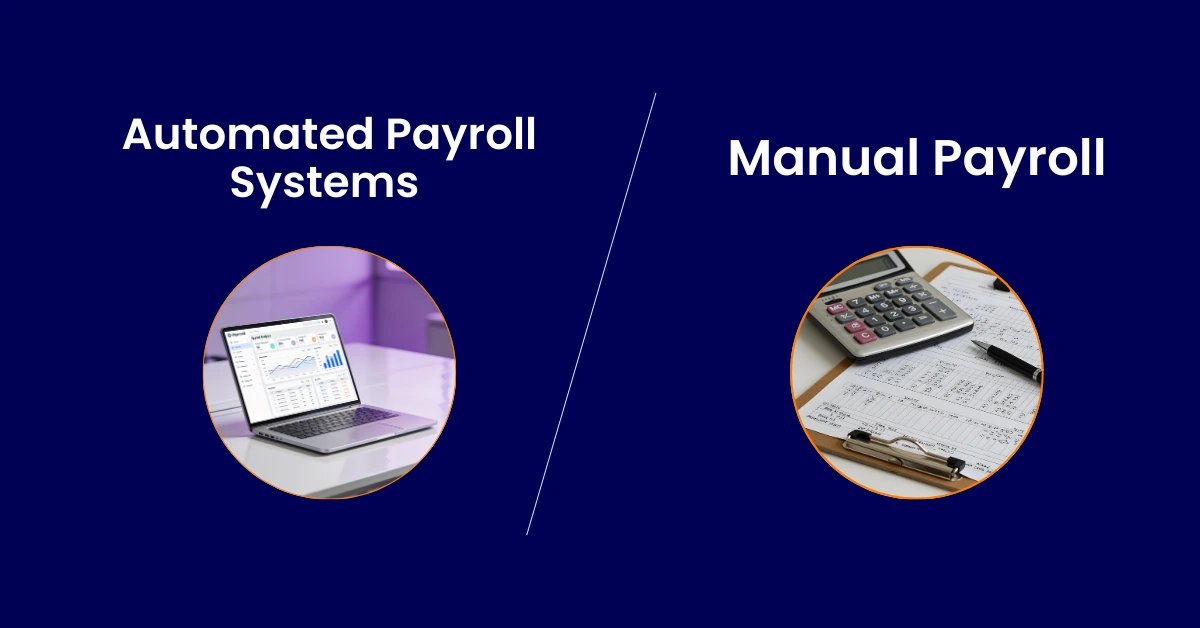
Automated payroll systems use payroll software to calculate salaries, tax withholdings, statutory deductions, and compliance reporting with minimal manual intervention. Manual payroll relies on spreadsheets, manual data entry, and manual processing, increasing payroll errors, compliance risks, and payroll processing time in 2026.
This difference matters more than ever in India.
What Is Manual Payroll?
Manual payroll depends on spreadsheets and manual entry. The payroll team calculates salaries, tax slabs, and statutory deductions without automated systems.
Manual Payroll Typically Includes
- Manual data entry for attendance data and salaries.
- Separate tracking of benefits deductions and leave records.
- Manual calculation of tax withholdings each pay cycle.
- Filing tax returns through offline compliance processes.
- Updating compliance rules without automatic validation tools.
Manual processing increases administrative workload. It also increases compliance risks under Indian labor laws.
Even a small payroll mistake can damage employee trust.
What Is Payroll Automation?
Payroll automation uses payroll software and cloud-based solutions. These automated systems integrate payroll with HR data, time tracking, and workforce management.
Payroll Automation Provides
- Automated validation of statutory deductions and tax rules.
- Real-time reporting dashboards for business leaders.
- Automatic compliance updates for regulatory changes.
- Employee self-service access to pay information.
- Complete audit trails for compliance reporting.
Modern payroll systems reduce payroll processing time. They ensure fewer payroll errors and stronger regulatory compliance.
Why 2026 Is a Turning Point for the Indian Payroll Market
India’s payroll landscape is becoming more regulated.
Compliance requirements now include:
- Frequent updates in tax slabs.
- Changing employment laws and labor codes.
- Mandatory digital tax filings.
- Increased compliance reporting transparency.
- Growing compliance complexity for global organizations.
Businesses should monitor official guidance under Indian labour lawsand compliance guidelines.
They must also follow updated tax slabs under the latest tax slabs, and tax rules updates from the Income Tax Department.
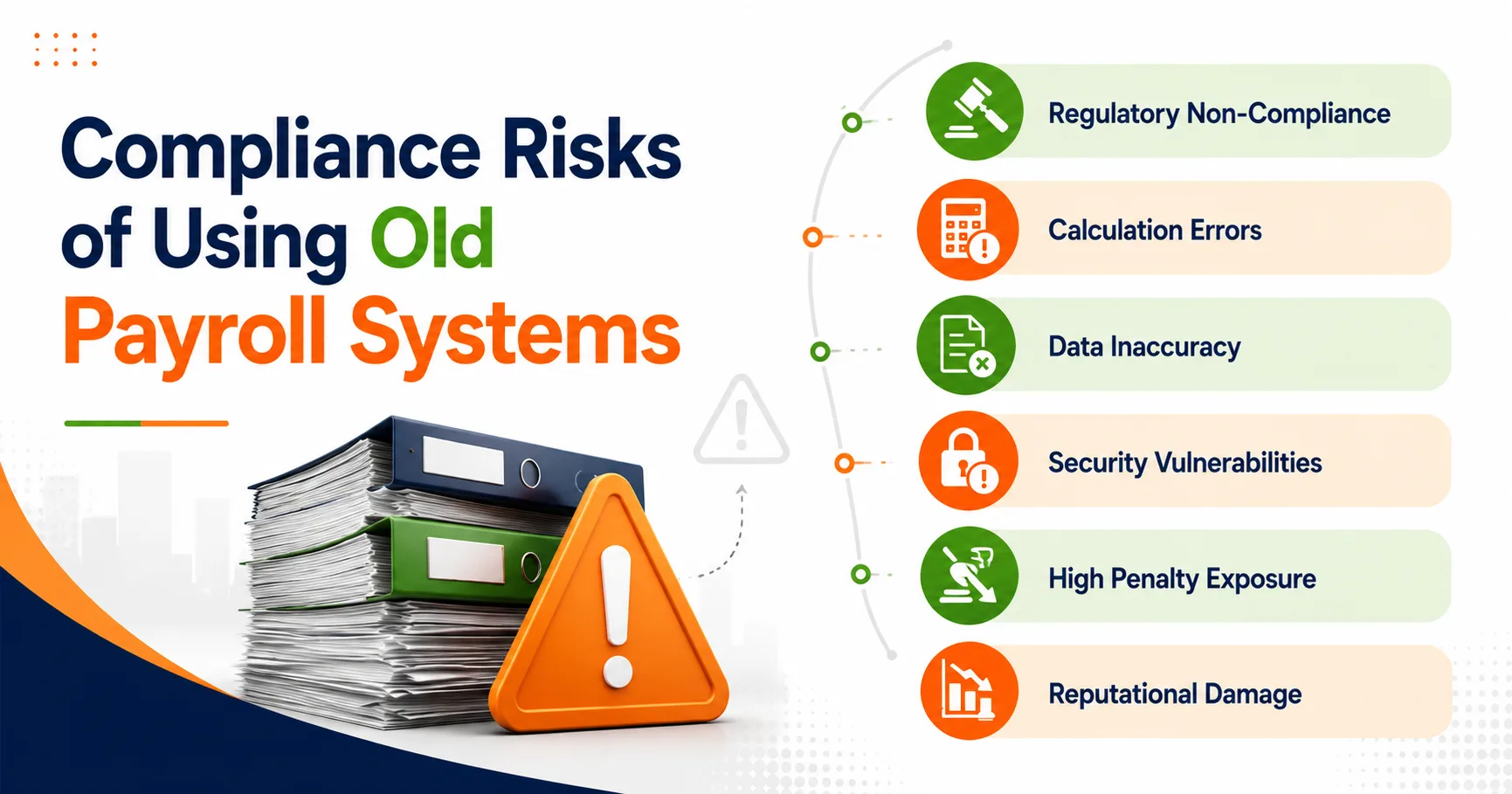
Regulatory changes increase compliance risks for manual payroll systems.
Automated Payroll Systems vs Manual Payroll: 2026 Comparison
| Key Factor | Manual Payroll | Automated Payroll Systems |
|---|---|---|
| Payroll processing time | Slower due to manual entry | Faster with minimal manual intervention |
| Payroll accuracy | Higher risk of payroll mistakes | Fewer payroll errors through automated validation |
| Compliance risks | High due to regulatory changes | Strong compliance support with automatic updates |
| Administrative workload | Heavy repetitive tasks for the payroll team | Reduced workload for HR teams |
| Real-time reporting | Limited visibility for business leaders | Instant dashboards and analytics |
| Global payroll support | Difficult for global organizations | Scalable for global payroll operations |
Operational efficiency is the key differentiator in 2026.
Compliance Risks Are Increasing in India
Labor laws are evolving. Tax rules are tightening. Compliance requirements are expanding.
Manual payroll systems struggle to:
- Maintain compliance across multiple states.
- Update compliance rules after regulatory changes.
- Handle statutory deductions correctly each month.
- Generate structured compliance reporting.
- Support compliance during business expansion.
Payroll automation ensures automatic compliance updates and structured audit trails. This significantly reduces compliance risks.
Cost of Manual Payroll vs Automated Payroll in 2026
Many organizations focus only on software cost. The real comparison is broader.
| Cost Factor | Manual Payroll | Automated Payroll |
|---|---|---|
| Payroll team effort | High manual processing time | Minimal manual intervention |
| Payroll mistakes cost | Frequent correction expenses | Fewer payroll errors |
| Compliance penalties | Higher compliance risks | Automatic compliance updates |
| Administrative workload | Heavy repetitive tasks | Streamlined workflows |
| Reporting capabilities | Limited real-time reporting | Instant compliance reporting |
| Scalability for growth | Difficult for expansion | Supports global payroll |
Hidden Manual Payroll Costs
- Time lost in manual data entry.
- Audit stress during regulatory changes.
- Delayed statutory deductions reconciliation.
- Extra employee training for payroll systems.
- Increased payroll processing time each month.
When total operational impact is measured, payroll automation becomes more cost-effective.
Payroll Automation ROI Example in India
Let us consider a 100-employee Indian company.
Manual Payroll Impact
- 24 hours spent per pay cycle.
- 288 hours spent per year.
- ₹600 average hourly payroll cost.
- ₹1,72,800 annual payroll labor cost.
- 3–5 payroll mistakes per quarter.
Automated Payroll Impact
- 8 hours spent per pay cycle.
- 96 hours spent per year.
- ₹57,600 annual payroll labor cost.
- 60% reduction in payroll processing time.
- 80% fewer payroll errors through automated validation.
Estimated Annual Savings
- ₹1,15,200 labor savings.
- ₹50,000–₹1,00,000 reduced compliance penalty risk.
- Improved workforce stability and employee satisfaction.
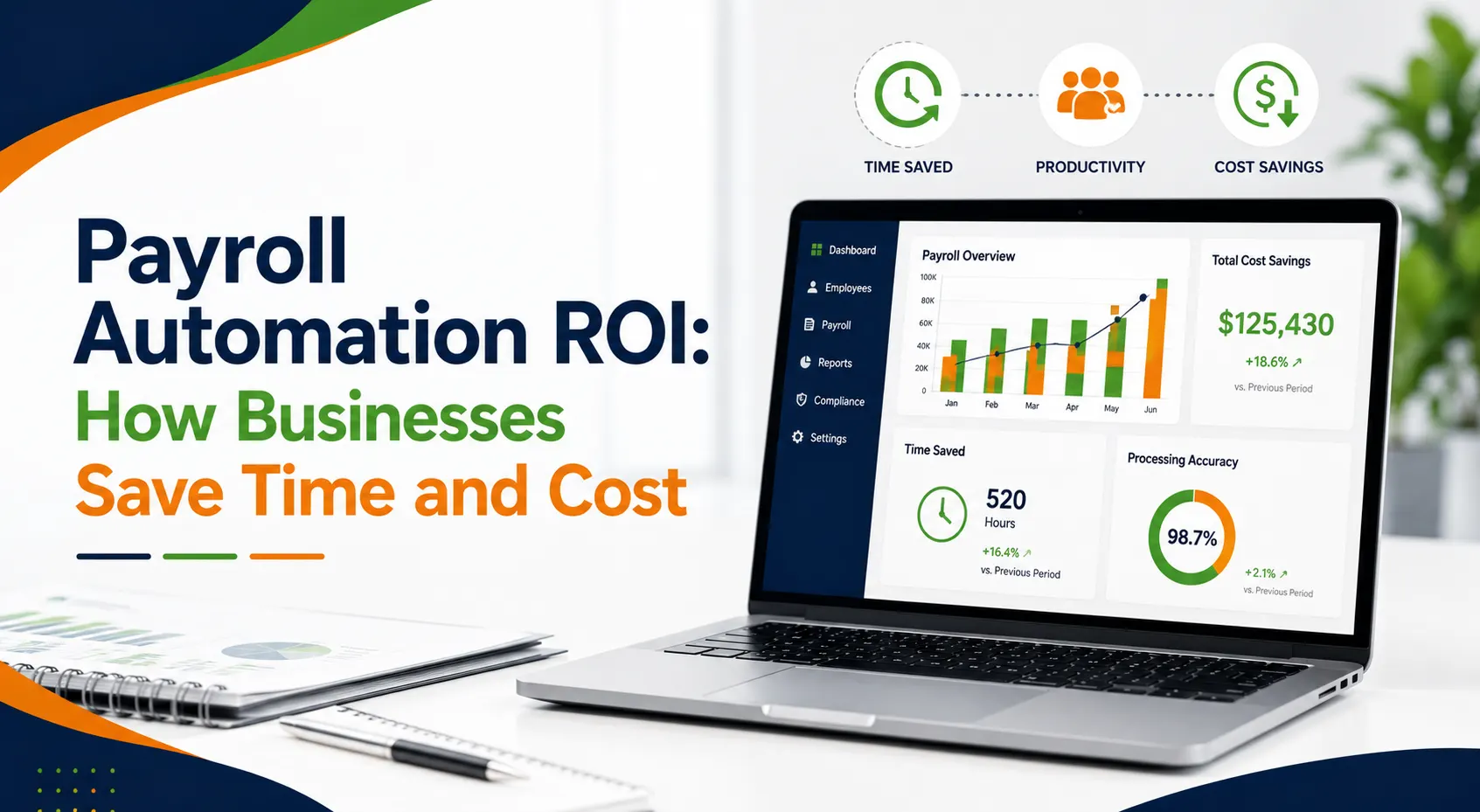
Within one year, payroll automation delivers measurable ROI.
What Would Payroll Automation Save Your Business?
If your organization processes payroll for 50, 100, or 500 employees, the cost difference becomes even more significant.
- Every hour saved reduces administrative overhead.
- Every compliance error avoided prevents penalties.
- Every automation improves employee satisfaction.
Case Study: How an Indian SME Reduced Payroll Errors by 70%
Company Profile
- 150-employee IT services firm.
- Operating across two Indian states.
- Managing multiple salary structures.
Challenges Faced
- Frequent payroll mistakes in tax slabs.
- Delays in statutory deductions filings.
- High administrative workload for the payroll team.
- Compliance complexity across state regulations.
Solution Implemented
The company adopted automated payroll systems integrated with:
- Attendance data and time tracking.
- Automated validation for tax rules.
- Real-time reporting dashboards.
- Employee self-service access.
- Automatic compliance updates.
Results Achieved
- 70% reduction in payroll errors.
- 50% reduction in payroll processing time.
- Zero compliance penalties during audits.
- Improved employee satisfaction internally.
This reflects broader payroll trends in India in 2026.
Changing Employee Expectations in India
Employees expect:
- Transparent pay information through self-service portals.
- Clear breakdown of statutory deductions and tax slabs.
- Faster resolution of payroll mistakes.
- Support for financial wellness initiatives.
- Secure access to payroll data anytime.
Modern payroll platforms meet these expectations. Manual payroll systems cannot.
Payroll Compliance Challenges in India: 2026 Outlook
Compliance complexity in India is increasing.
Businesses must manage:
- Provident Fund and ESI calculations.
- Professional tax across states.
- TDS and tax filings accuracy.
- Labor code compliance reporting.
- Frequent regulatory changes.
Manual payroll struggles to maintain compliance under evolving compliance requirements.
Automated payroll platforms support compliance through:
- Automatic compliance updates.
- Structured compliance reporting tools.
- Audit trails for tax filings.
- Integrated statutory deductions tracking.
- Real-time regulatory compliance dashboards.
For HR leaders, compliance automation reduces stress and financial exposure.
How Payroll Automation Supports Modern HR Strategy in India
Payroll is no longer transactional. It supports HR strategy.
Modern HR teams focus on:
- Workforce management integration.
- Financial wellness initiatives.
- Earned wage access programs.
- Employee expectations around pay transparency.
- Data-driven decision making.
Automated payroll systems enable:
- Integration with HR data and attendance systems.
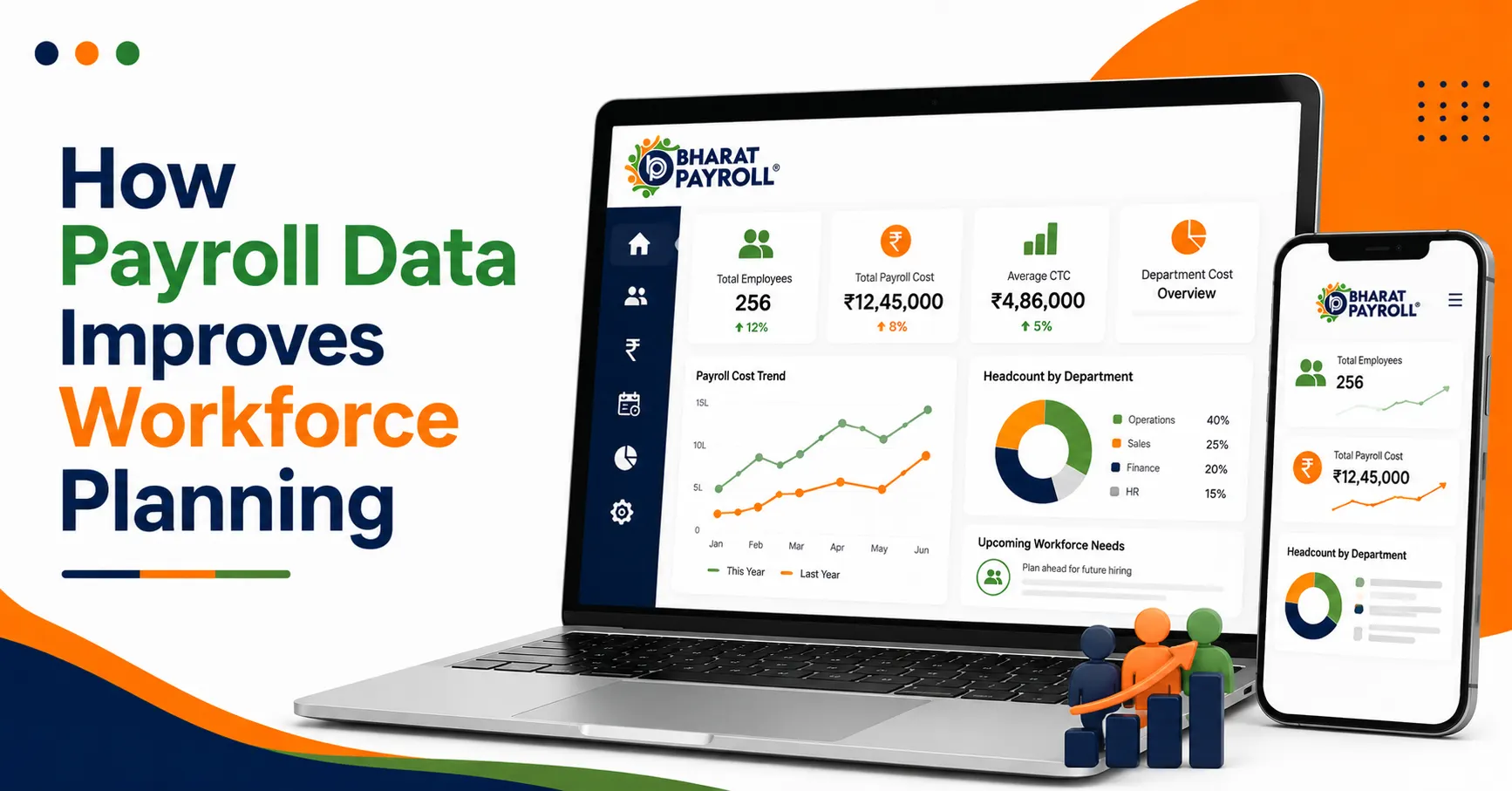
- Real-time reporting for labor costs.
- Exception management for payroll adjustments.
- Employee self-service empowerment.
- Improved employee well-being through transparency.
Payroll automation aligns payroll operations with long-term business strategy.
When Should Indian Businesses Switch?
Switch to payroll automation when:
- Payroll processing time exceeds operational capacity.
- Compliance complexity increases across locations.
- Payroll mistakes impact employee satisfaction.
- HR teams struggle with repetitive tasks.
- Business leaders need real-time reporting insights.
If payroll correction takes longer than payroll analysis, it is time to modernize.
Why Indian Businesses Choose Bharat Payroll
Bharat Payroll is built specifically for Indian compliance complexity.
We provide:
• Automatic statutory deduction validation
• Multi-state compliance management
• Real-time payroll dashboards
• Seamless HR and attendance integration
• Audit-ready reporting tools
• Secure cloud-based payroll infrastructure
Unlike generic payroll software, Bharat Payroll is designed for Indian regulatory realities.
Final Thoughts
The comparison between automated payroll systems vs manual payroll 2026 trends in India is clear.
Manual payroll increases compliance risks and payroll processing time. It raises the administrative workload. It increases payroll mistakes.
Automated payroll systems ensure payroll accuracy, automatic compliance updates, and operational efficiency.
At Bharat Payroll, we help Indian businesses modernize payroll operations with secure, compliant, and scalable payroll platforms built for today’s regulatory environment.
The future of payroll in India is automated.
Upgrade Payroll Today for Better Compliance and Accuracy in 2026
Manual payroll increases compliance risks. Switch to automated payroll systems for accuracy, efficiency, and regulatory confidence in 2026.
Frequently Asked Questions
1. What are automated payroll systems vs manual payroll 2026 trends in India?
In India, automated payroll systems are replacing manual payroll because compliance complexity and regulatory changes are increasing. Payroll automation reduces payroll mistakes, improves compliance reporting, and shortens payroll processing time.
2. Why is manual payroll risky in 2026?
Manual payroll increases compliance risks due to manual data entry and manual processing. Frequent tax slab updates and evolving labor laws make manual payroll more prone to payroll errors and compliance failures.
3. How does payroll automation improve payroll accuracy?
Payroll automation uses automated validation and compliance rules to calculate statutory deductions and tax withholdings. It reduces payroll errors and ensures structured audit trails for regulatory compliance.
4. Is payroll automation suitable for small businesses?
Yes. Small businesses benefit from payroll automation because it reduces administrative workload, improves operational efficiency, and ensures compliance reporting accuracy.
5. How does payroll automation support HR teams?
Payroll automation integrates payroll with workforce management and attendance data. It reduces repetitive tasks and provides real-time reporting insights for HR leaders.