

Payroll compliance in India refers to the legal responsibility employers carry while paying employees. It includes tax deductions, statutory contributions, labour law adherence, and maintaining salary records according to Indian regulations.
For many organisations, payroll seems like a routine administrative process. Yet payroll compliance in India operates under a layered legal structure involving income tax rules, social security contributions, labour laws, and state-level regulations.
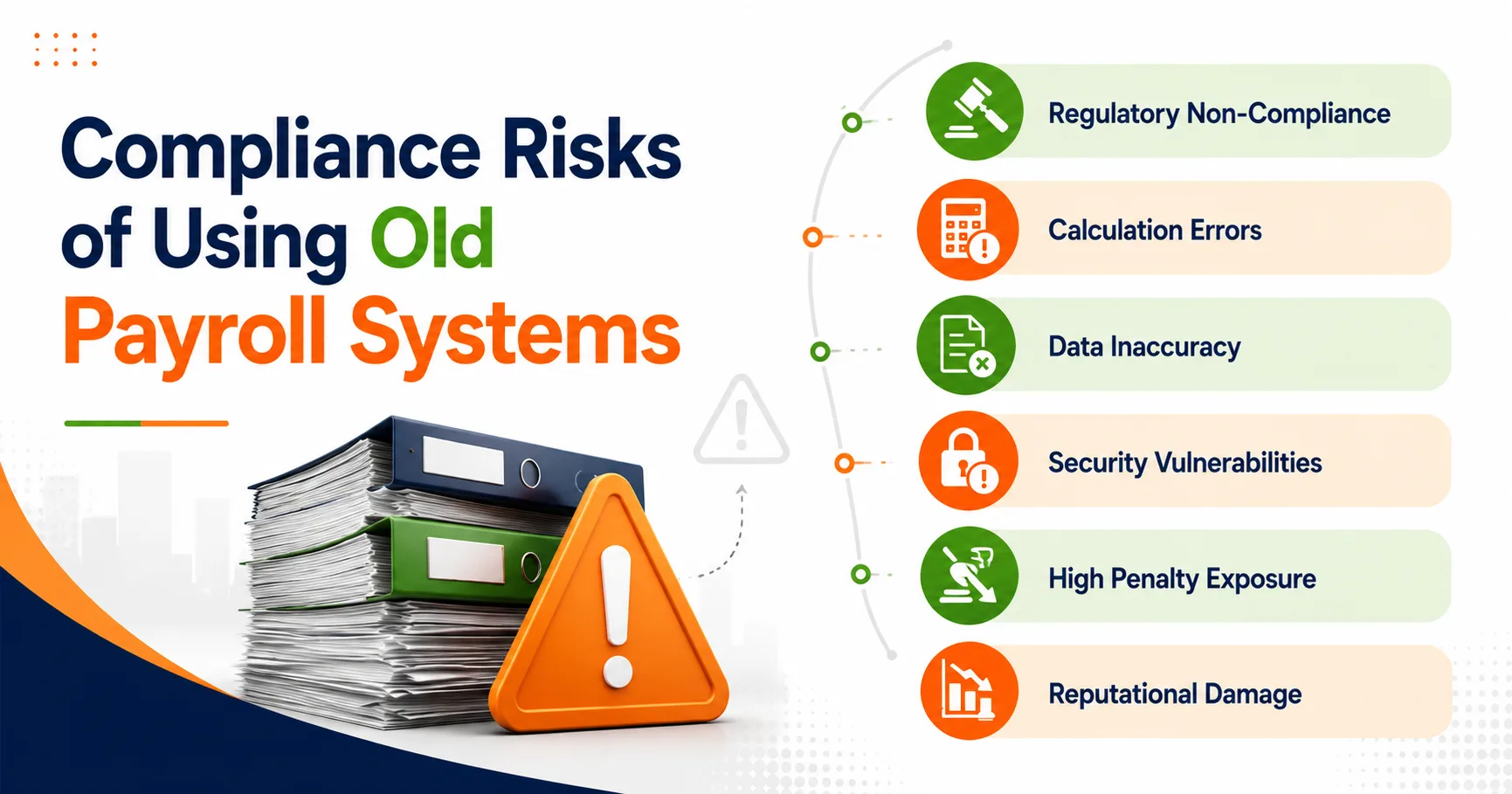
When payroll compliance fails, the consequences go beyond salary corrections. Businesses may face penalties, statutory notices, financial liabilities, and operational disruption.
According to labour compliance studies, payroll errors and delayed statutory deposits are among the most common compliance violations reported during labour inspections. Modern companies, therefore, treat payroll compliance as a business discipline rather than a back-office task.
This guide explains how payroll compliance works in India, the regulations employers must follow, the risks of non-compliance, and the practical steps businesses should take to maintain payroll compliance in 2026.
Is Your Payroll Fully Compliant Right Now?
Many organisations assume their payroll process is compliant because salaries are processed every month. In practice, payroll compliance involves far more than salary disbursement.
Employers must calculate tax deductions correctly, deposit statutory contributions on time, maintain payroll records, and submit regulatory filings within deadlines. A single oversight in any of these areas can create compliance exposure.
Businesses managing payroll through spreadsheets, disconnected HR tools, or manual calculations often face higher compliance risk. As companies grow and hire across multiple locations, monitoring payroll regulations becomes more demanding.
Regular compliance reviews help organisations confirm that their payroll process aligns with current labour laws and statutory requirements.
What Payroll Compliance Means for Employers in India
Payroll compliance refers to the obligation employers must follow when compensating employees under Indian tax and labour regulations.
It includes several responsibilities:
- Salary calculations must follow legal wage definitions.
- Income tax deductions must follow the applicable tax regime.
- Statutory contributions must be deposited within prescribed deadlines.
- Payroll records must remain accessible for inspection and audits.
Payroll compliance in India, therefore, covers three core responsibilities:
- Accurate salary processing
- Timely statutory deposits
- Maintaining legally required payroll records
Companies managing payroll across multiple locations must also monitor state-specific labour regulations, professional tax rules, and local compliance requirements.
Why Payroll Compliance Matters for Indian Businesses
Payroll compliance protects a company from legal exposure and financial penalties. Yet its importance extends beyond regulatory obligations.
1. Financial protection
Incorrect tax deductions, delayed statutory deposits, or missed filings can lead to interest charges, financial penalties, and compliance notices from authorities.
2. Operational continuity
Regulatory scrutiny often forces companies to review records, correct past filings, and reconcile financial data. These processes consume significant management time.
3. Employee trust
Salary accuracy directly affects employee confidence. When payroll records are transparent, and deductions remain correct, employees feel secure about their earnings.
4. Business credibility
Investors, partners, and auditors frequently review payroll records during due diligence processes. Consistent compliance signals operational discipline.
For growing businesses, payroll compliance becomes even more important as employee count increases and statutory obligations expand.
Key Payroll Laws Governing Payroll Compliance in India for Employers
Indian payroll regulations operate through several central labour laws and tax regulations. These laws define how salaries must be calculated, deducted, and reported.
1. Code on Wages
This legislation standardises wage definitions and requires timely salary payments. It also establishes minimum wage protections across sectors.
2. Employees’ Provident Fund Act
Employers with twenty or more employees must contribute to the provident fund savings. Both employer and employee contributions usually equal twelve percent of basic salary.
3. Employees’ State Insurance Act
This scheme provides medical benefits and social security coverage for eligible employees. Employers and employees both contribute to the insurance fund.
4. Income Tax Act
Employers must deduct income tax from employee salaries through the TDS mechanism and deposit it with the Income Tax Department within specified timelines.
5. Professional Tax Regulations
State governments impose a professional tax on employees. The applicable rates vary between states such as Maharashtra, Karnataka, and West Bengal.
6. Payment of Bonus Act
Companies employing twenty or more employees must provide statutory bonuses ranging from 8.33 percent to 20 percent of eligible wages.
Understanding these laws is the foundation of payroll compliance in India.
Core Areas of Payroll Compliance in India
Payroll compliance involves several operational activities within a payroll cycle.
1. Salary calculation and wage structure
Employers must calculate salaries based on legally defined wage structures. Incorrect structuring can affect statutory contributions and bonus calculations.
2. Income tax deduction
Companies must calculate employee income tax accurately based on declared deductions, applicable tax regimes, and salary components.
3. Statutory contributions
Provident fund and ESI contributions must be calculated and deposited within the monthly deadlines.
4. Payroll documentation
Employers must maintain salary registers, payslips, deduction records, and statutory challans for inspection.
5. Statutory filings
Companies must submit required returns such as quarterly TDS filings and monthly PF returns.
These activities together form the operational framework of payroll compliance in India.
The Hidden Cost of Payroll Non-Compliance
Payroll compliance failures rarely appear immediately. In many cases, issues accumulate quietly until authorities review filings or conduct inspections.
Companies commonly discover payroll mistakes during audits, due diligence reviews, or employee disputes. Some of the financial consequences businesses encounter include:
- Interest charges on delayed provident fund deposits
- Penalties for late income tax deductions and payments
- Retrospective statutory contributions for past payroll cycles
- Regulatory notices requesting payroll documentation
- Legal action under applicable labour laws
Correcting payroll compliance gaps after they occur usually requires significant time, financial adjustments, and administrative effort.
Maintaining accurate payroll records and monitoring statutory deadlines helps organisations reduce the likelihood of such issues.
Common Payroll Compliance Mistakes Businesses Make
Several recurring mistakes cause payroll compliance failures.
- Incorrect salary structuring that violates wage definitions
- Late statutory deposits for PF or ESI contributions
- Errors in TDS calculation or reporting
- Misclassification of contractors and employees
- Incomplete payroll records during audits
- Ignoring state-level professional tax rules
Even small payroll mistakes can escalate when the employee count grows or when organisations expand into multiple states. Regular compliance reviews help businesses identify gaps early and correct payroll processes before penalties arise.
Signs Your Business Is Struggling With Payroll Compliance
Several operational indicators suggest that payroll compliance processes may require improvement.
- HR teams spend several days each month preparing payroll
- Frequent last-minute statutory filings before deadlines
- Payroll calculations managed entirely through spreadsheets
- Difficulty tracking compliance rules across multiple states
- Repeated employee queries about deductions or payslips
- Uncertainty about the new labour code requirements
Businesses experiencing these situations often benefit from structured payroll systems that organise compliance tracking and payroll documentation in a single environment.
Payroll Compliance Checklist 2026
Maintaining payroll compliance in India requires structured monitoring throughout the financial year. A simple checklist helps businesses confirm that payroll obligations are completed correctly.
i. Registration and employee documentation
Employers must register with EPFO and ESIC and obtain a TAN for tax deductions. Employee onboarding documentation, such as PAN, Aadhaar, bank details, and employment agreements, must remain on record.
ii. Salary structure validation
Salary components should follow wage definitions under labour regulations. Incorrect structures can affect PF calculations, gratuity eligibility, and bonus applicability.
iii. Income tax deduction and deposits
Employers must calculate tax deductions according to the employee’s chosen tax regime. TDS must be deposited before the 7th of the following month.
iv. Provident fund and ESI deposits
Employer and employee contributions must be deposited before the statutory due date to prevent interest charges.
v. Payroll filings
Quarterly TDS filings, EPF returns, and professional tax submissions must be completed within regulatory timelines.
vi. Payroll documentation
Payslips, salary registers, attendance records, and statutory challans should remain accessible for inspection and audit purposes.
Regular internal reviews using a compliance checklist help businesses identify gaps before they become regulatory issues.
Multi-State Payroll Compliance
Organisations operating across multiple states encounter additional payroll obligations. Labour laws may originate from central legislation, yet several payroll rules vary at the state level.
1. Professional tax differences
Professional tax rates and filing deadlines differ between states. Maharashtra, Karnataka, and West Bengal follow different tax slabs and compliance calendars.
2. Minimum wage regulations
State governments revise minimum wage notifications periodically based on industry and skill classification.
3. Labour welfare fund contributions
Some states mandate labour welfare fund deductions. These contributions must be deposited within state-specific timelines.
4. Shops and Establishments regulations
Working hours, leave rules, and employment registers may vary across states.
Managing multi-state payroll compliance requires continuous monitoring of state notifications. Businesses expanding across cities often rely on payroll software to track these differences accurately.
Hybrid Payroll Compliance
Hybrid work arrangements have changed how payroll compliance operates. Employees may work remotely while being employed by companies registered in different states.
This creates additional payroll considerations.
State employment registration
Companies must confirm whether remote employees fall under the employment laws of their home state or the employer’s registered location.
Professional tax implications
Remote workers may trigger professional tax obligations in their state of residence.
Attendance and work hour documentation
Even with flexible work arrangements, employers must maintain working hour records aligned with labour regulations.
Payroll location reporting
Employee work location may affect labour compliance filings and state-level registrations.
As hybrid work becomes common, payroll teams must track employee work locations carefully to avoid compliance gaps.
Payroll Audit Preparation Guide
Payroll audits may occur during financial audits, statutory inspections, or due diligence reviews. Preparing payroll documentation early helps organisations avoid last-minute compliance stress.
1. Maintain accurate payroll registers
Salary registers should contain employee earnings, deductions, and net payments for each payroll cycle.
2. Verify statutory challans
Deposit confirmations for PF, ESI, and tax payments must remain accessible for review.
3. Cross-check payroll records with filings
Payroll reports should match statutory filings submitted to authorities.
4. Store payroll documentation securely
Payroll records often require retention for several years, depending on regulatory requirements.
5. Conduct internal compliance reviews
Quarterly payroll reviews help identify calculation errors or missed filings before regulatory authorities detect them.
Strong audit preparation reduces compliance risk and protects organisations during regulatory inspections.
Payroll Compliance for Startups
Startups often treat payroll as a simple operational task during early growth stages. Yet compliance obligations apply even to small teams. Early-stage companies must pay attention to several areas.
Salary structure planning
Improper salary structuring may affect statutory benefits, tax deductions, and compliance filings later.
Employee classification
Startups frequently hire consultants or contract workers. Incorrect classification can trigger statutory liabilities.
Statutory registration
Once employee thresholds are crossed, companies must register under PF and ESI regulations.
Compliance calendar management
Missing statutory deadlines is common when startups manage payroll manually.
Adopting structured payroll systems early helps startups avoid compliance complications as their workforce expands.
Payroll Compliance Penalties in India
Non-compliance with payroll regulations can result in financial penalties and legal consequences.
i. Provident fund violations
Delayed PF deposits attract interest charges and additional damages depending on the delay period.
ii. Income tax violations
Late TDS deposits or incorrect filings may trigger interest, penalties, and notices from tax authorities.
iii. Minimum wage violations
Employers paying below the statutory minimum wage levels may face legal action under labour laws.
iv. Documentation failures
Failure to maintain payroll registers and statutory records may result in fines during labour inspections.
Repeated payroll violations can escalate into larger regulatory investigations and reputational damage.
For growing companies, proactive payroll compliance monitoring prevents these risks from accumulating.
When Should You Upgrade Your Payroll System?
Many organisations continue using manual payroll processes until compliance requirements begin consuming significant time. Certain milestones usually indicate that upgrading payroll systems becomes necessary.
- Employee count expanding beyond early-stage team size
- Hiring employees across multiple cities or states
- Statutory filings becoming difficult to track manually
- Frequent payroll errors or reconciliation issues
- Upcoming financial audits, investor reviews, or due diligence
Upgrading payroll infrastructure early helps organisations maintain regulatory accuracy while reducing administrative workload.
Structured payroll systems support consistent payroll calculations, organised documentation, and reliable compliance monitoring as businesses scale.
Manual Payroll vs Payroll Software for Compliance
Businesses managing payroll internally often compare manual payroll processes with payroll software solutions.
|
Payroll Compliance Area |
Manual Payroll Management |
Payroll Software |
|
Salary calculations |
Requires manual verification each cycle |
Automated salary calculations with built-in rules |
|
Tax deduction accuracy |
High risk of miscalculation |
Automatic tax deduction calculations |
|
Statutory deadlines |
Requires manual tracking of due dates |
Compliance calendar alerts and reminders |
|
Multi-state compliance |
Difficult to monitor state regulations |
State-specific payroll configuration |
|
Payroll documentation |
Records stored across files and spreadsheets |
Centralised payroll record storage |
|
Audit preparation |
Time-consuming reconciliation process |
Organised payroll reports for audits |
Businesses managing payroll through spreadsheets often face greater compliance risk compared with organisations using structured payroll systems.
Conclusion
Payroll compliance in India involves far more than paying employees on time. Businesses must follow tax rules, statutory contribution requirements, labour regulations, and state-level obligations while maintaining accurate payroll records.
As organisations expand their workforce and operate across multiple locations, payroll compliance becomes increasingly complex.
Structured payroll processes and modern payroll systems help businesses maintain regulatory accuracy, prepare for audits, and reduce compliance risk.
Companies that manage payroll compliance effectively protect their operations, maintain employee confidence, and avoid unnecessary regulatory penalties.
Why Businesses Choose Bharat Payroll for Payroll Compliance in India
Managing payroll compliance in India requires constant attention to regulatory deadlines, statutory calculations, and documentation requirements. As the employee count grows and businesses expand into multiple cities, manual payroll management becomes increasingly difficult.
Many organisations adopt specialised payroll systems to reduce compliance risk and simplify payroll administration.
Bharat Payroll supports businesses with structured payroll management designed for Indian regulatory requirements.
i. Accurate payroll calculations
Salary calculations follow statutory rules, including tax deductions, PF contributions, ESI contributions, and other payroll deductions required under Indian labour regulations.
ii. Automated compliance tracking
Compliance calendars help businesses monitor statutory deadlines for tax deposits, statutory filings, and contribution submissions.
iii. Multi-state payroll support
Companies operating across different states can manage payroll obligations such as professional tax, labour welfare fund contributions, and state-level wage regulations in a single payroll environment.
iv. Secure payroll documentation
Payroll records such as payslips, deduction summaries, statutory challans, and payroll reports remain organised for compliance audits and financial reviews.
v. Reduced payroll errors
Automation reduces the risk of manual calculation errors that frequently trigger compliance notices.
For organisations scaling their workforce, a structured payroll platform helps maintain compliance consistency while reducing administrative workload.
How Bharat Payroll Helps Maintain Payroll Compliance
Bharat Payroll helps organisations manage payroll operations while maintaining regulatory alignment. The platform supports:
- Accurate payroll processing
- Statutory deduction calculations
- Automated payroll reports
- Structured payroll documentation
- Compliance monitoring across states
Companies adopting organised payroll systems reduce payroll errors and simplify regulatory filings. Payroll compliance then becomes part of a consistent operational workflow rather than a recurring administrative challenge.
Simplify Payroll Compliance With Bharat Payroll
Frequently Asked Questions
1. What is payroll compliance in India?
Payroll compliance in India refers to the following labour laws, tax regulations, and statutory contribution requirements while processing employee salaries. It includes tax deductions, PF contributions, ESI deposits, statutory filings, and maintaining payroll records.
2. What are the key components of payroll compliance?
Payroll compliance includes salary calculations, income tax deductions, statutory contributions such as PF and ESI, professional tax deductions, statutory filings, and maintaining payroll documentation for audit purposes.
3. What happens if a company fails to maintain payroll compliance?
Non-compliance may lead to financial penalties, interest on delayed statutory deposits, regulatory notices, and legal action from authorities. Companies may also face reputational damage and employee disputes.
4. How often should payroll compliance be reviewed?
Businesses usually review payroll compliance every month during payroll processing. Many organisations also conduct quarterly internal reviews to verify statutory filings and deduction accuracy.
5. Can payroll software help with compliance management?
Payroll software helps businesses calculate deductions accurately, track statutory deadlines, generate payroll reports, and maintain organised payroll records. This reduces manual errors and simplifies compliance monitoring.