
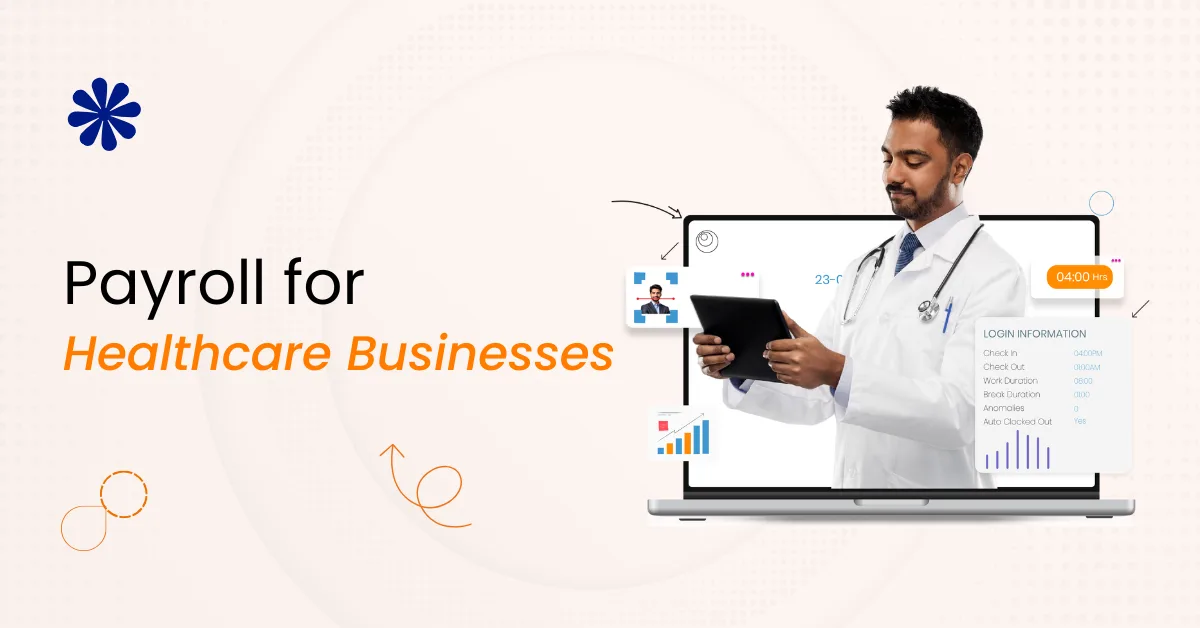
Healthcare payroll services play a vital role in keeping hospitals, clinics, diagnostic centres, nursing homes, and multi-location healthcare groups financially organised. In a sector where staffing runs around the clock, and payroll mistakes can affect morale quickly, healthcare payroll needs far more attention than a standard salary cycle. Doctors, nurses, technicians, front office teams, billing staff, pharmacists, housekeeping teams, and on-call professionals often work under different pay rules. That is why many healthcare organisations now rely on healthcare payroll software, healthcare payroll systems, and a structured payroll management system for healthcare to manage salaries accurately.
For Indian healthcare businesses, payroll is closely linked with attendance, shifts, overtime, leave, contract staffing, compliance deductions, and timely salary release. A reliable hospital payroll software setup helps HR teams reduce errors, maintain payroll records properly, and keep employee confidence steady. This guide explains payroll in healthcare, the payroll challenges healthcare employers face, and why Bharat Payroll is a practical choice for healthcare payroll management in India.
What Is Payroll in Healthcare
Payroll in healthcare is the process of calculating, recording, and disbursing salaries, incentives, statutory deductions, reimbursements, and employer contributions for employees working in the healthcare sector. It covers a wide employee base and multiple compensation models within the same organisation.
A typical healthcare payroll cycle may include:
- Doctors on fixed or variable pay
- Nurses working rotational shifts
- Technicians with overtime or holiday duty
- Administrative staff on a monthly salary
- Visiting consultants on payout schedules
- Support staff with attendance-linked earnings
This makes healthcare payroll management more layered than a standard office payroll process. Hospitals and clinics do not operate on one uniform work model. They run across day shifts, night shifts, weekly offs, emergency duty rosters, and holiday staffing. Payroll has to reflect that reality with precision.
Key Elements of Healthcare Payroll
A well-managed healthcare payroll process usually includes the following components:
- Basic salary and fixed monthly wages
- Shift allowances and night duty incentives
- Overtime calculations were applicable
- Attendance-linked earnings and deductions
- Leave adjustments and unpaid leave deductions
- Statutory deductions such as PF, ESI, and TDS
- Consultant payouts and contractual staff payments
- Payslip generation and payroll records
When these elements are not handled within one system, the risk of payroll confusion rises sharply.
Payroll Challenges in Hospitals and Healthcare
Hospitals and healthcare organisations deal with payroll issues that are different from those in many other sectors. Payroll teams are not just processing salaries. They are also dealing with complex duty structures, employee categories, and compliance records.
1. Complex Salary Structures
Healthcare employers often maintain different salary structures for doctors, nurses, technicians, administrative teams, and support staff. Some may receive fixed salaries, while others receive incentives, consultation fees, emergency duty payments, or shift-based earnings.
Without structured healthcare payroll software, these calculations can become difficult to track consistently.
2. Round-the-Clock Shift Management
Healthcare operations do not stop at the end of the workday. Shift-based staffing is common, and payroll must account for morning, evening, and night shifts. Add overtime, shift differentials, and emergency call duty, and payroll becomes even more detailed.
This is one reason hospital payroll software is now seen as a requirement rather than a convenience.
3. High Employee Turnover
Many healthcare organisations experience frequent hiring and exits, especially among nursing staff, technicians, and support teams. Final settlements, prorated salaries, new employee payroll setup, and document verification all increase payroll workload.
4. Attendance and Leave Complexity
In healthcare, attendance can change quickly. Staff may swap shifts, report late after long duty hours, take emergency leave, or work on public holidays. Manual attendance tracking does not support accurate payroll outcomes in such cases.
A proper payroll management system for healthcare needs attendance and leave data integrated directly into payroll calculations.
5. Compliance Pressure
Indian healthcare businesses must manage statutory deductions and salary records properly. PF, ESI, TDS, bonus rules, professional tax, where applicable, and payroll documentation all require careful review. Errors in deduction handling or record keeping can create legal and financial issues.
6. Consultants, Full-Time Staff, and Contract Workers
Healthcare employers often work with a mix of permanent staff, visiting doctors, outsourced teams, ambulance staff, and temporary support workers. Payroll classification becomes important. The wrong setup can create payment delays and internal disputes.
Why Payroll Software Matters in the Healthcare Industry
A hospital may have excellent medical talent, advanced infrastructure, and growing patient demand. But if the payroll system is weak, internal pressure builds quickly. Staff lose confidence when salaries are delayed or when deductions are unclear. HR teams lose hours checking spreadsheets, shift sheets, and attendance logs. Finance teams face repeated rework.
This is where the best payroll software for healthcare becomes useful. A well-planned payroll system supports the healthcare employer in three important ways.
- First, it creates salary accuracy across roles and shifts.
- Second, it maintains payroll records in a form that HR and finance teams can review without confusion.
- Third, it reduces manual work that slows down payroll close every month.
How Healthcare Payroll Software Improves Accuracy
Healthcare payroll software automates repetitive salary calculations and links them with attendance, shifts, leaves, and deduction rules. This reduces the need to compute every component manually.
It also helps payroll teams:
- Review duty hours before payroll lock
- Validate allowances and overtime entries
- Generate payslips without repeated rechecking
- Store payroll records securely for future reference
For multi-department hospitals or growing clinic chains, these controls matter a lot.
Confidential Employee Data Handling
Healthcare employers hold sensitive payroll and identity records. A secure healthcare payroll system setup helps restrict access and keeps payroll data protected within defined roles. This is especially useful where payroll data must be handled by HR, finance, and administrators without exposing all records to every user.
Solutions Healthcare Employers Need from Payroll Systems
Healthcare payroll does not improve just because software is installed. The payroll platform has to match the daily reality of hospitals and clinics. That means handling attendance, shifts, records, and reports in one place.
1. Data Management for Payroll Control
Healthcare businesses need a system that stores employee records, salary structures, bank details, shift history, and compliance documents properly. This improves payroll preparation and reduces back-and-forth during salary processing.
2. Shift and Schedule Tracking
A strong hospital payroll software environment should support rotational shifts, duty changes, weekly offs, and night allowances. Payroll teams should be able to review these before salary disbursement.
3. Time Tracking for Field and Mobile Staff
Many healthcare businesses employ travelling staff, home care teams, ambulance support staff, or offsite coordinators. GPS-based or mobile attendance capture helps payroll teams verify working hours with greater clarity.
4. Reporting and Analysis
Payroll reports are important in healthcare because staffing costs directly affect financial planning. Monthly payroll summaries, department-wise salary data, overtime patterns, and attendance-linked salary reports help management review labour cost trends.
How Healthcare Payroll Systems Support Accurate Payroll Processing
Healthcare organisations handle a diverse workforce. Doctors, nurses, paramedics, laboratory technicians, administrative teams, billing staff, and support workers may all follow different work schedules and salary structures. A structured healthcare payroll system environment helps manage these variations without creating payroll delays.
A well-implemented payroll management system for healthcare connects attendance records, employee salary structures, and statutory deductions within one payroll process. This reduces the number of manual adjustments required during each payroll cycle.
Healthcare payroll platforms usually support several operational needs.
1. Attendance and Duty Hours Integration
Payroll accuracy begins with verified duty hours. Hospitals run multiple shifts across departments such as emergency, outpatient, diagnostics, and inpatient care. When attendance systems integrate directly with healthcare payroll software, HR teams can validate employee work hours before salary calculations begin.
This ensures that overtime payments, shift allowances, and leave deductions are reflected correctly in the payroll register.
2. Consultant and Contract Staff Payments
Many healthcare facilities engage visiting doctors or specialist consultants who are compensated differently from full-time staff. A structured healthcare payroll management framework allows payroll teams to process consultation payments, retainership fees, or contractual payouts without mixing them with regular employee payroll.
This separation improves financial clarity for the hospital’s finance team.
3. Payroll Records and Payslip Distribution
Healthcare employees often require salary documentation for financial planning, loan applications, or personal records. A well-configured healthcare payroll system environment allows employees to access salary slips securely through employee portals. Payroll teams can maintain historical salary records while avoiding repeated manual requests.
4. Statutory Deduction Management
Healthcare employers in India must maintain accurate deduction records for provident fund contributions, employee state insurance, income tax deductions, and professional tax, where applicable. A reliable payroll management system for healthcare supports deduction calculations and generates reports required for statutory filing.
When these records remain organised, compliance reviews become easier.
Benefits of Healthcare Payroll Services for Hospitals and Clinics
Healthcare organisations that adopt structured healthcare payroll services gain operational clarity across their payroll operations. Payroll accuracy directly influences staff satisfaction and internal workflow stability.
Accurate Salary Calculations
Hospitals manage multiple earning components, including shift allowances, consultation fees, incentive payouts, and emergency duty compensation. Healthcare payroll software helps HR teams calculate these components consistently.
Reduced Payroll Processing Time
Payroll preparation can take several days when calculations are handled manually. Automated healthcare payroll systems reduce repetitive work such as deduction calculations, payslip generation, and payroll report preparation.
This allows HR teams to complete payroll cycles faster.
Improved Compliance Monitoring
Healthcare organisations must comply with labour laws and payroll regulations. A structured healthcare payroll management environment helps track statutory deductions and payroll documentation for regulatory reporting.
Better Payroll Transparency for Employees
Healthcare employees often work long and irregular shifts. Clear payroll documentation helps employees understand how their earnings are calculated. When payroll records remain accessible, employee queries reduce, and HR teams spend less time answering repetitive questions.
Centralised Payroll Records
Hospitals operating across multiple departments or locations require payroll visibility at both branch and organisational levels. Healthcare payroll systems allow payroll data to remain organised while supporting department-wise salary reporting.
Automate Your Healthcare Payroll
Manual Payroll vs Healthcare Payroll Software
Healthcare payroll becomes difficult to manage through spreadsheets once employee numbers grow. Comparing manual payroll management with digital healthcare payroll software illustrates how structured systems simplify payroll administration.
| Payroll Activity | Manual Payroll Processing | Healthcare Payroll Software |
| Attendance tracking | Separate shift records and spreadsheets | Attendance integrated with payroll |
| Salary calculations | Manual formulas and adjustments | Automated salary calculations |
| Shift allowances | Calculated manually | Predefined shift rules are applied automatically |
| Consultant payments | Separate payment tracking | Consultant payments are managed within payroll |
| Compliance deductions | Manual deduction entries | Automated statutory deduction calculations |
| Payroll reports | Created through spreadsheets | Instant payroll reports generated |
| Payslip distribution | Sent manually | Digital payslips are generated and stored |
Hospitals and clinics that move to digital payroll systems gain stronger payroll control while reducing administrative workload.
Final Take
Payroll for healthcare businesses requires careful coordination between attendance records, shift schedules, statutory deductions, and employee salary structures. Hospitals and clinics operate in an environment where staff work around the clock, and payroll accuracy directly affects employee confidence.
A structured healthcare payroll system framework allows healthcare organisations to maintain accurate payroll records while reducing administrative complexity. By combining attendance tracking, salary calculation, and compliance reporting in one environment, healthcare employers can process payroll consistently every month.
For growing hospitals, diagnostic chains, and healthcare service providers, adopting reliable healthcare payroll software supports both operational stability and employee trust.
Why Healthcare Businesses Choose Bharat Payroll
Healthcare organisations need payroll systems that reflect real operational needs rather than generic payroll tools. Bharat Payroll supports healthcare payroll management with structured payroll workflows suitable for hospitals, diagnostic centres, nursing homes, and healthcare service providers.
Healthcare businesses choose Bharat Payroll for several reasons:
- Accurate salary calculations for multiple healthcare roles
- Integration of attendance records with payroll calculations
- Secure storage of employee payroll documentation
- Automated deduction management for statutory compliance
- Structured payroll reports for finance and administration teams
For healthcare employers managing large staff rosters or multiple branches, Bharat Payroll provides clarity across payroll operations while reducing administrative workload.
Simplify Payroll for Healthcare Businesses
Manage healthcare payroll services with structured automation, accurate salary processing, and organised payroll records using Bharat Payroll.
Frequently Asked Questions
1. What is payroll in healthcare?
Payroll in healthcare refers to the process of calculating salaries, allowances, deductions, and statutory contributions for employees working in hospitals, clinics, and healthcare facilities.
2. Why do hospitals need healthcare payroll software?
Hospitals require healthcare payroll software to manage shift-based salaries, overtime payments, statutory deductions, and payroll documentation accurately.
3. What features should hospital payroll software include?
Hospital payroll software should support attendance integration, shift management, statutory deduction calculations, payroll reporting, and secure employee payroll records.
4. How does healthcare payroll software improve payroll accuracy?
Healthcare payroll software automates salary calculations, tracks employee attendance, and applies deduction rules consistently, reducing manual payroll errors.
5. Can healthcare payroll systems support multiple employee categories?
Yes. Healthcare payroll systems can manage different employee categories, including doctors, nurses, technicians, consultants, and administrative staff.