
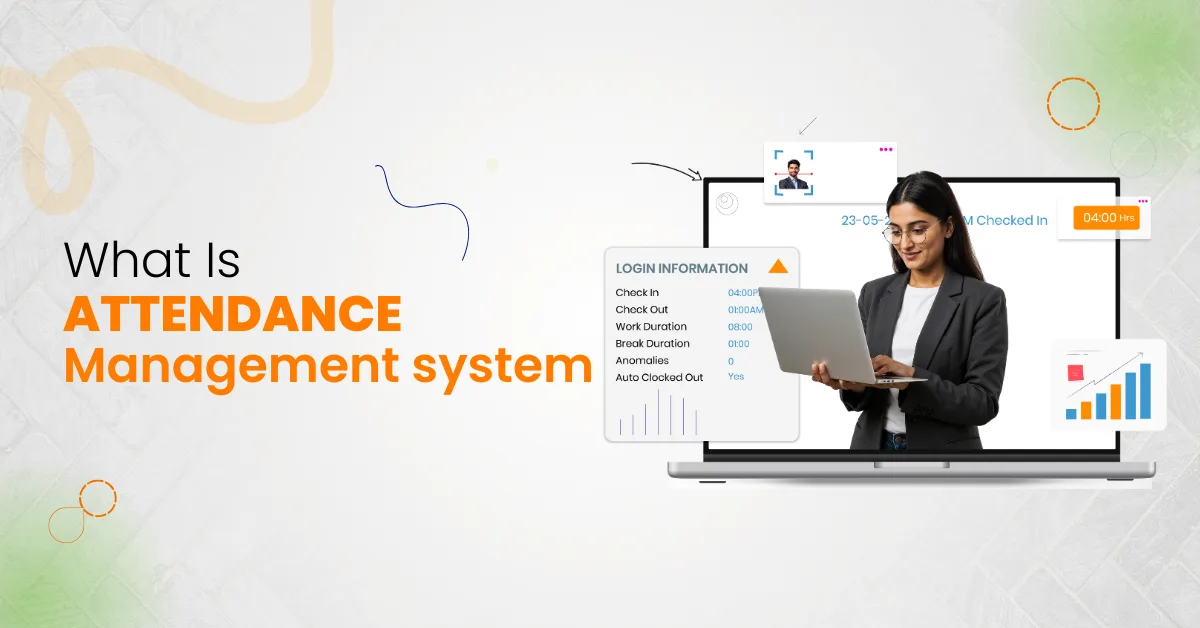
An attendance management system helps businesses track employee attendance accurately every day. It records employee working hours, break times, overtime hours, and attendance status. This information supports payroll processing, workforce management, and compliance needs.
Many businesses still depend on traditional methods like registers or spreadsheets. These methods increase human error and slow down HR operations. A modern attendance management system replaces manual tracking with automated systems that work in real time.
At Bharat Payroll, we work closely with HR teams that manage attendance data daily. We see how automated attendance tracking improves accuracy and reduces payroll errors. Businesses that adopt the right attendance software operate more efficiently and confidently.
What is an Attendance Management System in Simple Terms
So, what is an attendance management system in simple words?
It is a digital system that tracks when employees start work, take breaks, and end shifts. The system stores attendance records safely and makes them easy to access.
Attendance management software removes guesswork. It replaces paper-based tracking of attendance with accurate digital records. HR teams no longer need to chase timesheets or fix manual mistakes.
This makes attendance management faster, clearer, and more reliable for everyone.
Why Attendance Management Matters for Businesses
Attendance management affects payroll, compliance, and productivity. When attendance data is wrong, payroll calculations suffer. This creates payroll errors, disputes, and frustration among employees.
Attendance management also supports labor law compliance. Businesses must follow rules related to working hours, overtime, and leave. Automated attendance systems help ensure compliance without extra manual work.
Accurate attendance records also build trust. Employees feel secure when their attendance is tracked fairly and transparently.
Problems With Traditional Attendance Methods
Traditional attendance methods rely on manual entry. These include registers, punch cards, and spreadsheets. Such systems often result in human error.
Buddy punching becomes common with manual systems. Time theft increases when attendance is not verified. HR teams spend hours correcting attendance records.
Administrative workload increases, and payroll processes slow down. Attendance management software eliminates these issues by using automated systems.
How an Attendance Management System Works
Attendance management systems capture attendance automatically. Employees clock in using biometric systems, mobile apps, or web-based platforms.
The system records attendance data instantly. Managers can monitor attendance status in real time. Payroll integration sends employee hours directly to payroll software.
This automated attendance process improves efficiency and accuracy across business operations.
Common Attendance Tracking Methods Used Today
Modern attendance tracking software supports several tracking methods.
Biometric attendance systems use fingerprints or facial recognition. These biometric systems prevent buddy punching and ensure accurate time records.
Mobile app-based systems support remote teams and field employees. Mobile time tracking allows employees to clock in from any location.
Web-based attendance systems work well for office teams and hybrid work environments.
Key Features of an Effective Attendance Management System
An effective attendance management system includes features that support HR and payroll needs.
- Automated attendance tracking reduces manual administrative tasks
- A biometric attendance system prevents buddy punching issues
- Mobile apps support remote teams and flexible schedules
- Payroll integration minimizes payroll errors
- Attendance reports provide clear reporting and analytics
- Real-time data improves attendance visibility
- Attendance policies apply rules consistently
- Cloud-based systems scale with business growth
These features help businesses manage attendance efficiently.
Benefits of Attendance Management Software
Attendance management software improves daily operations in several ways.
1. Accurate Attendance Records
Automated systems generate accurate attendance records. These records support payroll systems and compliance audits.
2. Reduced Administrative Workload
HR teams spend less time fixing attendance errors. Automated reports replace manual tracking work.
3. Improved Payroll Accuracy
Attendance data flows directly into payroll processes. Payroll errors and disputes have reduced significantly.
4. Higher Employee Productivity
Employees trust systems that track employee hours fairly. This improves morale and focus.
Attendance Management for Remote and Hybrid Teams
Remote teams need flexible attendance tracking. Cloud-based attendance management systems support work from anywhere.
Mobile time tracking allows employees to clock attendance using mobile apps. Managers monitor attendance trends without delays.
This supports efficient workforce management in modern work environments.
Biometric and Facial Recognition Attendance Systems
Biometric attendance systems use fingerprints or facial recognition technology. These systems improve accuracy and security.
Facial recognition reduces physical contact and speeds up attendance tracking. It also helps prevent time theft.
Biometric systems work well for offices, factories, and large organizations with many employees.
Attendance Management and Payroll Integration
Attendance management and payroll integration work together seamlessly. Attendance software sends accurate employee hours to payroll software automatically.
This integration:
- Reduces payroll errors
- Speeds payroll calculations
- Improves payroll processes
- Supports labor law compliance
- Simplifies HR and payroll workflows
At Bharat Payroll, attendance and payroll systems operate as one unified solution.
Attendance Reports and Analytics
Attendance reports help HR teams understand attendance patterns clearly. Reporting and analytics highlight absenteeism, overtime hours, and attendance trends.
Automated reports support audits and internal reviews. Managers use insights to improve attendance policies.
Data-driven decisions become easier with accurate attendance data.
Attendance Management for Growing Businesses
As businesses grow, managing attendance becomes complex. Attendance management systems scale easily with business size.
They support multiple shifts, locations, and departments. Cloud-based systems allow smooth expansion.
Growing businesses benefit from stable and flexible attendance management software.
Best Practices for Effective Attendance Management
Businesses should follow proven practices to simplify attendance tracking.
- Use automated systems instead of traditional methods
- Track employee working hours consistently
- Review attendance records regularly
- Apply attendance policies fairly
- Integrate attendance with payroll systems
These steps ensure effective attendance management.
How Attendance Management Supports Compliance
Labor laws require accurate tracking of employee hours. Attendance systems ensure compliance by recording attendance correctly.
Accurate attendance records protect businesses during audits. Ensuring compliance reduces penalties and legal risks.
Attendance management software gives HR teams confidence and control.
How Attendance Management Improves Business Operations
Attendance management systems improve business operations by reducing delays and errors. Managers gain better visibility into workforce availability.
HR teams spend less time on administrative tasks. Payroll teams process salaries faster and more accurately.
Employee productivity improves when attendance systems work smoothly.
How Bharat Payroll Supports Attendance Management
At Bharat Payroll, we provide attendance management software designed for real business needs. Our system supports biometric attendance, mobile apps, and cloud-based access.
We help HR teams track employee attendance accurately. Payroll integration ensures smooth salary processing.
Our solutions reduce administrative workload and support efficient workforce management.
Conclusion
Attendance management systems are essential for modern businesses. They replace traditional methods with automated systems that track employee attendance accurately.
With attendance management software, businesses reduce errors, improve compliance, and increase productivity.
At Bharat Payroll, we help organizations manage attendance and payroll with clarity and confidence. The right attendance management system supports efficiency, accuracy, and sustainable business success.
Simplify Attendance Tracking and Payroll Accuracy
With Bharat Payroll, businesses gain accurate attendance records, payroll integration, and compliance support.
Frequently Asked Questions
1. What is an attendance management system?
An attendance management system records employee attendance digitally. It tracks working hours, breaks, overtime, and attendance status. The system stores data securely and integrates with payroll software to ensure accurate salary processing.
2. How does attendance management software reduce payroll errors?
Attendance management software sends accurate attendance data directly to payroll systems. This removes manual entry and reduces human error. Payroll calculations become faster, more accurate, and consistent across pay cycles.
3. Is a biometric attendance system better than manual tracking?
Yes. Biometric attendance systems prevent buddy punching and time theft. They provide accurate time records and improve compliance. These systems are more reliable and secure than traditional attendance methods.
4. Can attendance systems support remote teams?
Yes. Mobile app-based attendance systems support remote teams. Employees clock attendance using mobile apps, while managers monitor attendance status and reports in real time.
5. Why should businesses invest in attendance management software?
Attendance management software improves productivity, ensures labor law compliance, reduces payroll errors, and simplifies HR operations. It supports efficient workforce management and long-term business growth.