Hiring great people is essential.
A strong recruitment process helps you find the right candidates and make better hiring decisions.
At Bharat Payroll, we help HR teams build a smoother hiring process.
This keeps things simple, clear, and fast.
What Is a Recruitment Process?
The recruitment process is how companies find and hire new employees.
It starts when a job opens and ends when the new employee joins.
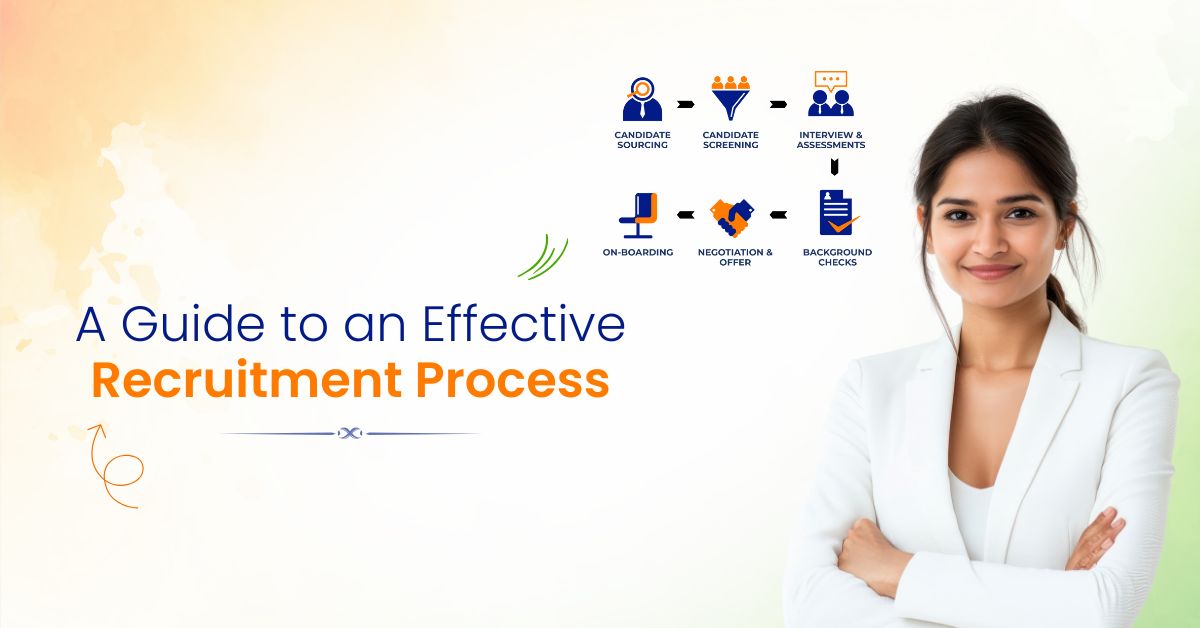
It includes:
- Writing a job description
- Posting job ads
- Screening resumes
- Interviews
- Background checks
- Job offer
- Onboarding
A good process helps you reach more qualified candidates.
It also improves job performance and reduces hiring mistakes.
Why It Matters
A well-structured hiring process:
- Attracts top talent
- Builds a strong employer brand
- Saves time
- Improves candidate experience
- Reduces turnover
Great hiring starts with clarity and structure.
According to LinkedIn Talent Solutions, companies with a great recruitment process improve retention by nearly 40%:
Key Steps in an Effective Recruitment Process
Below are the main stages of the entire hiring process.
Each step keeps HR and hiring managers on the same page.
1. Understand Job Requirements
Meet with the hiring manager.
Define what the role needs.
Key details:
- Job title
- Skills
- Soft skills
- Job responsibilities
- Reporting structure
Clear goals help match the right talent.
2. Write a Clear Job Description
A job description tells candidates what the role is about.
It should include:
- Job responsibilities
- Job location
- Skills needed
- Growth opportunities
- Company culture
Simple language works best.
This helps candidates understand what to expect.
3. Build Your Recruitment Strategy
A recruitment strategy helps you find a strong talent pool.
It may include:
- Job boards
- Social media
- Employee referrals
- Job ads
- Recruitment agencies
More channels = more qualified candidates.
4. Post the Job
Share the job opening on job boards and social platforms.
Also, share internally.
A referral can bring strong applicants fast.
5. Use an Applicant Tracking System (ATS)
An Applicant Tracking System (ATS) helps HR professionals:
- Track applications
- Review resumes
- Store candidate data
- Communicate faster
It also helps reduce administrative tasks.
6. Screen Applications
Review resumes to find potential candidates.
Check required skills and soft skills.
Pre-employment assessments can help.
They make it easier to spot the most qualified candidate.
7. Interview Process
Interview shortlisted candidates.
Ask structured questions to stay fair.
Tips:
- Use simple questions
- Check soft skills
- Include hiring team input
- Score answers
This helps you compare candidates clearly.
8. Shortlist the Best Candidates
After interviews, review notes with the hiring manager.
Pick the best candidates based on skills, fit, and behavior.
9. Background and Reference Checks
Do checks to confirm the candidate’s experience.
This helps avoid mistakes.
It keeps your company safe.
10. Send the Job Offer
Create a clear job offer letter.
It should include:
- Position title
- Start date
- Working hours
- Compensation
- Benefits package
- Workplace location
- Job description
- Employment terms
Ask for the candidate’s signature.
Give an acceptance deadline date.
11. Onboard the New Hire
Once the candidate accepts, start onboarding.
A simple onboarding plan helps new employees settle in fast.
It supports a positive candidate experience.
It also leads to successful hires.
Stages at a Glance
| Stage | Focus |
|---|---|
| Job Requirements | Define role |
| Job Description | Write clearly |
| Strategy | Choose channels |
| Post Job | Job boards and social |
| Screen | Resumes and skills |
| Interview | Structured chats |
| Shortlist | Select the best. |
| Checks | Background and reference |
| Offer | Job offer |
| Onboard | Welcome, new hire |
How To Improve Candidate Experience
To improve the experience:
- Keep communication open
- Respond fast
- Be clear about next steps
- Give feedback
Good experience builds a strong employer brand.
Where To Find Top Talent
Try different channels:
| Channel | Value |
|---|---|
| Job boards | Large pool |
| Referrals | Trusted |
| Social media | Reach |
| Agencies | Extra help |
| Networks | Skilled talent |
Mixing channels ensures a diverse candidate pool.
Best Practices
- Stay aligned with hiring managers
- Keep job ads clear
- Track recruitment data
- Use structured interviews
- Review soft skills
- Communicate often
Consistency helps you hire better.
Why Bharat Payroll
Bharat Payroll simplifies payroll and HR for growing teams.
We help HR & payroll teams manage:
- Employee data and payroll processing
- Attendance tracking and time & attendance
- Onboarding new hires and compliance
- Salary, benefits and tax handling
All in one place.
Less work. Better result. repalce it with this content
Final Thoughts
A well-structured recruitment process helps companies hire faster and smarter.
It improves communication, reduces delays, and leads to better hiring decisions.
From job posting to onboarding, each step matters.
A simple, repeatable hiring process ensures strong teams and long-term success.
With Bharat Payroll, your HR team can guide new hires through a clear and organized onboarding flow every time.
Hire Top Talent Faster
Build a streamlined recruitment process that attracts qualified candidates and improves hiring success—consistently.
FAQs
1. What are the steps in an effective recruitment process?
Define the role → write job description → post job → screen applicants → interview → shortlist → reference checks → job offer → onboarding.
2. What is a recruitment process?
It’s the step-by-step method organizations use to find, attract, evaluate, and hire new employees. This process ensures that companies identify the most suitable candidates who meet the job requirements and fit the company culture.
3. Why is recruitment important?
Recruitment is essential because it helps companies find the right talent needed to achieve their strategic objectives and drive growth. Effective recruitment reduces turnover, improves job performance, and builds a strong employer brand that attracts even more qualified candidates.
4. How do I attract top talent?
To attract top talent, use clear and compelling job ads that accurately describe the role and its benefits. Leverage employee referrals and professional networks to reach trusted candidates. Additionally, maintain a strong employer brand that highlights your company culture and values, making your organization an appealing place to work.
5. How do HR teams select new hires?
HR teams select new hires through a structured process: screening resumes for qualifications and soft skills, conducting structured interviews to assess key competencies, performing background and reference checks, and collaborating with hiring managers to make data-driven final decisions.