
Time is money. In 2026, it is also compliance, trust, and business intelligence.
Indian businesses are no longer managing simple office schedules. Teams are remote, hybrid, project-based, and client-driven. Payroll cycles are tighter. Compliance expectations are higher. Without reliable employee time tracking software, businesses lose visibility into actual work, billable hours, and employee productivity.
At Bharat Payroll, we work with Indian employers who want accurate time tracking without turning their workplace into a surveillance environment. This guide explains time tracking software from every angle—technology, payroll, compliance, productivity, and employee experience—so you can make an informed buying decision for 2026.
What Is Employee Time Tracking Software?
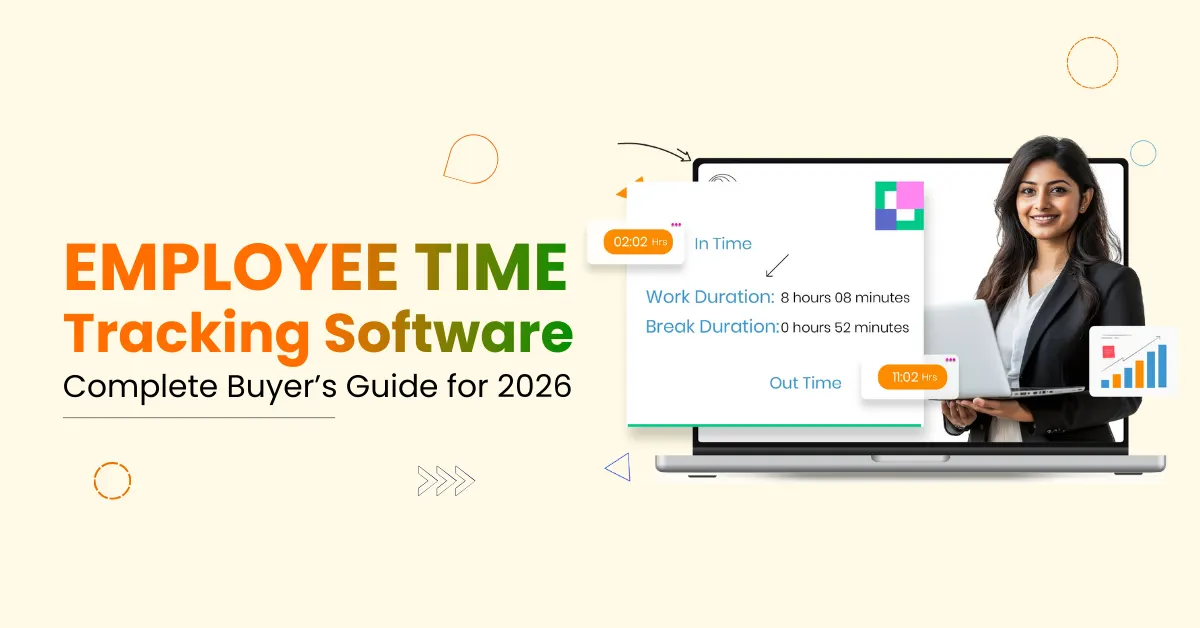
Employee time tracking software is a digital system that records how long employees work and what they work on.
Unlike basic attendance software, it does not stop at clock-in and clock-out. It captures actual time, task-level effort, and project involvement. This time, data feeds into payroll systems, billing tools, and reporting dashboards.
In simple terms, time tracking software answers three questions:
- When did the employee work?
- What work was done?
- How much time did it take?
That clarity is what businesses need in 2026.
Employee time tracking software definition
Employee time tracking software is an online tracking system that records employee work hours, task time, and attendance data. It helps businesses ensure accurate payroll, track billable hours, manage projects, improve productivity, and generate compliance and billing reports.
Why Time Tracking Became Critical in 2026
The way work happens has changed.
Employees no longer sit at the same desk, at the same time, every day. Teams work across cities and states. Clients demand transparent billing. Auditors expect accurate records.
In this environment, manual time tracking fails.
Businesses now rely on time tracking systems to:
- Prevent payroll disputes
- Improve workload balance
- Support compliance reporting
- Enable accurate billing
Time tracking is no longer about control. It is about clarity.
Time Tracking vs Attendance Software
Many buyers confuse attendance tracking with time tracking. The difference matters.
| Area | Attendance Software | Time Tracking Software |
|---|---|---|
| Purpose | Presence tracking | Work time tracking |
| Detail level | Entry and exit only | Task and project level |
| Payroll impact | Partial | Direct payroll integration |
| Billing support | Not supported | Accurate billing |
| Reporting depth | Basic reporting | Detailed and advanced reporting |
Attendance tells you who showed up.
Time tracking tells you what work happened.
Who Should Buy Time Tracking Software in 2026?
Scenario 1: Professional Services Firm
Client billing depends on billable hours. Missed entries mean lost revenue.
Scenario 2: Growing Startup
Teams scale fast. Manual tracking breaks under pressure.
Scenario 3: Remote Workforce
Managers need real-time data, not assumptions.
Scenario 4: Compliance-Focused Business
Audit trails and accurate time records are mandatory.
If any scenario feels familiar, time tracking software is not optional.
Types of Time Tracking Software
Time tracking tools come in different forms. Choosing the right type matters more than choosing the biggest brand.
1. Manual Time Tracking
Employees log their time themselves. This method is simple but error-prone.
2. Automatic Time Tracking
The system records activity in the background. This improves accuracy and reduces missed time entries.
3. Project-Based Time Tracking
Time is tracked against projects, tasks, or clients. This supports project planning and profitability analysis.
Most modern businesses combine automatic tracking with project-level visibility.
Core Features Buyers Must Evaluate
| Feature Area | Why It Matters |
|---|---|
| Accurate time tracking | Prevents payroll and billing errors |
| Payroll integration | Ensures salaries match actual time |
| Attendance tracking | Supports compliance and leave rules |
| Reporting capabilities | Converts time data into insights |
| Mobile access | Supports remote and field teams |
| Data security | Protects employee information |
| Audit trails | Supports compliance reporting |
| Role-based access | Controls who sees what |
A tool missing even one core feature creates gaps later.
Hour Tracking Software and Payroll Accuracy
Here is how hour tracking software improves payroll accuracy:
Step 1: Employees log time, or time is captured automatically
Step 2: Overtime and non-billable time are identified
Step 3: Time data flows into the payroll system
Step 4: Salaries are calculated based on actual time worked
This removes guesswork and manual corrections.
At Bharat Payroll, time tracking and payroll integration are designed as one workflow, not separate tools.
Time Recording Software for Client Billing
For client-facing teams, time recording software directly impacts revenue.
Accurate time tracking ensures:
- Billable hours are never missed
- Client invoicing is transparent
- Project budgets stay controlled
Professional services firms depend on time tracking to protect margins.
Automatic Time Tracking vs Manual Entry
| Factor | Manual Entry | Automatic Time Tracking |
|---|---|---|
| Accuracy | Medium | High |
| Employee effort | High | Low |
| Missed entries | Frequent | Rare |
| Reporting depth | Limited | Robust |
| Scalability | Poor | Strong |
In 2026, automatic tracking is the safer choice.
Time Tracking and Project Management
Project managers rely on time tracking data to make decisions.
Time tracking supports:
- Project planning
- Resource allocation
- Monitoring project budgets
- Measuring project profitability
Without time data, project management becomes guesswork.
Employee Monitoring vs Ethical Time Tracking
Some tools focus heavily on employee monitoring, including screenshot monitoring and constant activity tracking.
This creates privacy concerns.
Ethical time tracking focuses on:
- Time entries
- Task duration
- Output trends
It avoids invasive surveillance. Employee trust matters.
Mobile Apps, GPS Tracking, and Field Teams
Mobile access is no longer optional.
Mobile time tracking apps allow:
- Easy time entries anywhere
- GPS tracking for field employees
- Real-time data sync
This is essential for sales teams, service staff, and on-site roles.
Reporting Capabilities Explained
Time tracking reports exist at multiple levels.
1. Basic Reporting
Attendance and total hours.
2. Detailed Reporting
Task-level and project-level time entries.
3. Advanced Reporting
Trends, workload balance, productivity patterns.
4. Compliance Reporting
Audit trails and historical records.
Robust reporting turns raw time data into valuable insights.
Data Security, Privacy, and Compliance
Time tracking software handles sensitive employee data.
Buyers must evaluate:
- Role-based access controls
- Data encryption
- Disaster recovery plans
- Audit trails
A weak security model puts the business at risk.
Pricing Models Buyers Will See in 2026
Time tracking software pricing varies.
Common pricing approaches include:
- Per user per month
- Unlimited users plans
- Feature-based tiers
Small businesses should avoid tools that become expensive as teams grow.
Deployment Methods Explained
| Deployment Method | Best For |
|---|---|
| Cloud solutions | Fast setup and scalability |
| On-premise | Full internal control |
| Hybrid | Mixed compliance needs |
Most Indian businesses choose cloud solutions for flexibility.
How Bharat Payroll Approaches Time Tracking
At Bharat Payroll, time tracking is built for Indian business realities.
Our approach focuses on:
- Accurate time tracking without micromanagement
- Seamless payroll integration
- Compliance-ready audit trails
- Clear reporting for HR and finance
Time tracking works best when it feels natural to employees.
Buyer Evaluation Checklist
Before selecting a new system, buyers should verify:
- The system supports accurate time tracking at scale
- Payroll integration works without manual steps
- Reporting is clear and exportable
- Mobile access supports remote teams
- Privacy concerns are addressed transparently
This checklist prevents costly mistakes.
Common Buyer Mistakes to Avoid
Many buyers fail because they:
- Choose tools without payroll integration
- Overuse employee monitoring features
- Ignore reporting depth
- Underestimate change management
A time tracking system must be adopted, not just installed.
Conclusion
Employee time tracking software is no longer just a productivity tool. In 2026, it is a foundation for payroll accuracy, compliance, and smarter project management.
Choosing the right system helps businesses track time, improve employee productivity, control costs, and make informed decisions.
At Bharat Payroll, we help Indian businesses implement ethical, accurate, and payroll-ready time tracking systems. When time data is reliable, businesses operate with confidence.
Modernise Employee Time Tracking for 2026
Track employee time accurately, improve productivity, ensure payroll accuracy, and gain real insights with Bharat Payroll’s time tracking solution.
Frequently Asked Questions (FAQs)
1. What is employee time tracking software used for?
Employee time tracking software records employee work hours, task time, and attendance data. It helps businesses ensure accurate payroll, track billable hours, manage projects, improve productivity, and generate reports for compliance, billing, and decision-making.
2. Is time tracking software suitable for small businesses?
Yes. Small businesses use time tracking software to save time, improve payroll accuracy, and gain visibility into work patterns. Modern pricing models allow small teams to start simple and scale without switching systems.
3. How does time tracking software integrate with payroll?
Time tracking software sends accurate time data directly into the payroll system. This ensures salaries, overtime, and deductions are calculated correctly based on actual time worked, reducing payroll errors and employee disputes.
4. Does time tracking software invade employee privacy?
Ethical time tracking focuses on time data, not constant monitoring. Businesses should avoid excessive screenshot monitoring and use transparent policies to address privacy concerns while improving productivity and accountability.
5.What should buyers prioritise when choosing time tracking software?
Buyers should prioritise accurate time tracking, payroll integration, robust reporting, mobile access, data security, compliance support, and ease of use. The best system aligns with business needs and supports long-term growth.