
Payroll Compliance for Startups is one of the first operational responsibilities founders face after hiring employees. Early-stage companies often focus heavily on product development, funding, and growth. Payroll regulations, statutory deductions, and labour obligations can easily receive less attention during the initial stages.
Yet ignoring payroll compliance during early hiring can create long-term complications. Payroll compliance for startups involves salary calculation, tax deduction, statutory contributions, employee documentation, and regulatory reporting according to Indian labour laws.
This guide explains how startup founders can manage payroll compliance from the beginning, what statutory obligations apply to new businesses, and how structured payroll systems help startups maintain regulatory discipline as their teams expand.
Startups that establish organised payroll processes early build stronger financial control, prepare for investor due diligence, and maintain employee confidence.
What Payroll Compliance for Startups Means
Payroll compliance for startups refers to the legal obligations companies must follow while compensating employees in India. These obligations apply from the moment a business begins paying salaries.
Payroll compliance covers several areas:
i. Salary calculation based on wage regulations
Employee salaries must follow legally defined wage structures, minimum wage rules, and statutory benefit calculations.
ii. Tax deduction from employee salaries
Employers must deduct income tax through the TDS system according to employee tax declarations and salary levels.
iii. Statutory contributions and deposits
Employers must deposit contributions such as the provident fund or the employee state insurance within the prescribed timelines.
iv. Payroll record maintenance
Salary registers, payslips, deduction summaries, and statutory challans must remain available for inspection or audit review.
Even startups with small teams must follow these rules once payroll processing begins. Companies that organise payroll compliance early avoid regulatory corrections later when employee counts increase.
Why Payroll Compliance Matters for Startups
Payroll compliance requirements in India are governed by multiple labour and tax regulations, including the Employees’ Provident Fund Act, the Employees’ State Insurance Act, and the Income Tax Act. Founders sometimes assume compliance rules apply only to larger organisations. In practice, payroll compliance affects startups from the moment employees are hired.
Several business factors make payroll compliance important during the early growth stage.
i. Financial risk protection
Incorrect tax deductions, late statutory payments, or missed filings can result in interest charges and regulatory notices. Young companies often operate with limited financial reserves. Avoiding penalties protects working capital.
ii. Investor due diligence
When startups raise funding, investors review financial and employment records. Payroll documentation is often examined during due diligence.
Organised payroll compliance signals financial discipline and operational stability.
iii. Employee confidence
Salary transparency affects employee trust. Workers expect their salaries, deductions, and benefits to be handled correctly.
Accurate payroll records strengthen internal credibility.
iv. Operational readiness for growth
Startups typically expand quickly once business traction develops. Payroll processes that work for five employees may not scale for fifty.
Maintaining payroll compliance from the start reduces disruption as hiring accelerates.
Key Payroll Compliance Requirements for Startups in India
Several statutory obligations apply to Indian startups managing employee payroll. Founders and HR teams should understand the primary regulatory areas affecting salary processing.
1. Provident Fund Contributions
The Employees’ Provident Fund Act requires employer and employee contributions toward retirement savings once the company crosses the applicable employee threshold.
Both contributions are calculated as a percentage of eligible wages and must be deposited within the monthly compliance timeline.
2. Employees’ State Insurance
ESI provides medical and social security benefits to eligible employees.
When an employee’s salary falls within the prescribed eligibility limit, and the company meets the employee threshold, employers must contribute to the ESI scheme alongside employee contributions.
3. Professional Tax
Professional tax applies at the state level and varies across jurisdictions. Employers deduct the applicable tax from employee salaries and deposit it with the respective state authority.
4. Income Tax Deduction (TDS)
Employers must deduct income tax from salaries according to tax slabs and employee declarations. TDS must be deposited within the statutory deadline, and quarterly filings must be submitted to tax authorities.
These four compliance areas form the foundation of payroll compliance for startups.
Payroll Compliance in India
Startups must align their payroll operations with broader payroll compliance in India, which combines labour laws, tax rules, and statutory contribution requirements.
Payroll compliance in India includes:
- Correct salary structuring under labour regulations
- Accurate tax deductions from employee salaries
- Timely deposit of statutory contributions
- Submission of payroll filings within deadlines
- Maintaining payroll records for regulatory review
Early-stage companies sometimes assume compliance becomes necessary only after scaling operations. In reality, regulatory obligations apply as soon as payroll processing begins.
Startups operating across different cities must also monitor state-specific payroll requirements, including professional tax rules and labour welfare contributions. Companies that integrate payroll compliance into daily operations reduce regulatory risk as the business expands.
For a full explanation of these regulatory requirements, explore the related article: Payroll Compliance in India Guide 2026.
Payroll Compliance Checklist 2026
A structured checklist helps startups confirm that payroll obligations remain aligned with regulatory requirements.
i. Business registrations
Companies must obtain the required registrations for tax deduction and statutory contributions. This includes employer registration with EPFO and ESIC, where applicable.
ii. Employee documentation
Employee records should include:
- PAN and Aadhaar information
- Bank account details
- Employment agreements
- Salary structure documentation
These records support tax deductions and statutory filings.
iii. Salary structure verification
Salary components should follow wage definitions recognised under labour regulations. Incorrect structuring can affect statutory contribution calculations.
iv. Monthly statutory deposits
Employers must deposit TDS, PF, and ESI contributions within the specified timelines. Late deposits may trigger interest charges.
v. Regulatory filings
Startups must submit required payroll filings such as quarterly TDS returns and monthly statutory submissions.
vi. Payroll documentation
Payslips, salary registers, attendance records, and deduction summaries must remain accessible for inspection.
Many startups adopt payroll software to track this checklist consistently. Explore the complete guide on the Payroll Compliance Checklist 2026.
Common Payroll Compliance Challenges for Startups
Startup teams frequently encounter payroll compliance challenges during early hiring phases.
1. Limited internal HR expertise
Many founders manage payroll themselves during early growth stages. Without specialised payroll knowledge, statutory obligations may be misunderstood.
2. Changing regulatory requirements
Labour and tax rules evolve regularly. Monitoring updates becomes difficult when teams focus primarily on product and customer acquisition.
3. Manual payroll calculations
Spreadsheet-based payroll processing increases the likelihood of calculation errors. Incorrect deductions may affect both employee salaries and statutory filings.
4. Tracking statutory deadlines
Each compliance area has separate deposit and filing timelines. Without structured reminders, startups risk missing regulatory deadlines.
5. Multi-location hiring
Once startups hire employees in different states, payroll rules become more complex. State-level taxes and wage regulations must be monitored. These challenges often lead startups to adopt structured payroll systems once their teams begin expanding.
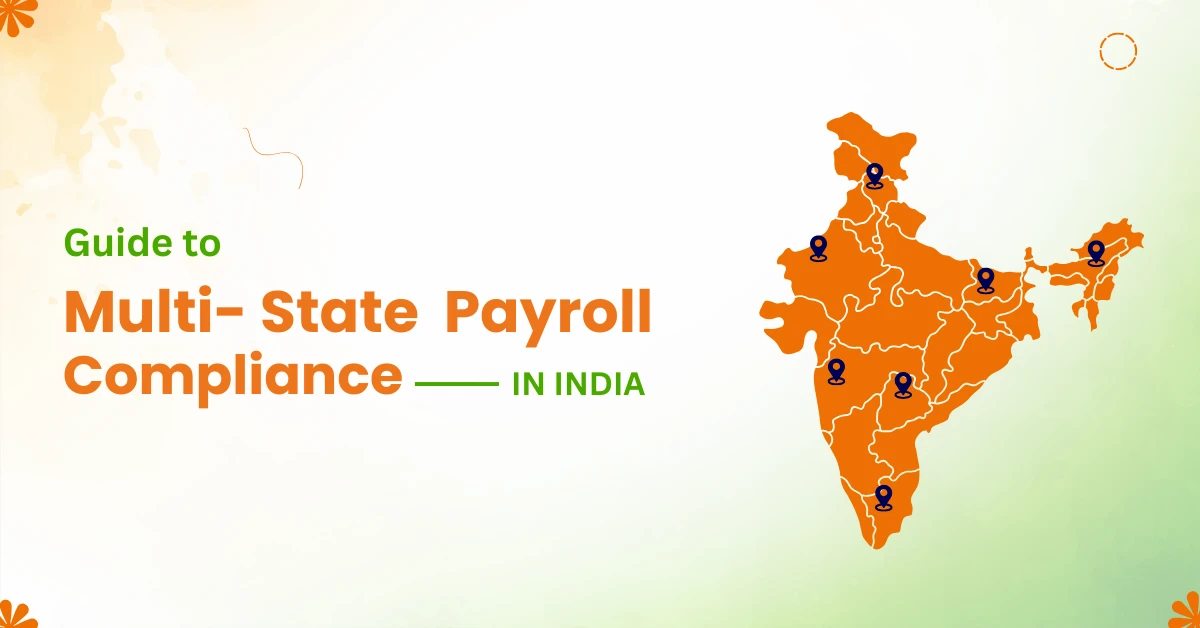
Multi-State Payroll Compliance
Startups frequently hire talent across multiple cities once remote work becomes part of the hiring model. This introduces multi-state payroll compliance responsibilities.
1. Professional tax differences
Professional tax rates and compliance timelines vary between states. Employers must calculate deductions based on the employee’s location.
2. Minimum wage notifications
State governments periodically revise minimum wage levels depending on industry and employee category. Payroll systems must reflect these updates.
3. Labour welfare fund contributions
Certain states mandate labour welfare fund deductions from employee salaries. Employers must deposit these contributions according to state-specific schedules.
4. Local employment regulations
Working hours, leave rules, and employment registers may differ across states. Startups expanding beyond a single state must monitor these regulations carefully. Many companies adopt payroll platforms to manage multi-state payroll obligations in a centralised environment.
Hybrid Payroll Compliance
Hybrid work arrangements have introduced new payroll compliance considerations. Employees may work remotely from cities different from the company’s registered location. This affects several payroll responsibilities.
Employee work location tracking
Companies must maintain accurate records of employee work locations for compliance reporting.
State tax implications
Remote work may trigger professional tax obligations in the employee’s resident state.
Attendance documentation
Even under flexible work arrangements, employers must maintain attendance and working hour records.
Payroll reporting
Some labour filings require location-specific reporting of employees. Startups adopting remote work policies should review these obligations regularly.
Payroll Audit Preparation Guide
As startups grow, payroll records often become part of financial audits, statutory inspections, or investor due diligence. Preparing payroll documentation early helps companies avoid last-minute corrections and regulatory pressure.
Maintain payroll registers
Salary registers should record:
- employee earnings
- statutory deductions
- employer contributions
- net salary payments
These registers create a clear payroll history across each pay cycle.
Verify statutory challans
Companies must maintain proof of deposits for:
- provident fund contributions
- employee state insurance payments
- tax deducted at source
Auditors typically cross-check challans against payroll records and filings.
Match payroll reports with statutory filings
Payroll reports must match returns submitted to authorities. Differences between payroll records and filings often trigger compliance questions during audits.
Preserve payroll documents
Payroll documentation should remain stored for the legally required retention period. Startups often maintain digital payroll archives to simplify document retrieval during audits.
Conduct periodic internal reviews
Quarterly payroll reviews help detect deduction errors or missed deposits before external auditors identify them.
Startups that organise payroll documentation early usually experience smoother audit processes.
Payroll Compliance Penalties
Failure to maintain payroll compliance can create financial and legal exposure for startups. Even small errors can accumulate if statutory obligations remain unattended.
i. Provident fund violations
Delayed PF contributions may attract interest and additional damages depending on the delay period.
ii. Income tax deduction failures
Late deposit of tax deducted from salaries can result in interest charges and notices from tax authorities.
iii. Minimum wage violations
Employers paying below the prescribed wage levels may face legal action under labour regulations.
iv. Missing payroll documentation
During inspections, companies must produce payroll records. Missing documentation may lead to penalties.
For startups seeking funding or preparing for acquisition, unresolved payroll compliance penalties may also affect business valuation.
Regular payroll reviews help companies detect these risks early.
When Should Startups Upgrade Their Payroll System
Early-stage companies sometimes manage payroll manually. That approach often works for very small teams, but becomes difficult as employee numbers increase.
Several operational signals indicate that startups should consider structured payroll systems.
i. Growing employee headcount
Manual payroll processes become difficult to manage once hiring increases.
ii. Employees across different cities
Multi-state hiring introduces additional statutory obligations that spreadsheets cannot easily track.
iii. Frequent payroll corrections
Repeated adjustments after salary payments indicate weaknesses in payroll calculations.
iv. Difficulty tracking compliance deadlines
Startups often miss filing deadlines when compliance calendars are not monitored centrally.
v. Upcoming audits or funding reviews
Investors and auditors expect organised payroll records during financial reviews.
Adopting payroll systems early helps startups manage payroll compliance more consistently as their workforce expands.
Manual Payroll vs Payroll Software for Startup Compliance
Many founders evaluate whether to continue with manual payroll management or move to payroll software.
| Payroll Compliance Area | Manual Payroll Management | Payroll Software |
| Salary calculations | Requires repeated manual verification | Automated calculations based on salary structure |
| Tax deduction accuracy | Higher risk of miscalculation | Automatic tax deduction logic |
| Compliance deadlines | HR teams track deadlines manually | Built-in compliance calendars |
| Multi-state payroll rules | Difficult to monitor multiple state rules | State-wise payroll configuration |
| Payroll documentation | Records are spread across spreadsheets | Centralised payroll records |
| Audit preparation | Manual reconciliation required | Payroll reports available instantly |
Startups operating with small teams often begin with manual payroll. Once hiring accelerates, payroll software typically becomes the more reliable option.
Conclusion
Payroll compliance for startups begins the moment a company hires its first employee. Accurate salary calculations, timely statutory deposits, and organised payroll records form the foundation of compliant payroll operations in India.
Startups that build structured payroll processes early avoid regulatory corrections, financial penalties, and operational disruptions as their teams grow. Clear payroll documentation also strengthens investor confidence, simplifies audits, and improves employee trust.
As hiring expands across cities and remote teams become common, payroll compliance responsibilities increase. Using organised payroll systems helps startups manage statutory obligations, maintain payroll records, and track compliance deadlines consistently.
For growing businesses, disciplined payroll compliance is not only a legal requirement. It becomes part of building a stable and scalable organisation.
Why Startups Choose Bharat Payroll
Startups often require payroll systems that balance compliance accuracy with operational simplicity. Bharat Payroll supports growing companies by organising payroll operations in a single platform built for Indian regulatory requirements.
1. Accurate salary calculations
Salary structures, deductions, and statutory contributions are calculated according to applicable payroll rules.
2. Compliance deadline tracking
Built-in compliance calendars help teams track statutory deposit and filing timelines.
3. Multi-state payroll management
Companies hiring employees across states can manage professional tax, wage notifications, and statutory obligations in one payroll environment.
4. Organised payroll records
Payslips, payroll reports, deduction summaries, and statutory challans remain stored within the system for audit readiness.
5. Reduced payroll errors
Automated calculations help startups reduce mistakes that commonly occur with spreadsheet payroll processing.
Startups preparing for rapid hiring often rely on structured payroll platforms to keep payroll compliance consistent.
Manage Payroll Compliance for Startups with Bharat Payroll
Startups that organise payroll early avoid regulatory issues as their teams expand. Bharat Payroll helps companies maintain accurate payroll records and statutory tracking.
Frequently Asked Questions
1. What is payroll compliance for startups?
Payroll compliance for startups refers to following labour laws, tax rules, and statutory contribution requirements while paying employees. This includes salary calculations, tax deductions, statutory deposits, and payroll documentation.
2. When should startups start payroll compliance?
Payroll compliance obligations begin as soon as a company hires employees and processes salaries. Employers must calculate deductions and maintain payroll records from the first payroll cycle.
3. Are startups required to register for the Provident Fund immediately?
PF registration generally becomes mandatory once the employee threshold under the Provident Fund Act is reached. Some startups choose voluntary registration earlier.
4. Can startups manage payroll manually?
Small startups sometimes begin with spreadsheet payroll management. As employee numbers increase, payroll software usually becomes necessary to maintain compliance accuracy.
5. How often should payroll compliance be reviewed?
Payroll compliance should be reviewed during each payroll cycle. Many companies also conduct quarterly internal compliance checks to verify statutory filings and deductions.