
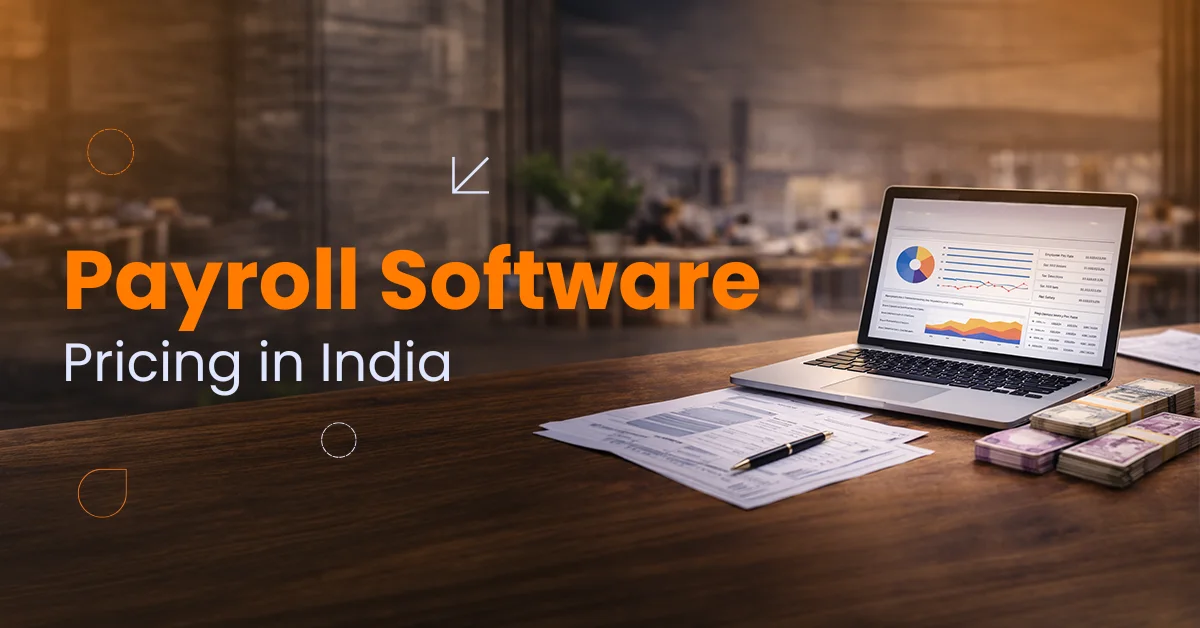
Understanding payroll software cost is one of the first steps organisations take before choosing a payroll platform. Businesses evaluating payroll software price options want clarity on how vendors structure their pricing, what features are included, and how those costs grow as employee numbers increase.
Payroll software pricing in India has changed in recent years. Small businesses once relied on spreadsheets or local accounting tools. Today, payroll platforms automate salary processing, statutory deductions, payslips, and compliance documentation.
Companies now compare multiple factors before selecting a payroll system. They review payroll software price comparison data, analyse hr payroll software price models, and examine long term operational value.
This guide explains payroll software cost in India for 2026, what pricing models vendors use, and how businesses evaluate hr and payroll software pricing before making a purchase decision.
Primary considerations businesses analyse include payroll software cost comparison between vendors, pricing based on employee count, and feature availability within different pricing plans.
What Determines Payroll Software Cost in India
Payroll software cost in India varies based on several operational factors. Vendors price payroll software according to employee strength, feature access, compliance support, and automation capability.
Companies evaluating payroll software prices should examine these core elements before selecting a vendor.
1. Employee Count and Payroll Volume
Most payroll software providers price their systems based on the number of employees processed each month.
For example:
Small businesses with 10 to 25 employees usually pay a lower payroll software cost.
Mid-sized organisations with 100 or more employees pay higher subscription fees because the system processes larger payroll volumes.
As employee numbers grow, hr payroll software price typically increases through tiered pricing structures.
2. Compliance and Statutory Automation
Indian payroll requires accurate handling of statutory deductions, such as:
- Provident Fund contributions
- Employee State Insurance
- Professional Tax
- Tax deducted at source
Payroll software cost often reflects how well the platform manages these statutory requirements.
Platforms that automate statutory calculations and generate compliance reports usually carry a higher payroll software price compared with basic payroll tools.
3. Integration with HR Systems
Many organisations prefer payroll software that connects with attendance, leave, and employee management systems.
When payroll software integrates with HR systems, businesses gain a unified payroll and workforce record. Platforms offering complete HR and payroll software pricing packages usually include:
- Attendance integration
- Leave management
- Employee records
- Payroll reporting
This integration slightly increases payroll software cost but reduces manual administration work.
4. Automation and Payroll Processing Speed
Payroll automation reduces the time HR teams spend preparing salary calculations. Software platforms that automatically generate payslips, tax reports, and statutory filings usually charge a higher hr payroll software price.
However, the time saved during monthly payroll cycles often justifies the investment.
Payroll Software Price Models Used in India
Vendors in India use several pricing structures. Understanding these models helps businesses perform a clear payroll software price comparison before selecting a platform.
1. Per Employee Monthly Pricing
The most common payroll software price structure in India is a per-employee subscription model.
Under this pricing structure:
Businesses pay a monthly fee based on employee count.
For example:
Small teams may pay between ₹40 and ₹120 per employee per month, depending on features.
If a company has 50 employees and the payroll software cost is ₹80 per employee, the monthly payroll subscription becomes ₹4000. This model allows companies to scale payroll systems gradually as teams expand.
2. Flat Monthly Subscription
Some vendors provide payroll platforms with a fixed monthly subscription fee.
Under this model:
Businesses pay a set amount regardless of employee numbers within a specified range.
For example:
A payroll platform may charge ₹3000 to ₹8000 per month for up to 100 employees.
Companies with a predictable workforce size often prefer this hr payroll software price model because it simplifies budgeting.
3. Annual Licensing Model
Certain enterprise payroll platforms operate on annual contracts. Instead of monthly billing, organisations pay a yearly licence fee.
This model usually includes:
- Dedicated implementation support
- Compliance configuration
- Payroll system training
- Data migration from previous payroll systems
Annual hr and payroll software pricing packages are often chosen by large organisations that require advanced payroll configuration.
| Pricing Model | How It Works | Typical Cost Range | Best For |
| Per Employee Monthly Pricing | Businesses pay a fixed monthly fee for each employee processed in payroll | ₹40 – ₹150 per employee per month | Startups and small businesses with growing teams |
| Flat Monthly Subscription | Companies pay a fixed monthly price covering a specific employee range | ₹3000 – ₹8000 per month for up to ~100 employees | Small to mid-sized companies with stable workforce sizes |
| Annual Licensing Model | Organisations pay a yearly license fee for payroll software access | ₹1.5 lakh – ₹5 lakh per year, depending on company size | Large companies need advanced payroll features |
| Enterprise Custom Pricing | Vendors offer customised pricing based on company requirements and integrations | Varies based on workforce size and feature scope | Enterprises with complex payroll structures |
Payroll Software Cost Comparison Between Popular Pricing Models
Before choosing a payroll platform, businesses conduct a payroll software cost comparison across vendors. Each pricing model offers different financial advantages depending on company size.
Small startups often select per-employee pricing because it keeps payroll software costs low during early growth stages. Mid-sized companies compare flat subscription pricing against per-employee plans to determine which structure reduces long term payroll expenses.
Large organisations with complex payroll operations typically select annual licensing models where hr and payroll software pricing includes advanced reporting and compliance features. Conducting a payroll software price comparison also helps businesses identify hidden costs such as implementation charges, training fees, or payroll report exports.
Payroll Software Cost Comparison by Company Size
| Company Size | Typical Payroll Software Cost | Example Monthly Cost |
| 10 Employees | ₹40 – ₹120 per employee | ₹400 – ₹1200 |
| 50 Employees | ₹60 – ₹120 per employee | ₹3000 – ₹6000 |
| 200 Employees | ₹70 – ₹150 per employee | ₹14,000 – ₹30,000 |
This pricing structure reflects the most common payroll software pricing models used in India. As employee numbers increase, businesses typically upgrade to platforms that include automation features, compliance management, and integrated HR tools.
Bharat Payroll offers transparent pricing that helps businesses evaluate payroll software cost without unexpected fees.
Explore Bharat Payroll Features
Typical Payroll Software Cost Range in India
Companies often ask how much payroll software costs they should expect when evaluating platforms. The answer depends on organisation size, payroll complexity, and the type of pricing model used by vendors.
Most payroll platforms in India follow structured pricing tiers designed for different company sizes. Reviewing these tiers helps businesses perform a clear payroll software cost comparison before selecting a provider.
Payroll Software Cost for Small Businesses
Small companies with fewer than 25 employees generally pay lower payroll software prices because payroll volumes are smaller.
Typical payroll software cost range:
₹40 to ₹120 per employee each month
For example:
A company with 20 employees paying ₹80 per employee would spend about ₹1600 per month on payroll software. Small companies often choose this model because it allows them to manage payroll expenses while maintaining statutory compliance.
Payroll Software Price for Growing Businesses
Companies with 50 to 200 employees require more advanced payroll capabilities. These organisations often use platforms that integrate payroll with employee records and attendance systems.
Typical hr payroll software price range:
₹70 to ₹150 per employee per month
These systems usually include:
- Automated payroll processing
- Compliance reporting
- Payslip generation
- Payroll registers
- Employee records
For growing companies, these tools reduce HR workload and improve payroll accuracy.
HR and Payroll Software Pricing for Larger Organisations
Companies with several hundred employees require payroll systems that handle large payroll volumes and multiple compliance rules.
HR and payroll software pricing for these organisations may follow:
- Enterprise subscription plans
- Annual licensing agreements
- Custom payroll configurations
Payroll software price for large organisations may range between ₹1.5 lakh to ₹5 lakh per year, depending on feature scope and workforce size. These systems support complex payroll structures such as multi-location payroll, multiple salary components, and advanced reporting.
Payroll Software Price Comparison: What Businesses Should Evaluate
Choosing payroll software based only on price can lead to operational problems later. Businesses comparing payroll software price options should review several practical factors before selecting a vendor.
Feature Availability
During payroll software price comparison, organisations should review the features included in each pricing plan.
Important payroll capabilities include:
- Automated salary calculations
- Payslip generation
- Statutory deduction automation
- Payroll reports and registers
- Employee tax records
Platforms that include these features reduce the time HR teams spend managing payroll operations.
Compliance Support
Indian payroll requires careful handling of statutory deductions and compliance reports. Businesses comparing hr payroll software prices should confirm whether the platform supports:
- Provident Fund reporting
- Employee State Insurance documentation
- Tax deduction calculations
- Professional tax deductions
Software that automates these functions reduces the risk of payroll errors.
Scalability
Companies rarely remain the same size for long. Payroll software cost comparison should include long-term scalability.
A payroll platform should support growth without requiring frequent system changes. When evaluating payroll software price comparison options, businesses should consider how pricing changes as employee numbers increase.
Customer Support and Implementation
Payroll software often requires configuration before the first payroll cycle runs successfully. Businesses should review whether the vendor provides:
- Payroll setup assistance
- Employee data migration
- Payroll training for HR teams
- Customer support during payroll cycles
These services affect hr and payroll software pricing and influence the overall value of the platform.
How Businesses Choose the Right Payroll Software Price Plan
Selecting payroll software should involve more than reviewing pricing tables. Businesses should consider how the platform supports payroll operations as the workforce expands. HR teams often evaluate payroll software price comparison options using the following criteria.
- Payroll accuracy and compliance capability
- Availability of payroll reports and salary registers
- Employee record management
- Integration with attendance and leave systems
- Vendor support during payroll processing
Businesses that evaluate these factors alongside payroll software cost comparison often select platforms that support long-term operational stability.
Payroll software becomes a core administrative tool once employee numbers grow. Choosing the right payroll platform reduces payroll errors and improves salary processing efficiency.
Conclusion
Payroll software cost in India depends on several operational factors, including employee strength, compliance requirements, and automation features. Businesses comparing payroll software price options should evaluate both the pricing model and the payroll capabilities included within each platform.
Organisations that review payroll software price comparison carefully can select systems that simplify salary processing while maintaining statutory compliance.
Platforms such as Bharat Payroll provide structured hr and payroll software pricing that supports accurate payroll operations as businesses grow.
How Bharat Payroll Simplifies Payroll Software Cost Management
Businesses often struggle with payroll systems that include complex pricing structures or hidden charges. Bharat Payroll addresses this concern by offering transparent payroll software pricing that organisations can evaluate easily.
Bharat Payroll provides a structured payroll platform designed for Indian compliance requirements. Organisations using Bharat Payroll benefit from:
- Clear payroll software cost based on workforce size
- Automated statutory calculations, including PF, ESI, and tax deductions
- Accurate payroll reports and salary registers
- Secure employee payroll records
- Integrated payroll processing with HR data
This structure allows HR teams to process payroll faster while maintaining accurate documentation.
For companies comparing payroll software cost options, Bharat Payroll provides a platform that balances functionality with predictable pricing.
Get Accurate Payroll Pricing Guidance
Understand payroll software cost clearly and choose the right pricing model for your organisation with Bharat Payroll.
Frequently Asked Questions
1. How much does payroll software cost in India?
Payroll software cost in India typically ranges from ₹40 to ₹150 per employee per month, depending on features and company size.
2. What affects payroll software price?
Payroll software price depends on employee count, payroll automation features, compliance reporting capability, and integration with HR systems.
3. What is the difference between payroll software price and hr payroll software price?
Payroll software price usually refers to salary processing systems, while hr payroll software price may include additional HR tools such as employee records and attendance management.
4. Why should businesses compare payroll software costs?
Payroll software cost comparison helps organisations evaluate long-term payroll expenses and select platforms that support their operational needs.
5. Is payroll software suitable for small businesses?
Yes. Payroll platforms help small businesses process salaries accurately, generate payslips, and maintain compliance documentation without manual calculations.