


What Is Statutory Compliance in Payroll in India?
Statutory compliance in payroll in India means following the legal rules that govern salary payments, employee deductions, employer contributions, tax deductions, leave-linked payouts, and statutory records. For employers, this is not only a legal duty. It directly affects payroll accuracy, audit readiness, employee trust, and business continuity.
In practical terms, payroll compliance covers areas such as wage rules, EPF, ESI, gratuity, bonus, professional tax, where applicable, tax deduction at source, and employee records. It also requires businesses to track state-specific rules, due dates, wage thresholds, and documentation standards.
For growing companies, compliance issues rarely begin with one large failure. They usually begin with small gaps such as wrong salary components, missed due dates, incorrect wage definitions, outdated state rules, or scattered employee data. Over time, those gaps become penalties, disputes, and operational delays.
Bharat Payroll helps employers manage these moving parts in one system by connecting payroll, attendance, leave, statutory components, records, and approval workflows.
Explore Bharat Payroll’s AI-enabled HR and Payroll solutions to automate your compliance processes seamlessly.
Benefits of Statutory Compliance
- Statutory compliance ensures improved employee satisfaction and workplace conditions by guaranteeing fair treatment and protecting employee rights.
- It protects businesses from legal penalties and financial losses, reducing the risk of non-compliance. Additionally, compliance helps businesses manage their tax liabilities effectively, reducing the risk of unexpected financial burdens.
- Compliance builds trust between employers and employees, promoting a positive and happy workplace environment.
- It ensures smooth and lawful business operations, supporting business growth and expansion.
Discover how Bharat Payroll can help you maintain flawless statutory compliance while boosting employee satisfaction. Book a free demo today!
What Happens When Payroll Compliance Fails
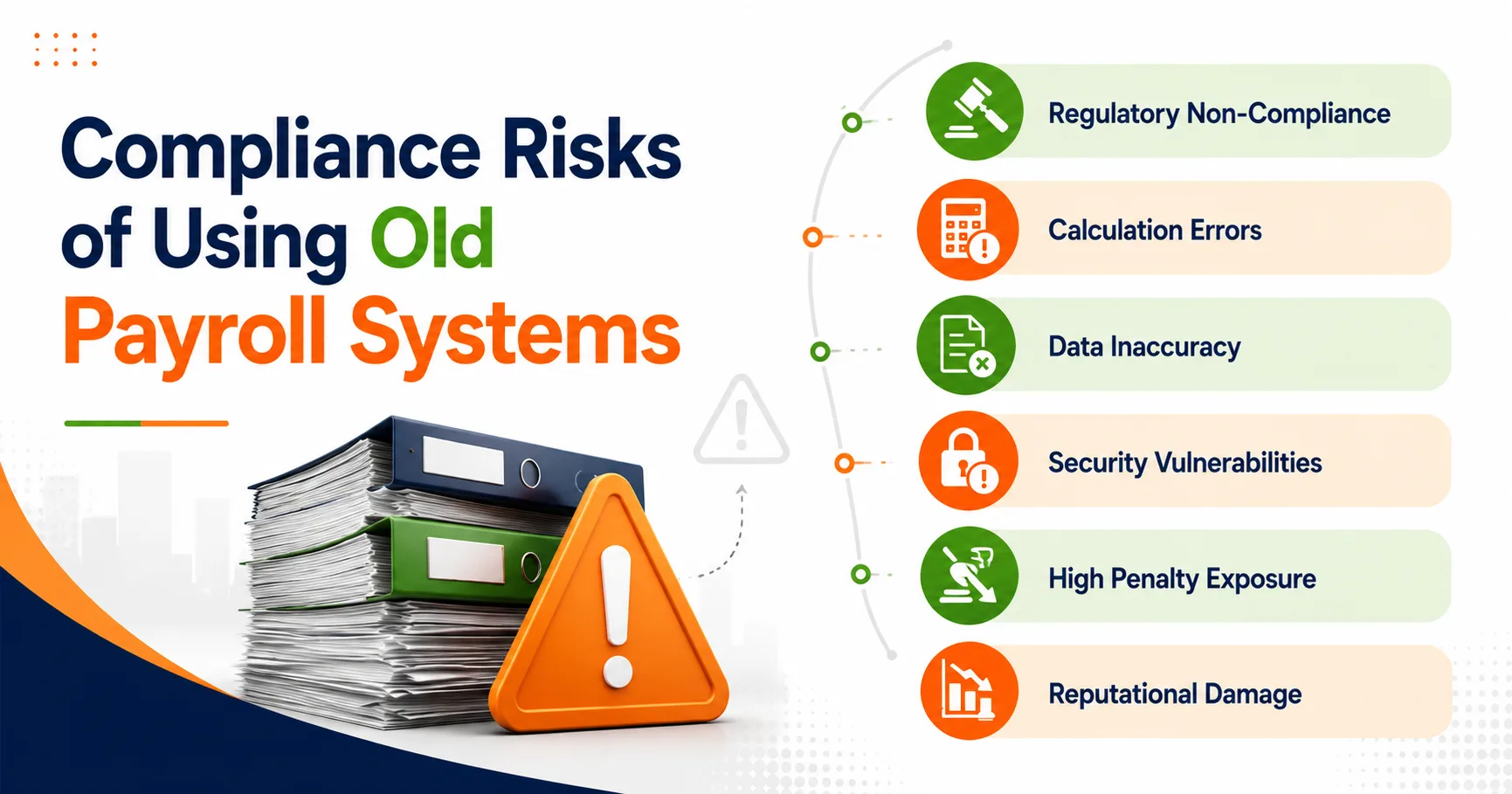
- Non-compliance risks include legal penalties and fines for the organization, as well as damage to reputation and operational disruptions, especially for violations of labour law and other statutory requirements.
- It can harm employee welfare and workplace morale, leading to increased employee turnover rates.
- Non-compliance can lead to severe penalties, fines, lawsuits, and even the confiscation of business licenses, making it essential to prioritise statutory compliance. Failure to comply with the applicable tax regime can also result in additional penalties and scrutiny from tax authorities.
- Businesses may face reputational damage and financial losses, making it essential to prioritise statutory compliance.
- Ignoring statutory compliance laws can lead to severe financial and legal consequences, including imprisonment.
Stop Compliance Errors Before They Turn Into Penalties
Manage payroll, statutory deductions, filings, and employee records in one system built for Indian employers.
Which Payroll Compliances Should Indian Employers Track
- Statutory compliance in payroll ensures employers and employees follow government-mandated rules, including the Payment of Wages Act and Minimum Wages Act. These rules govern the calculation and payment of employee’s salary.
- It protects employee rights and maintains lawful payroll practices, reducing the risk of legal action. Payroll compliance also involves accurate tax deduction from employee’s salary as per statutory requirements.
- Compliance reduces legal risks and promotes trust within the organization, supporting business growth and expansion.
- It is essential for smooth business operations and employee welfare, making it a critical aspect of payroll management.
Simplify payroll statutory compliance with Bharat Payroll’s AI-enabled platform. Schedule your free demo and see how easy compliance can be.
- The Payment of Wages Act regulates timely payment of wages, with penalties for delays beyond one month.
- Employees in organizations with under 1,000 staff must be paid by the 7th of each month, while those with over 1,000 employees must be paid by the 10th, as mandated by the Payment of Wages Act, 1936.
- The Act applies to employees earning up to ₹10,000 monthly, with payment modes including cash, cheque, or bank transfer with consent.
- It is essential to ensure compliance with the Payment of Wages Act to avoid legal penalties and maintain employee trust.
Ensure timely wage payments effortlessly with Bharat Payroll’s automated payroll solutions designed to keep you compliant.
Minimum Wages and Floor Wage: What Employers Must Check
- The Minimum Wages Act prevents labor exploitation by fixing minimum wage rates, which vary by state and sector.
- Minimum wages are influenced by provincial governments and consider factors such as cost of living and wage period.
- The Act ensures fair wage standards across India, protecting employee rights and promoting social security.
- It is essential to stay updated on minimum wage laws and regulations to ensure compliance and avoid legal action.
Bonus Compliance: Eligibility, Thresholds, and Employer Risk
- The Payment of Bonus Act provides annual bonuses to employees in factories and organizations with over 20 employees.
- Bonus is calculated based on employee salary and company profits, with eligibility requiring 30+ working days and earning ₹21,000 or less monthly.
- The Payment of Bonus Act, 1965 mandates a minimum bonus of 8.33% of wages for eligible employees.
- The Act originated during WWI as a war bonus in textile mills and has since been amended to include various industries.
- It is essential to ensure compliance with the Payment of Bonus Act to maintain employee trust and avoid legal penalties.
Automate bonus calculations and compliance with Bharat Payroll’s comprehensive payroll management platform. Book a demo now.
Equal Remuneration Act- Equal Pay and Non-Discrimination Under Current Wage Rules
- The Equal Remuneration Act ensures equal pay for men and women workers performing the same work, preventing sex-based discrimination.
- The Act applies to virtually all establishments, regardless of size or sector, and promotes gender equality and fair remuneration practices.
- It is essential to ensure compliance with the Equal Remuneration Act to maintain employee trust and avoid legal penalties.
- The Act supports social security and labor law compliance management, making it a critical aspect of payroll management.
Promote fair remuneration effortlessly with Bharat Payroll’s AI-driven HR solutions. Request a free demo to learn more.
EPF Compliance: Coverage, Wage Ceiling, and Contributions
- The Employee Provident Fund (EPF) as governed by the Employees Provident Fund and Miscellaneous Provisions Act, 1952, is a social welfare act requiring employee and employer contributions to the employee provident fund.
- The EPF applies to establishments with 20+ employees, including contract workers, and contributions are based on basic wages and dearness allowance. The Miscellaneous Provisions Act includes various miscellaneous provisions that support the administration and enforcement of the provident fund scheme.
- The Act ensures social security and financial benefits for employees, making it a critical aspect of payroll management.
- It is essential to ensure compliance with the EPF Act to maintain employee trust and avoid legal penalties.
ESI and Other Social Security Compliance in Payroll
- Social security is a critical aspect of statutory compliance, including the Employees State Insurance Act and Labour Welfare Fund Act.
- The Employees’ State Insurance Act provides social security benefits to employees in case of sickness, maternity, and employment injuries, ensuring their welfare, with the Employees State Insurance Corporation (ESIC) administering the scheme.
- The Acts provide benefits such as medical care, sickness benefit, and employment injury benefit, supporting employee welfare and social security.
- The State Labour Welfare Board manages the Labour Welfare Fund and oversees the disbursal of welfare benefits to workers.
- It is essential to ensure compliance with social security laws and regulations, under the oversight and regulatory role of the central government, to maintain employee trust and avoid legal penalties.
- Social security supports labor law compliance management, making it a critical aspect of payroll management.
Employee’s Compensation and Employer Liability
The Employee’s Compensation Act, 1923 requires employers to compensate employees for certain workplace injuries, occupational diseases, disablement, or death arising out of and in the course of employment. For employers, this is not a background legal issue. It is a payroll-linked compliance area because compensation liability, wage records, and employment documentation often become central during claims and inspections. In high-risk industries, this remains a critical part of statutory preparedness in India.
Ensuring Compliance
- Ensuring compliance requires a thorough understanding of applicable laws and regulations, including labor laws and tax regulations. Key laws organizations must understand for compliance include the Factories Act, which regulates working conditions and safety standards in factories, and the Industrial Disputes Act, which governs the resolution of industrial disputes and helps maintain workplace harmony.
- The Payment of Gratuity Act, 1972 applies to every shop or establishment employing 10 or more persons and governs gratuity payments for long service, along with the Industrial Disputes Act, which plays a crucial role in resolving industrial disputes between employers and employees.
- It is essential to stay updated on changing Acts and policies, including the Minimum Wages Act and Equal Remuneration Act. Act mandates require employers to inform employees of their rights and adhere to compulsory notification requirements under various employment laws.
- Compliance audits and training employees are critical aspects of ensuring compliance, making it essential to prioritise these activities.
- It is essential to document policies and procedures, making it easier to ensure compliance and maintain employee trust.
Maintaining positive industrial relations is also a vital part of statutory compliance, as it helps foster a harmonious workplace and ensures adherence to employment laws.
Payroll Compliance
- Payroll compliance is a critical aspect of statutory compliance, including the Payment of Wages Act and Minimum Wages Act. Payroll compliance also includes the deduction and remittance of income tax as per the Income Tax Act.
- It is essential to ensure compliance with payroll laws and regulations, including meeting tax deduction requirements and interacting with the Income Tax Department, to maintain employee trust and avoid legal penalties.
- Payroll compliance supports labor law compliance management, making it a critical aspect of payroll management. It also involves managing tax deductions and ensuring all statutory requirements under the Income Tax Act are met.
- It is essential to prioritise payroll compliance to ensure smooth business operations and employee welfare.
Documenting Policies and Procedures
Documenting policies and procedures is fundamental to effective statutory compliance in HR. By maintaining clear, up-to-date records of all employment, payroll, and labor law policies, companies create a transparent framework that guides both management and employees.
This documentation serves as a reference point for resolving disputes, clarifying expectations, and demonstrating compliance during audits or inspections. Proper documentation also helps prevent non compliance by ensuring that everyone in the organisation understands their rights and responsibilities under applicable laws.
To remain effective, these documents should be regularly reviewed and updated in line with changes in statutory requirements and best practices. Ultimately, thorough documentation is a proactive step in statutory compliance in HR, reducing risk and supporting a culture of accountability.
Training Employees on Compliance
Training employees on compliance is a proactive strategy to ensure that everyone in the organisation understands and adheres to statutory requirements. Comprehensive training programs should cover key labor laws such as the Minimum Wages Act, Equal Remuneration Act, Employees Provident Fund, and the Wages Act, among others.
By educating staff about minimum wages, equal remuneration, provident fund contributions, and the consequences of non compliance, companies can significantly reduce the risk of legal penalties and foster a culture of fairness and transparency. Effective training should be interactive, provide real-world examples, and allow employees to ask questions and clarify doubts.
Regular refresher sessions help keep everyone updated on changes in the law and reinforce the importance of compliance. Investing in employee training not only safeguards the organization against non compliance but also empowers employees to contribute to a compliant and ethical workplace.
Automating Compliance Processes
Automating compliance processes is an increasingly popular and effective approach to managing statutory compliance in payroll and HR. By implementing specialized software solutions, businesses can streamline the tracking and management of compliance requirements, reducing the likelihood of non compliance due to human error or oversight.
Automation enables real-time updates on regulatory changes, ensures timely submission of statutory returns, and maintains accurate records for audits. These systems can also generate alerts for upcoming deadlines and provide comprehensive reports, freeing up HR and payroll teams to focus on strategic tasks.
By embracing automation, companies can enhance statutory compliance in payroll, minimise risks, and ensure that all legal obligations are met efficiently and consistently.
Which Businesses Need Statutory Compliance Control the Most
Some businesses feel payroll pressure earlier than others. The risk is usually higher when salary calculations, attendance, deductions, and statutory filings are handled across multiple sheets, teams, or tools.
This matters most for:
- Businesses operating across multiple states
- Companies with shift staff or attendance-linked salary rules
- Factories, retail groups, logistics teams, and service businesses with large headcounts
- Growing startups and SMEs are moving from manual payroll to formal compliance processes
- Employers managing EPF, ESI, bonus, gratuity, and tax deduction together
- HR teams handling payroll without a connected compliance workflow
For these businesses, payroll errors are rarely isolated. One wrong setup can affect salary, deductions, arrears, employee confidence, and statutory reporting at the same time.
Common Compliance Mistakes
- Common compliance mistakes include failing to stay updated on changing Acts and policies, neglecting to conduct compliance audits, and failing to train employees.
- It is essential to avoid these mistakes to ensure compliance and maintain employee trust, making it critical to prioritize compliance activities.
- Compliance mistakes can lead to legal penalties and damage to reputation, making it essential to take compliance seriously.
- It is essential to learn from compliance mistakes, making it easier to improve compliance practices and avoid future mistakes.
How Bharat Payroll Helps Employers Stay Compliant
Bharat Payroll helps employers manage statutory compliance as part of payroll operations, not as a last-minute correction exercise.
With Bharat Payroll, employers can:
- Maintain salary structures with statutory components mapped correctly
- Connect attendance, leave, and payroll in one workflow
- Track employee eligibility for major compliance areas
- Apply payroll deductions with better control and visibility
- Maintain approval trails and employee records for audits
- Reduce dependency on manual reminders and separate trackers
- Improve salary transparency for employees
For employers, this means less rework, lower compliance risk, and better payroll confidence every month.
Conclusion
Statutory compliance in payroll in India is not a side task. It sits at the centre of salary accuracy, employee trust, employer risk, and business continuity. When payroll is compliant, employees are paid correctly, records stay clean, and leadership has fewer surprises. When it is not, even small errors can expand into disputes, notices, and operational drag.
For Indian employers, the real challenge is not knowing that compliance matters. It is managing changing rules, state-level variation, due dates, deductions, and records without losing control.
Bharat Payroll helps employers bring payroll, compliance, employee data, and approval workflows into one structured system so statutory responsibilities are easier to manage and harder to miss.
Stop Compliance Errors Before They Turn Into Penalties
Manage payroll, statutory deductions, filings, and employee records in one system built for Indian employers.
Frequently Asked Questions (FAQs) about Statutory Compliance
1. What is statutory compliance?
Statutory compliance refers to the adherence to laws and regulations set by the central or state government that govern business operations, especially concerning payroll, labor laws, and employee welfare.
2. Why is statutory compliance important for businesses?
Statutory compliance is crucial as it ensures fair treatment of employees, protects businesses from legal penalties, supports smooth business operations, and promotes trust between employers and employees.
3. What are some key labor laws included in statutory compliance?
- Key labor laws include the Minimum Wages Act, Equal Remuneration Act, Payment of Bonus Act, Employees Provident Fund Act, Employees State Insurance Act, Payment of Gratuity Act, Maternity Benefit Act, Shop and Establishment Act, and Trade Unions Act.
- The Payment of Gratuity Act divides non-government employees into two categories for gratuity calculation purposes.
- Trade unions, governed by the Trade Unions Act, play a significant role in statutory compliance by facilitating collective bargaining and ensuring legal protections for employees.
4. Who is responsible for ensuring statutory compliance in an organization?
Both the employer and the HR department share responsibility for ensuring statutory compliance by staying updated on laws, conducting audits, and implementing compliant payroll and employment practices.
5. What are the risks of non-compliance with statutory laws?
Non-compliance can lead to legal penalties, fines, damage to reputation, operational disruptions, and may negatively impact employee morale and retention.
6. How often should organizations conduct compliance audits?
Organizations should conduct regular compliance audits, at least annually or whenever there are significant changes in labor laws or company operations, to ensure ongoing adherence to statutory requirements.
7. Can statutory compliance requirements vary by state in India?
Yes, statutory compliance requirements can vary between central and state governments, with some laws and regulations differing based on regional labor policies.
8. What role does payroll compliance play in statutory compliance?
Payroll compliance ensures that employee wages, benefits, and deductions adhere to applicable laws such as the Payment of Wages Act and Minimum Wages Act, which is essential for overall statutory compliance.
9. How can businesses stay updated on changing statutory compliance requirements?
Businesses can stay updated by consulting labor law consultants, subscribing to legal updates, using compliance management software, and regularly training HR personnel and management.
10. What benefits do employees gain from statutory compliance?
Employees benefit from fair wages, equal remuneration, social security benefits, maternity benefits, safe working conditions, and protection against unfair labor practices through statutory compliance. Employees in the financial services industry also benefit from statutory compliance, including sector-specific regulations that address unique operational and regulatory requirements. Additionally, the Maternity Benefits Act provides important protections for female employees, ensuring paid maternity leave and safeguarding their rights during and after pregnancy.
11. Which payroll compliances should employers usually track?
Most employers track wage rules, EPF, ESI, bonus, gratuity, tax deduction at source, leave-linked payouts, and state-specific payroll obligations.
12. How can employers reduce payroll compliance risk?
Employers reduce risk by using updated payroll rules, maintaining clean employee records, linking attendance and leave with payroll, reviewing statutory thresholds regularly, and using structured payroll software.

Wage Payment Compliance Employers Cannot Ignore