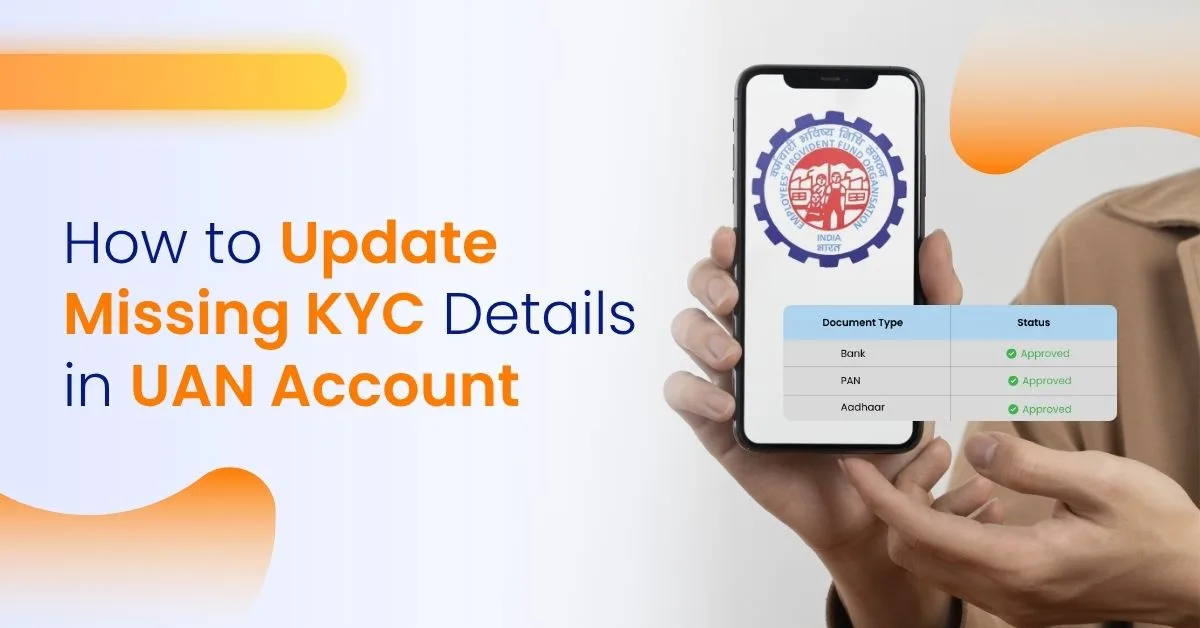
Managing your Universal Account Number (UAN) is no longer just an employee responsibility. In 2026, accurate KYC details are critical for employees, HR teams, payroll managers, and employers alike. Missing or incorrect information can delay PF withdrawal, block EPF account online services, and expose businesses to avoidable compliance risks.
The Employees’ Provident Fund Organisation (EPFO) now relies heavily on digitally approved KYC, employer verification, and system-driven audits. Every Aadhaar, PAN, or bank account update submitted by an employee must be validated by the employer, making payroll and HR teams directly accountable for KYC accuracy.
This is where Bharat Payroll becomes essential. Bharat Payroll’s AI-enabled payroll and compliance platform helps organizations manage UAN-linked KYC updates, employer approvals, PF calculations, and EPFO reporting from one centralized system. Instead of chasing documents, tracking approvals, or fixing PF errors later, businesses can automate the entire KYC verification workflow with confidence.
Whether you’re an employee trying to update bank account details or an employer ensuring EPFO compliance at scale, this step-by-step guide explains how to update missing KYC details in a UAN account, what employers must verify, and how payroll automation simplifies EPF compliance in 2026.
Introduction to UAN Account
The Universal Account Number (UAN) is a unique 12-digit number issued by the Employees’ Provident Fund Organization to every EPF member. It links all your PF accounts across different employers under one identity.
UAN remains the same throughout your career, even when you change jobs frequently. This consolidation simplifies PF account management, transfers, withdrawals, and compliance tracking.
In 2026, UAN accuracy matters more because:
- EPFO audits are fully digital
- Employer approvals are logged and traceable
- PF transfers and withdrawals depend on verified KYC
- Payroll systems sync directly with EPFO data
Employees can access their UAN account using the UAN login portal or the UMANG app to update KYC details, check PF balance, and transfer PF. However, every KYC update requires employer verification, making HR and payroll teams key stakeholders.
To simplify this, Bharat Payroll’s AI-enabled platform automates UAN-linked workflows, EPFO KYC updates, employer approvals, and compliance tracking from one dashboard.
Importance of KYC Verification
KYC verification is mandatory for EPF members to access digital EPFO services securely.
Verified KYC details allow:
- Online PF withdrawal without delays or manual employer follow-ups
- PF transfer without employer attestation using verified digital records
- Faster claim settlement through automated EPFO verification workflows
- Secure EPF account access with identity and bank validation
KYC verification also prevents unauthorized transactions and protects employees’ long-term retirement savings.
EPF members can update KYC details online using the EPFO member portal.
Employers digitally verify and approve submitted KYC details through EPFO systems.
For businesses, verified KYC ensures:
- Accurate PF contributions calculated using compliant wage definitions
- Error-free payroll processing across monthly salary and statutory filings
- Reduced compliance risk through timely verification and audit readiness
Required Documents for KYC
To complete the EPFO KYC update, EPF members must upload valid documents that match their basic details.
Accepted KYC documents include:
- Aadhaar card
- PAN card
- Bank account details with IFSC code
- Passport
- Driving license
- Voter ID
Ensure:
- Name matches bank records
- PAN and Aadhaar details are correct
- Bank account number and IFSC code are accurate
Incorrect details often lead to document rejection or a KYC pending status.
Updating KYC Details on UAN Portal (Step-by-Step)
Step 1: Log in to the UAN Member Portal
Visit the UAN member portal, enter your Universal Account Number UAN, password, and captcha code. Use your registered mobile number to receive OTP if required.
Step 2: Navigate to the KYC Section
After login:
- Click Manage
- Select KYC
This opens the section to update missing KYC details online.
Step 3: Add Missing KYC Details
Choose the document type:
- Aadhaar
- PAN
- Bank
Enter:
- Bank account number
- IFSC code
- Name as per bank records
Upload scanned copies of supporting documents clearly.
Step 4: Submit for Employer Approval
Once submitted:
- KYC status shows Pending
- Employer verifies and approves
Without employer approval, KYC remains incomplete.
Step 5: Check KYC Status
You can check KYC status anytime in the portal:
- Pending
- Approved
- Rejected
Upon successful verification, EPFO sends SMS notifications.
Linking Bank Account to UAN
Linking a personal bank account to your Universal Account Number (UAN) is no longer optional. In 2026, EPFO processes almost every transaction digitally. Without verified bank details, your EPF account online simply cannot function fully.
A linked bank account is mandatory for:
- PF withdrawal, whether partial or full
- Online claims, including advance and final settlement
- PF transfers when changing jobs
To avoid rejection, the bank account information must be accurate and consistent across records. This includes:
- Correct bank account number entered without formatting errors
- Valid IFSC code matching the branch exactly
- Name matching Aadhaar and PAN records to pass automated checks
Once the employee submits bank details through the UAN portal, employer approval is required. Only after employer verification does EPFO digitally approve the bank KYC, enabling withdrawals and transfers.
For businesses, correct bank linking reduces payroll disputes, failed PF credits, and employee escalations.
Resolving Common Issues
Even in 2026, many EPFO KYC updates fail due to avoidable errors. Understanding these issues early saves time for both employees and HR teams.
The most common EPFO KYC problems include:
- Incorrect personal details, such as name or date of birth, mismatch
- Bank account mismatch between UAN, Aadhaar, and bank records
- Invalid IFSC code due to branch changes or typing errors
- Blurred document uploads that fail digital verification
- Employer’s delay in approving the submitted KYC details
When issues occur, EPFO provides multiple resolution paths. Employees and HR teams can:
- Track KYC verification status online through the EPFO member portal
- Contact EPFO customer care for guidance or clarification
- Visit the nearest EPFO office for unresolved or complex cases
From a business perspective, manual follow-ups consume HR bandwidth. Payroll automation platforms like Bharat Payroll reduce repeated tracking by sending alerts, maintaining KYC dashboards, and flagging pending employer approvals early.
Using the UMANG App
The UMANG app has become a critical mobile channel for EPF services. In 2026, many employees prefer managing PF tasks on mobile rather than desktop portals.
Through the UMANG app, EPF members can:
- Update KYC details directly from their mobile phone
- Link bank accounts and submit details for employer approval
- Check PF balance in real time
- Transfer PF between employers digitally
The app offers secure authentication and SMS notifications for every major update. However, employees must always download UMANG only from official app stores and follow EPFO guidelines to avoid security risks.
For employers, UMANG adoption reduces HR tickets related to balance checks and basic KYC updates.
Consequences of Not Updating KYC Details
Missing or incorrect KYC details create real operational problems, not just minor delays.
If KYC details remain pending or incorrect:
- PF withdrawal requests get rejected automatically
- PF transfer requests fail, especially during job changes
- EPFO services remain blocked, limiting online access
This impacts employees financially and increases frustration. For employers, unresolved KYC issues lead to repeated queries, compliance exposure, and reputational risk.
Both employees and employers must treat KYC updates as a shared responsibility, not an individual task.
Employer’s Role in KYC Verification
In 2026, employers play a decisive role in EPFO compliance. Employee-submitted KYC details are not valid until the employer verifies them.
Employers must:
- Verify uploaded documents such as Aadhaar, PAN, and bank proof
- Approve KYC details digitally on the EPFO employer portal
- Maintain compliance records for audits and inspections
Any delay in approval directly affects employees’ ability to withdraw PF or transfer accounts. From a compliance standpoint, delayed approvals expose businesses to audit observations and employee grievances.
This is why modern HR teams rely on payroll platforms like Bharat Payroll to track pending approvals and streamline verification workflows.
What This Means for Employers & Businesses (2026)
In 2026, KYC compliance is no longer a background HR task. It is a business-critical obligation tied directly to payroll accuracy and statutory compliance.
The business impact of poor KYC management includes:
- Payroll calculation errors due to incorrect PF eligibility
- Delayed PF contributions, increasing compliance exposure
- EPFO penalties during inspections or audits
- Increased HR workload from repeated employee follow-ups
- Employee dissatisfaction caused by blocked withdrawals
Manual spreadsheets and email tracking do not scale. Automation is no longer optional for growing organizations.
Who Should Pay Attention in 2026
HR Teams
HR teams manage KYC approvals, employee queries, document tracking, and EPFO coordination. Clear systems reduce errors and daily follow-ups.
CFOs
CFOs are responsible for statutory compliance, audit readiness, PF accuracy, and financial reporting. KYC gaps directly affect risk and penalties.
Founders & Business Owners
Founders remain accountable for employer compliance, legal exposure, and company reputation. Poor EPFO handling reflects badly on the employer brand and governance.
2026 KYC Compliance Impact Table
| Area | Without KYC Update | With Digitally Approved KYC |
|---|---|---|
| PF Withdrawal | Delayed or rejected | Fast online processing |
| PF Transfer | Manual intervention | Seamless transfer |
| Payroll Accuracy | High error risk | Automated compliance |
| Employer Audit Risk | Increased | Reduced |
| Employee Experience | Poor | Smooth |
Why Payroll Automation Matters Now
In 2026, managing EPFO compliance manually is no longer practical. KYC rules are stricter, audits are more frequent, and even small errors can delay PF withdrawal or trigger compliance notices. Spreadsheets and email-based tracking simply do not scale as employee count grows.
This is where Bharat Payroll becomes critical for modern businesses. Instead of reacting to issues after they arise, payroll automation allows HR and finance teams to stay ahead of compliance requirements.
Bharat Payroll helps businesses:
- Automate EPFO KYC updates without repetitive manual entry
- Track employer approvals in real time from a single dashboard
- Reduce HR workload by minimizing employee follow-ups
- Ensure PF compliance through rule-based validation and alerts
AI-driven payroll automation ensures salary processing, PF contributions, and KYC verification remain accurate, consistent, and audit-ready. For employers, this means fewer compliance risks. For employees, it means faster PF services and fewer disruptions.
UAN Customer Care
Despite digital systems, EPFO support channels still play an important role when issues cannot be resolved online. In 2026, EPFO continues to provide multi-channel assistance for UAN and KYC-related concerns.
EPFO customer care support is available through:
- Phone support for basic guidance and status checks
- Email support for documentation-related or technical issues
- EPFO offices for complex cases requiring physical verification
EPF members can also raise and track grievances directly through the EPFO portal, which provides reference numbers and status updates. This is especially useful when employer approval delays or document rejections persist.
For businesses, reducing dependency on customer care starts with clean data and timely approvals. Payroll automation platforms like Bharat Payroll significantly cut down escalations by preventing errors before they reach EPFO systems.
Conclusion
In 2026, updating missing KYC details in your UAN account is no longer optional. Employees need it for smooth PF access. Employers need it for compliance, payroll accuracy, and audit readiness.
With increasing digital enforcement, businesses must automate EPFO workflows instead of relying on manual tracking.
Bharat Payroll simplifies UAN KYC updates, employer approvals, and EPF compliance through AI-powered automation.
Simplify EPFO Compliance with Automation
Automate UAN KYC updates, employer approvals, PF compliance, and payroll workflows using one AI-driven platform.
Frequently Asked Questions (FAQs)
1. How to update missing KYC details in the UAN account in 2026?
To update missing KYC details in your UAN account, log in to the UAN member portal, go to the KYC section, upload Aadhaar, PAN, and bank account details, then submit for employer approval. Track verification status online until approved.
2. What documents are required for EPFO KYC verification?
EPFO KYC verification requires an Aadhaar card, a PAN card, and personal bank account details with IFSC code. You may also upload a passport, a driver’s license, or a voter ID. All documents must match your UAN basic details to avoid rejection.
3. How long does EPFO KYC verification usually take?
KYC verification generally takes one to seven working days. The timeline depends on the employer approval speed and EPFO processing. Once approved, you receive SMS notifications, and your KYC status updates to verified on the UAN portal.
4. What happens if my KYC details are incorrect or rejected?
Incorrect KYC details may result in document rejection, delayed PF withdrawal, or unsuccessful PF transfer. You must correct the details, upload updated supporting documents, and resubmit them for employer verification to complete the EPFO KYC update process.
5. Why is employer approval mandatory for UAN KYC updates?
Employer approval ensures the authenticity of employee records. EPFO requires employers to verify KYC documents to prevent fraud, ensure accurate payroll reporting, and maintain statutory compliance before allowing PF withdrawals or transfers through the UAN account.
6. Can I withdraw PF without completing KYC verification?
No. PF withdrawal is not allowed without verified KYC. Aadhaar, PAN, and bank details must be digitally approved in your UAN account. Without successful verification, EPFO blocks online claims and PF transfers for security reasons.
7. How does payroll automation help employers manage EPFO KYC compliance?
Payroll automation centralizes employee KYC data, tracks employer approvals, reduces manual errors, and ensures EPFO compliance. Platforms like Bharat Payroll automate PF calculations, KYC verification workflows, and audit reporting, saving HR teams time and reducing compliance risks.