Look, payroll problems don’t just appear on salary day. Trust me on this one. They start much earlier, with a missed punch, a wrong overtime entry, an unupdated leave without pay, or a salary revision sneaking in without approval. These last-minute issues put your HR team under tremendous pressure to process the salary accurately in time. Moreover, the anomalies detected after processing the salary cycle not only affect your employees’ morale but also the credibility of your organisation.
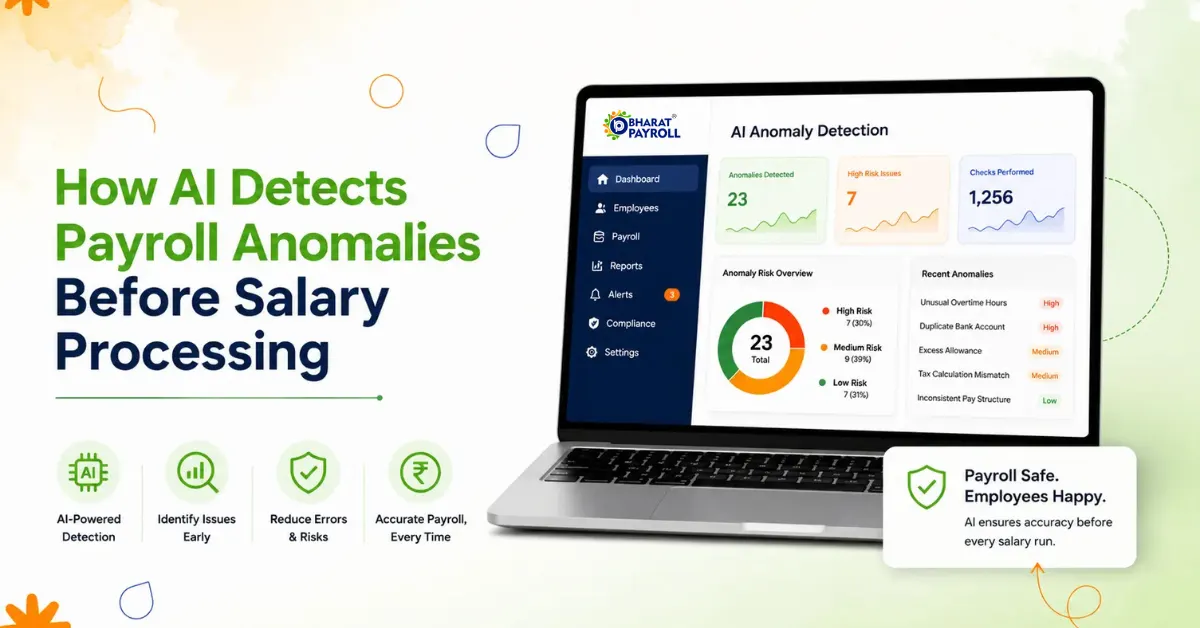
That’s exactly where AI payroll anomaly detection comes in handy. Instead of waiting around for payroll errors to show up after salary processing, AI takes a good look at your payroll data before the final run and flags anything that seems off. It catches missed punches, duplicate payouts, wrong deductions, sudden salary changes, pending approvals, and attendance mismatches before they mess with your employees.
For Indian SMBs, mid-sized companies, and growing enterprises, this isn’t just about fancy automation. It’s about keeping your salary processing accurate, cutting down on rework, and making payroll predictable every single month.
What Is AI Payroll Anomaly Detection?
AI payroll anomaly detection basically uses artificial intelligence to spot unusual payroll entries before you process salaries.
Here’s the thing—an anomaly isn’t always an error. It’s more like a heads-up. Maybe an employee has crazy high overtime because they’re genuinely working on a project deadline. Or another employee shows a full salary even after taking unpaid leave. AI flags both cases so your payroll team can double-check before hitting approve.
In simple terms? AI works like your pre-payroll buddy. It doesn’t replace your HR or finance teams. It just helps them focus on the weird stuff instead of manually checking every single employee record line by line.
Why Payroll Anomalies Happen Before Salary Processing
Most payroll errors come from data that’s all over the place. Attendance sits in one system, leave approvals in another, salary changes in random emails, and reimbursements in spreadsheets. When someone copies this data manually, tiny gaps turn into expensive mistakes.
Here’s what usually goes wrong with disconnected data:
- Missed biometric punches or manual attendance fixes
- Leave without pay not showing up in salary calculations
- Overtime entered without matching shift records
- Duplicate reimbursements, arrears, incentives, or bonuses
- Salary revisions added twice or without proper approval
- Wrong PF, ESI, professional tax, or TDS deductions
- Bank details changed right before salary processing
- Employee exits, new joinings, or transfers updated too late
In a small team? You might catch these things manually. But in a growing company with multiple departments, locations, shifts, and employee types? Manual payroll error detection gets harder every month. Way harder.
How AI Payroll Checks Detect Anomalies Early
1. Comparing Current Payroll With Past Patterns
AI looks at your previous payroll cycles and compares them with the current month. If someone’s net salary suddenly jumps up or drops without a clear reason, the system raises a flag.
For example, if an employee usually gets ₹42,000 but this month shows ₹57,000, AI can check whether the increase comes from arrears, overtime, incentives, reimbursement, or just a wrong entry. This gives your payroll team a chance to review the reason before processing salaries.
2. Matching Attendance, Leave, and Paid Days
Attendance data directly affects salary—no surprises there. AI payroll checks can compare paid days, unpaid leave, late marks, weekly offs, holidays, and shift attendance against your payroll calculation.
This catches issues like:
- Full salary despite leave without pay
- Missing attendance for working days
- Wrong half-day or late-mark deductions
- Paid days not matching approved leave records
- Shift schedules not lining up with working hours
For Indian businesses using biometric attendance, remote work logs, or branch-level attendance uploads, this prevents tons of last-minute payroll fixes.
3. Finding Missed Punches and Schedule Gaps
Missed punches are probably the most common payroll headaches out there. An employee forgets to punch out. A manager approves late attendance. A shift record doesn’t sync right.
AI can flag days where attendance doesn’t match what you’d expect from the schedule. Like, if someone’s assigned to a full-day shift but only has one punch, the system asks for a review before payroll gets locked.
This makes payroll error detection way smoother without making HR chase down every single record manually.
4. Detecting Overtime Mismatches
Overtime errors can bump up your payroll costs real quick. AI compares overtime hours with shift rules, attendance duration, manager approvals, and past overtime patterns.
If someone’s overtime is unusually high compared to previous months, AI flags it. If overtime’s entered but the attendance record doesn’t back up those extra hours, that becomes an exception too.
This doesn’t mean the overtime’s wrong. It just means payroll shouldn’t process it blindly.
5. Spotting Duplicate Payments and Compensation Changes
Your payroll teams handle reimbursements, bonuses, incentives, arrears, salary revisions, and one-time payouts all the time. These entries are helpful but risky when managed manually.
AI can catch duplicate amounts, repeated claim numbers, identical reimbursement entries, or the same salary revision added more than once. It also flags compensation changes made after the payroll cutoff.
This matters because duplicate payouts are way harder to get back after salary disbursement.
6. Checking Statutory Deductions and Salary Components
Indian payroll involves multiple salary components and statutory deductions. AI payroll checks can compare employee data, salary structure, location, and eligibility before final processing.
It flags mismatches in:
- PF deductions
- ESI eligibility
- Professional tax
- TDS calculation
- Loan or advance recovery
- Loss of pay
- Reimbursements and taxable components
This supports better salary processing accuracy and cuts down on post-payroll questions from employees.
Payroll Anomalies AI Can Catch Before Salary Processing
Before salary processing, AI can scan payroll inputs across attendance, leave, approvals, deductions, and past salary cycles to spot unusual changes that may need review.
| Payroll anomaly | What AI checks before salary processing |
| Sudden salary increase or drop | Compares current salary with previous payroll cycles |
| Missed punch | Matches attendance logs with shift schedules |
| Incorrect paid days | Checks leave, holidays, LOP, and attendance records |
| Duplicate payout | Flags repeated reimbursements, arrears, incentives, or bonuses |
| Overtime mismatch | Compares overtime with attendance, shifts, and approvals |
| Wrong deduction | Reviews PF, ESI, PT, TDS, and recovery rules |
| Late salary change | Flags edits made after payroll cutoff |
| Pending approval | Highlights manager or HR approvals still incomplete |
When these anomalies are detected early, HR and finance teams can correct errors before payout, reduce rework, and maintain employee confidence in payroll accuracy.
Why Human Review Still Matters
AI can find anomalies, but your payroll teams still need to make the final call. A flagged overtime entry might be totally valid. A sudden salary change could be linked to a promotion. A reimbursement might look duplicate, but actually belongs to two different travel claims.
The real value of AI isn’t blind automation. The value is better visibility before payroll gets approved.
Good AI payroll anomaly detection creates an exception list for your HR, payroll, and finance teams. Instead of reviewing every employee record from scratch, they can focus on the records that actually need attention.
How Bharat Payroll Supports Pre-Payroll Accuracy
Bharat Payroll helps Indian businesses connect attendance, leave, payroll, compliance, payslips, employee records, approvals, and reports in one structured HRMS workflow. This matters because anomaly detection gets way stronger when your payroll data isn’t scattered across disconnected tools.
With Bharat Payroll, your HR and payroll teams can bring employee data, salary structures, attendance inputs, leave records, statutory details, and payroll outputs closer together. This helps reduce mismatches before salary processing.
For growing businesses, this connected approach supports:
- Faster payroll review
- Better payroll error detection
- Clearer approval tracking
- More accurate salary calculations
- Less manual spreadsheet dependency
- Stronger salary processing accuracy
Bharat Payroll also helps teams keep better payroll records, which matters when an anomaly needs review later. If a salary change, deduction, reimbursement, or approval gets questioned, your team should be able to see what changed, who approved it, and when it happened.
Why This Matters for Indian SMBs and Growing Enterprises
Payroll mistakes affect way more than just payslips. One wrong deduction creates employee frustration. One missed LOP entry messes with finance reports. One duplicate payout creates recovery headaches. One delayed salary cycle damages trust.
As companies grow, payroll gets more complex. More employees mean more shifts, branches, attendance exceptions, tax declarations, reimbursements, joiners, exits, and compliance checks.
AI payroll checks help payroll teams move from fixing mistakes after the fact to catching problems before they happen. Instead of scrambling to fix things after payday, businesses can spot issues before salaries get processed.
Conclusion
Payroll accuracy depends on what happens before the final salary run. If attendance, leave, deductions, reimbursements, salary revisions, and approvals aren’t checked properly, errors can easily make it to employee payslips.
AI payroll anomaly detection helps businesses identify unusual records before salary processing. It supports payroll error detection, improves AI payroll checks, and strengthens salary processing accuracy by giving HR and finance teams a clear exception list for review.
For Indian businesses that want payroll to be cleaner, faster, and easier to control, Bharat Payroll brings HRMS, attendance, leave, payroll, compliance, payslips, and reports into one connected workflow.
Ready to catch payroll errors before salary day? Explore Bharat Payroll and build a more accurate, connected, and reliable payroll process for your business.
Stop Payroll Errors Before Payday
Detect anomalies early with AI-powered payroll checks and ensure accurate, stress-free salary processing every cycle.
FAQs
1. What is AI payroll anomaly detection?
AI payroll anomaly detection uses artificial intelligence to identify unusual payroll entries before salary processing. It can flag missed punches, duplicate payouts, wrong deductions, sudden salary changes, overtime mismatches, and pending approvals.
2. How does AI improve payroll error detection?
AI improves payroll error detection by comparing payroll data with attendance, leave, salary history, deductions, approvals, and statutory rules. It highlights records that need human review before payroll gets finalized.
3. What are common payroll anomalies AI can detect?
AI can detect missed punches, incorrect paid days, duplicate reimbursements, overtime mismatches, salary changes entered twice, wrong PF or ESI deductions, TDS mismatches, and unapproved payroll edits.
4. Do AI payroll checks replace payroll teams?
No. AI payroll checks don’t replace payroll teams. They help HR, payroll, and finance teams find exceptions faster so they can review, approve, or correct records before salary processing.
5. How does Bharat Payroll help improve salary processing accuracy?
Bharat Payroll connects attendance, leave, payroll, compliance, payslips, employee data, approvals, and reports in one HRMS workflow. This helps businesses reduce mismatches and improve salary processing accuracy before payday.