Still, many businesses in India either skip over important legal details or send out generic letters that don’t fit the role. That often leads to confusion, missed expectations, or rocky onboarding.
Want to create a professional appointment letter? This guide is here to help you get it right, not just by ticking boxes, but by setting the right tone, covering what matters legally, and giving every new employee the clarity they need to start strong.
A professional appointment letter is more than just a confirmation of employment. It plays a key role in setting the tone for a clear and confident start. Here’s what it does:
Understanding the Purpose of a Professional Appointment Letter
Contents
hide
- Confirms that the candidate is officially joining your organisation
- Documents important details like job title, salary, start date, and work location
- Sets clear expectations for both employer and employee
- Covers key terms such as working hours, probation period, notice terms, and policies
- Acts as a formal agreement that protects both parties
- Helps ensure a smooth and structured onboarding experience
Key Components of a Professional Appointment Letter
Let’s break down the sections you absolutely must include. This is where we move from intent to structure.1. Company Details on Official Letterhead
Start with the basics- your letter must appear on your company’s official letterhead. Include:- Registered company name
- Official communication address
- Contact information (email ID and phone number)
- Company identification numbers (CIN, PAN, GST if applicable)
- Date of issue
2. Appointment Confirmation and Designation
This is where you clearly state who is being appointed, in what capacity, and under which department. Use formal but simple language. Always mention:- Job title
- Department or function
- Effective date of appointment
- Reporting manager or division head
3. Job Description and Responsibilities
You do not need to include every deliverable in the letter, but you must give a broad overview of the role. If your organisation maintains a role document or KRAs separately, reference it here. This section shows that the role has a structure. It also gives you a reference point during performance reviews or if disputes arise later.4. Terms of Employment
Clarity here prevents conflict. Include:- Type of employment: He is permanent, on probation, contractual, or intern
- Duration of probation (if any)
- Office location or base location
- Number of working days per week
- Work hours and shift expectations
5. Salary and Compensation Structure
This section should specify:- The total salary – monthly or annual, whichever applies
- What’s included – like HRA, allowances, or any bonuses
- Deductions – such as Provident Fund, ESI, and tax (TDS)
- How and when the salary will be paid – for example, monthly via bank transfer
6. Place of Work and Transferability
If the role involves transfers, client-side deployment, or multi-location operations, include that upfront. This clause gives the employer flexibility and prepares the employee for mobility if needed.7. Working Hours and Holiday Policy
Let the candidate know when they’re expected to work, and what leave entitlements they’ll have. If your organisation has a shift-based policy or follows a roster, reference the shift rules or attach a shift policy.Legal Considerations and Compliance
An appointment letter is a formal agreement that turns a job offer into a working relationship. It lists the terms/conditions of employment. It includes: what’s expected from the employee and what the employee gets in return for the role assigned. If any critical legal details are missed in the appointment letter, it can lead to confusion, disputes, or non-compliance. A well-drafted appointment letter avoids these risks and makes sure that both sides are on the same page from the start.1. Ensuring Legal Compliance
An appointment letter becomes legally binding the moment it’s signed and accepted. So, it needs to be accurate, transparent, and compliant with local labour laws. It should clearly state:- The role and responsibilities
- Compensation and benefits
- Working hours, location, and probation terms
- Policies around leave, notice period, and termination
2. Including Legal Clauses
To protect both your business and your employee, it’s important to include a few core clauses in the letter. These might include:- Confidentiality – to protect sensitive company information
- Non-compete or non-solicitation – to set boundaries after employment ends
- Transferability – if the role may require relocation or work at different sites
- Moonlighting and dual employment – especially for full-time roles, where outside work might pose a conflict
- Notice period – clearly stating how much notice is required from either side
Structuring the Professional Appointment Letter for Clarity
Let’s now move from content to format. A professional appointment letter must be readable, logical, and legally sound, not just accurate.1. Keep It Clean and Businesslike
Use a clean layout with proper headers and short paragraphs. If you’re sending a digital letter, ensure the font is readable and the content fits within one or two pages. Annexures can be used for detailed CTC breakup or policy references.2. Sequence to Follow
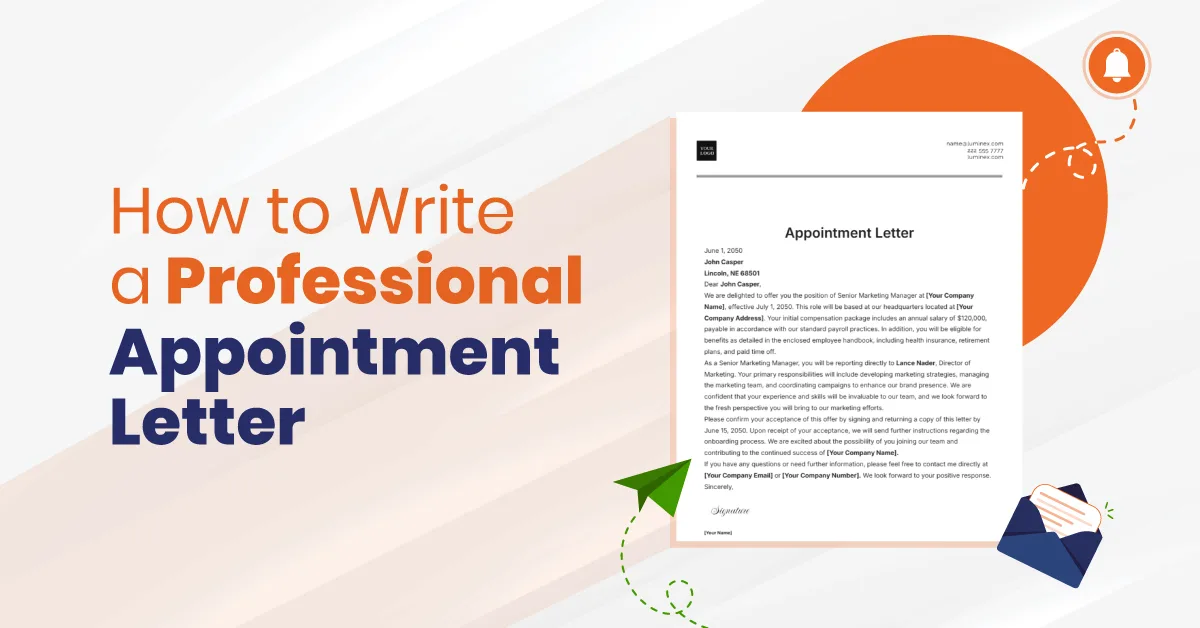
Here’s the sequence we recommend for Indian HR letters:- Letterhead and company details
- Date and candidate’s name/address
- Subject line: Appointment for the Position of [Job Title]
- Salutation
- Welcome/introduction paragraph
- Designation and department
- Job responsibilities
- Terms of employment
- Salary and compensation
- Work hours, leave, and location
- Legal clauses
- Instructions for acceptance
- Closing and signature line
- Annexures (if needed)
3. Add a Human Touch
Don’t let your letter sound like it was copied from a file. Add one honest line, what stood out in the interview, why you’re excited they’re joining, or what makes them a great fit. It takes just a moment, but it turns a standard letter into something real. It tells the candidate they’re not just filling a position – they’re someone you genuinely want on the team.Common Mistakes to Avoid While Writing a Professional Appointment Letter
Let’s talk about what not to do. Many appointment letters miss out on critical points, leading to confusion or even legal issues later.1. Leaving Out the Start Date or Reporting Details
One of the most common errors is forgetting to mention when and where the employee should report on day one. This creates confusion during onboarding and delays the administrative setup.2. Being Too Vague About Compensation
Statements like “as per industry norms” or “based on previous discussions” are legally weak and leave too much room for misinterpretation. Be precise. Use numbers. Attach annexures if needed.3. Not Mentioning the Probation Period or Notice Terms
This creates tension later, especially if the employee assumes they’re confirmed after joining, and your system still shows them under probation.4. Copy-Pasting the Wrong Role or Name
This happens more often than it should. Review every letter carefully, especially when issuing in bulk. One mismatch of name, CTC, or designation can damage trust right at the start.Humanised Sample Templates for Different Appointment Letter Types
Below are examples of fully humanised professional appointment letters, ready to adapt for Indian businesses across sectors.1. Full-Time Employee Template
A full-time appointment letter should clearly mention:- the job title,
- a brief description of the role,
- the start date
- working hours,
- probation period, and
- reporting structure.
2. Part-Time Employee Template
For part-time roles, it is essential to clarify and mention-- the working days
- expected hours
- How will it be calculated
- whether hourly or on a pro-rata basis.
3. Internship Position Template
An internship letter should clearly state-- How long will the internship last?
- What the intern will be working on,
- What they’re expected to learn.
- If a stipend is provided ( mention the amount and how it will be paid ).
Best Practices for Sending and Receiving a Professional Appointment Letter
Drafting a great professional appointment letter is only half the job. The way you issue it and how you follow up can make or break the candidate’s perception of your company. Let’s cover some often overlooked best practices that ensure a smooth and professional experience on both sides.1. Send Without Delay
The timing of sending an appointment letter matters a lot in acquiring the resource with the proper procedure. Once the candidate has accepted your offer, don’t wait too long to issue the appointment letter and try to share it within 24 to 48 working hours. Any delay in doing so can create anxiety, confusion, or even offer dropouts by the resource interviewed and selected. If your HR team uses a payroll platform like Bharat Payroll, automate the generation and dispatch of the appointment letter within your joining workflow.2. Give Clear Instructions for Signing and Acknowledgement
Tell the employee exactly what they need to do next:- By when the signed copy should be returned
- Whether they need to submit any supporting documents
- Who they should reach out to in case of questions
3. Attach Relevant Documents
Your professional appointment letter should come with any supporting documents needed to complete the pre-joining process. This may include:- Salary structure (Annexure A)
- Code of conduct and HR policy handbook
- Reimbursement forms (if applicable)
- PF/ESI nomination forms
- Onboarding checklist
4. Confirm Receipt and Maintain a Tracker
Once the letter is sent, confirm whether the candidate has received and opened it. If it’s a digital copy, use read receipts or your HRMS audit logs. If you’re sending it physically, follow up with a polite confirmation. Maintain a shared tracker in your HR team with the status of each letter: sent, acknowledged, signed, delayed, or declined. It helps prevent last-minute surprises at joining time.Summary
A Professional Appointment Letter Builds More Than Employment; It Builds Trust. A professional appointment letter isn’t just a legal formality. It’s your first formal message to your employee that says, “We’re clear, structured, and we value your time.” Done right, this one document helps you:- Reduce miscommunication
- Prevent legal risks
- Onboard employees faster
- Align salary, expectations, and responsibilities clearly
Still using outdated templates or scattered onboarding documents?
Switch to Bharat Payroll. Automate your HR letters, payroll logic, and compliance in one go.