
Human resource teams manage more than employee records today. They handle people, performance, compliance, and growth across the business. As companies grow, manual HR work becomes harder to manage. Errors increase, delays happen, and employee experience suffers.
This is why HR software is now essential for modern organizations. The real question is not whether to use HR technology, but which system fits your business needs best. Many HR professionals compare HRIS vs HRMS, but often struggle to understand the real difference.
At Bharat Payroll, we work closely with HR teams across industries. We see confusion around HRIS and HRMS every day. Both systems sound similar, but they solve different HR challenges. Choosing the right one depends on how your HR team works today and how your business plans to grow.
This guide explains HRIS vs HRMS in simple terms. It shows key differences, use cases, and helps you choose the right HR software with confidence.
Key Takeaways
- HRIS manages core administrative HR functions
- HRMS supports talent and performance management
- HRIS focuses on employee data accuracy
- HRMS supports strategic HR decisions
- The right system depends on business growth goals
Why HR Software Matters More Than Ever
HR departments support every employee in the organization. When HR processes are slow or unclear, it affects productivity across teams. Manual systems make it harder to manage employee records, payroll processing, and compliance.
Modern HR software helps HR teams work efficiently. It centralizes employee information and automates repetitive tasks. This allows HR professionals to focus on people instead of paperwork.
HR technology also improves employee satisfaction. Employees gain access to self-service portals, clear policies, and transparent records. These improvements create trust and consistency across the workforce.
What Is HRIS (Human Resource Information System)?
An HRIS, or Human Resource Information System, is designed to manage basic HR functions and employee data. It acts as a secure system of record for all employee information.
HRIS software focuses on accuracy, compliance, and efficiency. It is commonly used by HR departments that need strong administrative control without advanced performance tools.
Core Capabilities of HRIS
HRIS systems typically support:
- Employee records management and storage
- Payroll processing and compliance reporting
- Benefits administration and policy tracking
- Attendance and leave management
- Basic workforce management
HRIS focuses on managing employee data throughout the organization accurately and consistently.
What Is HRMS (Human Resource Management System)?
An HRMS, or Human Resource Management System, expands beyond HRIS capabilities. It includes all HRIS features and adds tools for managing employee performance, growth, and engagement.
HRMS helps HR teams move from administrative work to strategic planning. It supports the entire employee lifecycle, from hiring to development and retention.
What HRMS Adds Beyond HRIS
HRMS solutions usually include:
- Talent acquisition and applicant tracking systems
- Performance management and goal tracking
- Employee engagement and feedback tools
- Succession planning and workforce planning
- Advanced analytics and reporting
HRMS supports both daily HR operations and long-term workforce strategies.
HRIS vs HRMS: Key Differences Explained Clearly
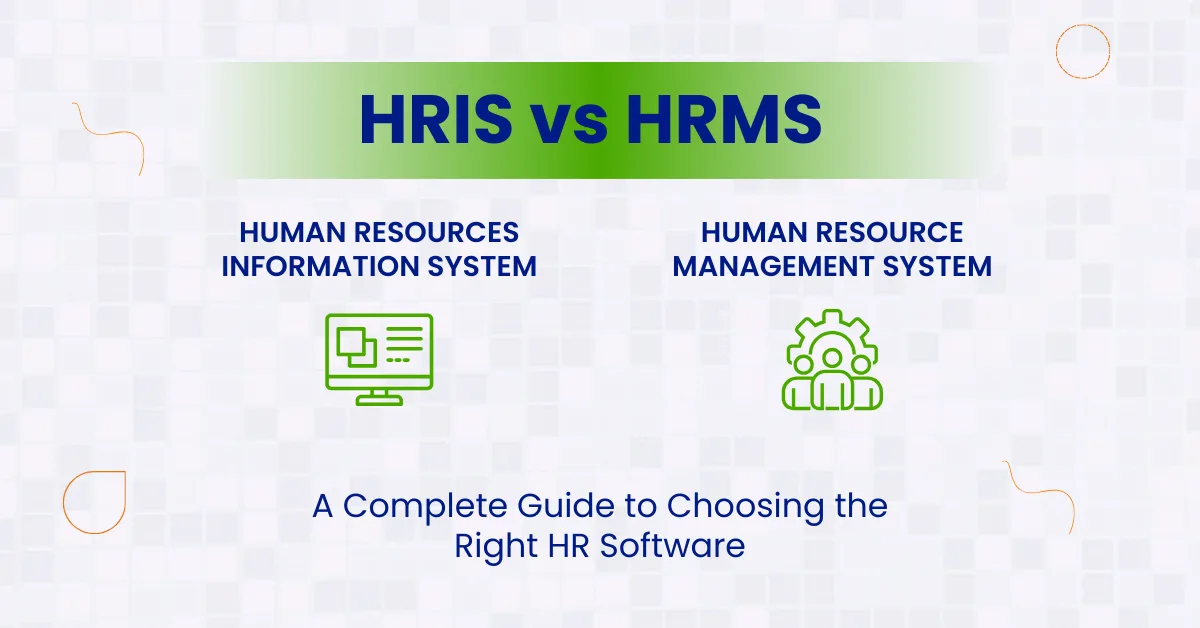
The main difference between HRIS and HRMS lies in scope and purpose. HRIS manages essential HR operations. HRMS supports people development and strategic decision-making.
| Area | HRIS | HRMS |
|---|---|---|
| Primary focus | Administrative HR tasks | Strategic HR management |
| Employee data | Centralized employee records | Performance and engagement insights |
| HR functions | Core HR functions | Talent and performance management |
| Analytics | Basic reporting | Predictive analytics |
| Ideal users | Small to mid-size HR teams | Growing and enterprise HR teams |
Both systems are valuable, but they solve different problems.
HRIS vs HRMS: Which Is Right for Your Business?
Choosing the right HR software depends on your organization’s needs, size, and plans.
Choose HRIS If:
- Your HR tasks are mainly administrative
- Payroll processing is a primary requirement
- Compliance and data accuracy are priorities
- You need cost-effective HR software
Choose HRMS If:
- Employee performance drives business results
- Talent management supports growth goals
- Workforce planning guides hiring decisions
- You need advanced HR insights
Many organizations begin with HRIS and later upgrade to HRMS as HR needs become more complex.
How HRIS Supports HR Teams Day to Day
HRIS systems simplify daily HR operations. They reduce manual data entry and improve consistency across departments. HR teams spend less time correcting errors and more time supporting employees.
HRIS helps ensure compliance with labor laws and payroll regulations. This reduces risk and improves confidence during audits.
For many businesses, HRIS creates a strong foundation for organized HR operations.
How HRMS Supports Strategic HR Growth
HRMS software helps HR teams think beyond daily tasks. It provides visibility into employee performance, engagement, and future potential.
With HRMS, HR professionals can identify skill gaps early. They can plan training programs and succession strategies more effectively.
This strategic approach helps businesses align people management with long-term business objectives.
HRIS, HRMS, and HCM: Understanding the Relationship
HRIS, HRMS, and HCM are often used together, but they represent different levels of HR maturity.
- HRIS focuses on employee data and administration
- HRMS adds performance and talent management
- HCM focuses on long-term human capital strategy
Many HR organizations evolve through these stages as they grow.
Role of Cloud HR Software in Modern HR Systems
Cloud HR software has transformed how HR systems operate. Unlike on-premise business systems, cloud solutions offer flexibility and scalability.
Cloud HR software provides:
- Access through employee self-service portals
- Automatic updates without manual installation
- Secure employee database management
- Easy integration with accounting software
At Bharat Payroll, cloud-based HR solutions simplify HR operations while maintaining compliance and data security.
Automating HR Processes with HR Software
Automation is one of the biggest advantages of modern HR software solutions. Automating HR processes reduces manual effort and improves accuracy.
Automation supports:
- Payroll processing and salary calculations
- Employee onboarding and documentation
- Attendance and leave management
- Compliance reporting and audits
Automation allows HR teams to focus on people instead of repetitive tasks.
Improving Employee Experience with HRMS
Employee experience plays a major role in retention and engagement. HRMS software improves employee experience through transparency and access.
Employee self-service portals allow employees to:
- View personal and payroll information
- Access benefits and HR policies
- Track goals and performance reviews
These features build trust and improve employee satisfaction.
Workforce Planning and Analytics with HRMS
HRMS supports strategic workforce planning using real-time data. HR teams can plan hiring, promotions, and training more accurately.
Workforce planning tools help organizations:
- Anticipate future talent needs
- Reduce skill gaps across teams
- Align workforce growth with business goals
This data-driven approach supports sustainable business growth.
Cost Considerations: HRIS vs HRMS
HRIS systems are usually more affordable and easier to implement. They suit organizations with stable HR requirements.
HRMS systems require higher investment but deliver stronger business value. Improved engagement and retention often offset the cost.
Choosing HR software should focus on long-term return, not just short-term savings.
Common HR Challenges Solved by HR Software
The right HR software helps organizations solve common HR challenges, such as:
- Managing large employee databases accurately
- Tracking employee performance consistently
- Ensuring compliance across locations
- Aligning HR strategies with business goals
Modern HR technology reduces risk and improves efficiency.
How Bharat Payroll Helps Businesses Choose HR Software
At Bharat Payroll, we help organizations evaluate HRIS vs HRMS based on real operational needs. Our solutions support payroll processing, HR operations, and employee data management.
We focus on compliance, accuracy, and scalability. This allows HR teams to operate with confidence while supporting workforce growth.
Conclusion
Choosing between HRIS and HRMS depends on your current HR needs and plans. HRIS provides a strong foundation for payroll, compliance, and employee records. HRMS builds on that foundation by supporting performance, engagement, and workforce planning.
At Bharat Payroll, we help businesses select the right HR software with clarity and confidence. With the right system in place, HR teams spend less time on manual tasks and more time supporting people and business growth.
Choose the Right HR Software for Smarter HR Operations
The right HR software reduces manual work and improves employee experience. Choose HRIS or HRMS solutions that support growth, accuracy, and compliance.
Frequently Asked Questions
1. What is the main difference between HRIS and HRMS?
HRIS manages employee records, payroll processing, and compliance tasks. HRMS includes all HRIS features and adds performance management, talent development, and workforce planning. HRMS helps HR teams support long-term business goals more effectively.
2. Is HRMS better than HRIS for growing companies?
Yes. HRMS is better for growing companies because it supports the entire employee lifecycle. It helps manage hiring, performance reviews, employee engagement, and succession planning while providing insights for strategic workforce decisions.
3. Can HRIS handle payroll processing accurately?
Yes. HRIS software handles payroll processing, employee data management, and compliance reporting very well. It works best for organizations that need reliable HR operations without advanced performance or talent management features.
4. Do small businesses need HRMS software?
Most small businesses start with HRIS because it covers basic HR tasks. HRMS becomes useful as the company grows and needs tools for employee performance, engagement, and workforce planning.
5. How does Bharat Payroll help businesses choose HR software?
Bharat Payroll helps businesses compare HRIS vs HRMS based on real HR needs. We support payroll accuracy, employee data management, compliance, and scalable HR solutions aligned with long-term business objectives.