
Many employees in India still receive work-related calls, emails, and messages after office hours. This affects sleep, personal time, and family life. Many workers feel they must reply, even when they are relaxing or spending time with loved ones.
To solve this problem, a Right to Disconnect Bill has been introduced in the Lok Sabha. The Disconnect Bill 2025 gives employees a legal right to switch off after work hours and holidays. Workers can ignore work-related calls or messages after official time ends. This helps protect personal time, reduce pressure, and improve work-life balance.
Digital communication has become fast and constant. We can work from anywhere using phones or laptops. However, constant connectivity makes it easy for managers or clients to send updates late at night. This affects sleep, emotional health, and personal relationships.
Workplace tools like Bharat Payroll can help companies define office hours, track overtime pay, and maintain simple workplace rules. When hours are clear and fair, both workers and companies benefit.
Why Clear Work Boundaries Matter
Digital tools and remote work help companies finish work faster. Teams can share updates and files in a few seconds. However, this quick access also creates pressure. Many workers feel they must reply, even when they are tired or with family.
This behavior becomes normal over time. Workers fear missing updates or disappointing leaders. Some workers try to stay online at night because they want to look responsible. This affects rest, sleep, and peace of mind.
Clear boundaries are important. If workers know they have a legal right to disconnect after office hours, they feel safer. They can enjoy personal time, weekends, or holidays without stress. Healthy rest improves energy and focus during office hours.
These rules also help families. Parents can spend time with children without checking phones for late messages. Workers can enjoy hobbies, take breaks, and build stronger personal relationships.
A healthier work-life balance supports stronger productivity and better mental health.
What the Disconnect Bill Means
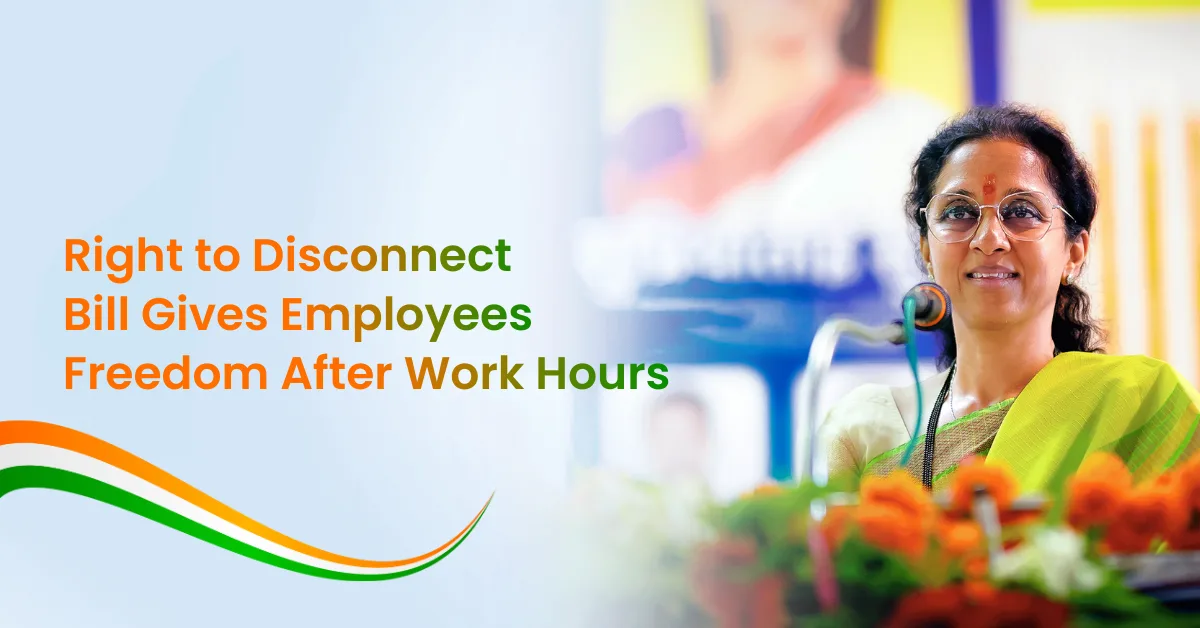
The Right to Disconnect Bill is a private member’s bill introduced in the Lok Sabha by NCP MP Supriya Sule. The bill introduced gives employees the right to ignore work-related calls, emails, and messages after official working hours and holidays.
The bill aims to protect personal space and reduce digital stress. Workers can disconnect without disciplinary action, fear, or confusion. Companies will need to plan communication during official hours instead of late at night.
Some companies operate in different time zones or require support at odd hours. In such cases, the assembly bill allows both sides to negotiate agreements. This allows flexibility while still protecting personal life.
Key Rules in the Bill
The bill proposes clear and simple rules for after-hours work:
- Employees may refuse work-related calls after office hours
- No punishment for ignoring messages in non-working hours
- Extra work after office hours must be counted as overtime pay
- Overtime must be paid at the normal wage rate
- Workers must enjoy personal life and time for rest
These key provisions protect workers from late-night pressure. Clear rules help improve work-life balance, rest, and mental stability.
These rules also protect young workers and beginners who often feel the most pressure to stay active at all hours.
Penalty for Late-Night Messaging
The bill seeks to use penalties to enforce digital boundaries. If employers continue to pressure workers after official hours, they may face a penalty equal to one percent of total employee remuneration. This penalty encourages companies to avoid late digital communication and respect personal time.
Penalties help companies understand that rest is part of healthy work. When personal time is respected, workers feel supported and valued. They return to work with a higher focus and stronger motivation.
Clear digital boundaries create:
- Better quality work
- Lower stress
- Better teamwork
- Higher job satisfaction
- Stronger trust
Rest and recovery help workers perform better during office hours.
How Work Has Changed
Remote work, hybrid schedules, and smartphones allow companies to contact employees anytime. This helps with quick updates and teamwork. However, it also blurs personal space and professional demands.
Some workers never switch off mentally. They may check phones while eating, driving, or spending time with family. This creates emotional stress and long-term tiredness.
The disconnect bill helps separate official working hours from personal life. Workers can rest fully and enjoy free time without late interruptions. This builds peace of mind and stronger emotional health.
Flexible Agreements Between Employers and Employees
Some businesses serve global customers or run 24/7 projects. The assembly bill understands this and allows both sides to negotiate agreements when special needs exist.
Possible agreements include:
- Clear working-hour boundaries
- Emergency message procedures
- Consent for holiday communication
- Proper overtime tracking
- Simple digital reporting rules
When agreements are written and simple, there is less confusion. Workers feel respected, and companies still complete important tasks smoothly.
International Examples
Countries like France, Portugal, Italy, and Australia already follow the right to disconnect. Workers in these countries enjoy a healthier work-life balance, stronger personal time, and less stress.
India’s moving in a similar direction shows progress. It is not against work—it protects human well-being. When workers are rested and focused, work quality improves.
Support Services for Workers
The bill proposes extra support to help employees feel better:
- Counselling services for emotional health
- Digital detox centers for healthy technology habits
- Awareness programs run by the employee’s welfare authority
These programs help workers reduce digital stress, improve mental well-being, and enjoy stronger personal relationships. Workers learn how to disconnect and use technology wisely.
Why Private Member’s Bills Matter
Many private members’ bills do not become laws right away. However, they help India understand important workplace issues. They create awareness and encourage companies to act before laws are final.
The disconnect bill highlights the emotional cost of late-night digital work. Even if the government responds differently, companies may still adopt helpful rules because employees want a better work-life balance.
Impact on Employees
Workers enjoy simple protection and peace of mind. They can:
- Refuse late work calls
- Enjoy personal time with family
- Sleep without late interruptions
- Reduce stress and burnout
- Build stronger personal connections
- Keep a better work-life balance
Healthy rest improves energy, emotions, and productivity. Workers feel more confident and satisfied.
Impact on Employers
Employers also gain benefits:
- Better quality work during office hours
- Lower burnout across teams
- Higher loyalty and retention
- Better teamwork and morale
- Lower hiring and training costs
- Clear expectations and fewer conflicts
When workers are rested, output improves. A balanced work culture helps companies grow and stay competitive.
How Bharat Payroll Helps
Bharat Payroll supports healthy workplace practices. Companies can:
- Define working hours
- Track attendance
- Record overtime
- Calculate overtime pay at the normal wage rate
- Maintain simple compliance records
- Support fair digital boundaries
This reduces confusion, protects employees, and helps companies manage work rules smoothly.
Conclusion
The Right to Disconnect Bill is an important step toward healthier workplaces in India. It helps workers rest after work, enjoy personal life, and reduce late-night communication stress. Clear communication rules build a better work-life balance, stronger well-being, and better focus during office hours.
With Bharat Payroll, companies can track work hours, record overtime pay, and support fair workplace policies. A respectful culture improves loyalty, performance, and long-term business success.
Empower Your Workforce With Bharat Payroll
Make work-hour tracking, overtime pay, and employee well-being simple and transparent in every workplace.
FAQs
1. What is the Right to Disconnect Bill?
The Right to Disconnect Bill gives employees the legal right to ignore work-related calls, emails, and messages after office hours and holidays. The bill aims to improve work-life balance and protect personal time without punishment or fear.
2. What happens if employers contact workers after hours?
If employers continue calling employees outside official hours, the bill proposes a penalty equal to one percent of total employee remuneration. This encourages companies to respect personal life and limit constant connectivity during rest time.
3. Can employees still work overtime if they choose?
Yes. Workers may choose to work beyond office hours. In that case, the proposed law requires overtime pay at the normal wage rate. This prevents unpaid late work and protects personal time with clear rules.
4. Does the disconnect bill apply to all workplaces?
The Disconnect Bill of 2025 protects most employees. Some companies with global clients or nonstop operations may need flexible rules. In such cases, employers and employees can negotiate agreements that protect both business needs and work-life balance.
5. How does the bill improve well-being?
The bill proposes counselling services, digital detox centers, and an employees’ welfare authority. These programs reduce stress, improve mental well-being, and help workers enjoy personal time without workplace pressure.